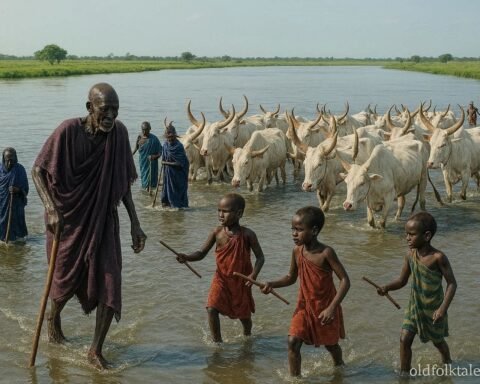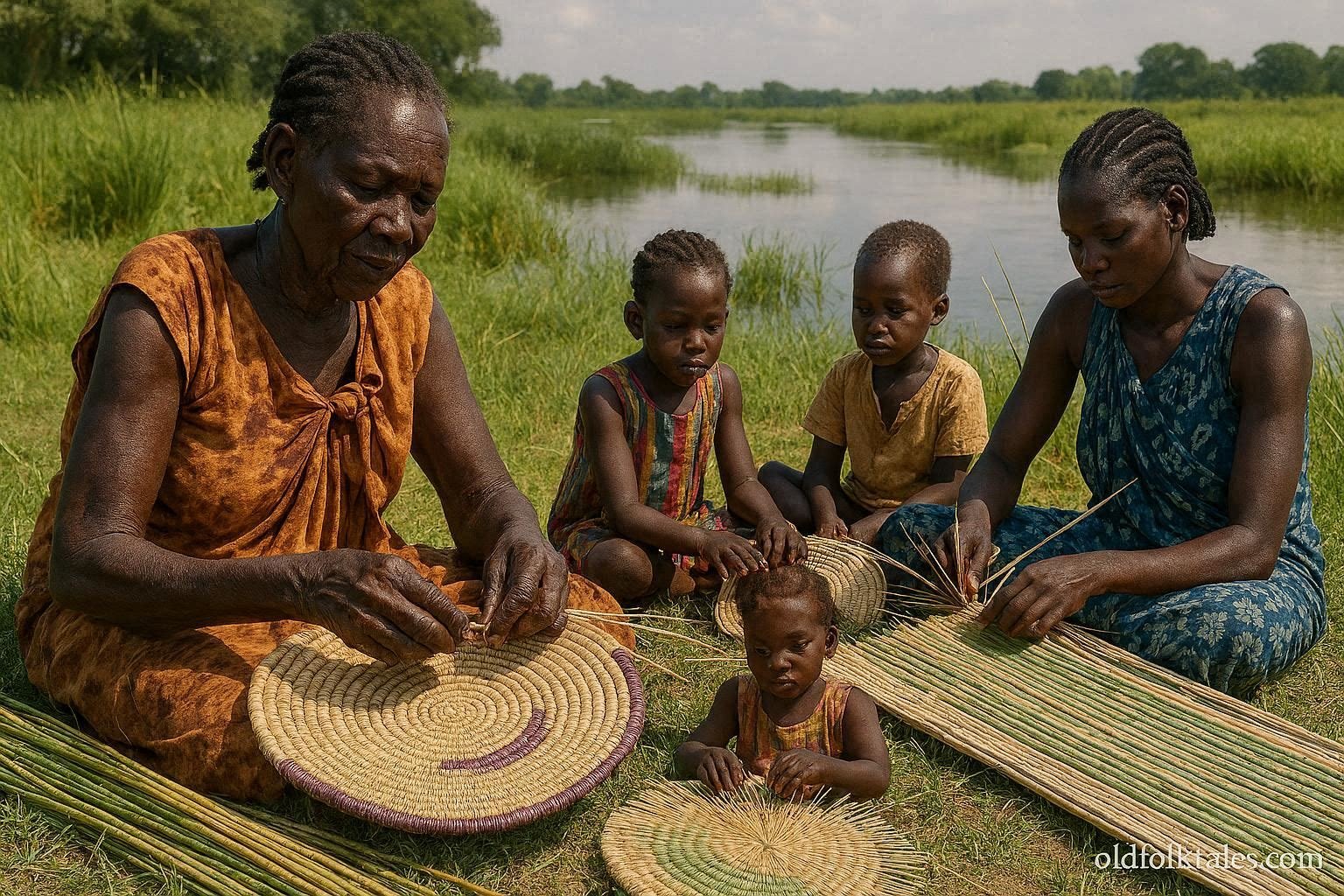
The Nile has shaped the lives of the people of South Sudan for countless generations. Flowing through wide floodplains, peaceful lagoons, and rich wetlands, its waters have provided food, transportation, fertile land, and materials that supported everyday life. Among the Shilluk and Nuer communities living along the river, one of the most treasured gifts of the Nile was the abundance of reeds that grew along its banks. These tall plants appeared simple to visitors, yet experienced hands transformed them into baskets, sleeping mats, fish traps, storage containers, and many other useful household items. Through careful weaving, women preserved a tradition that reflected patience, creativity, cooperation, and deep respect for nature. Every woven piece carried not only practical value but also the knowledge of generations who understood how the Nile continued to sustain both people and culture.
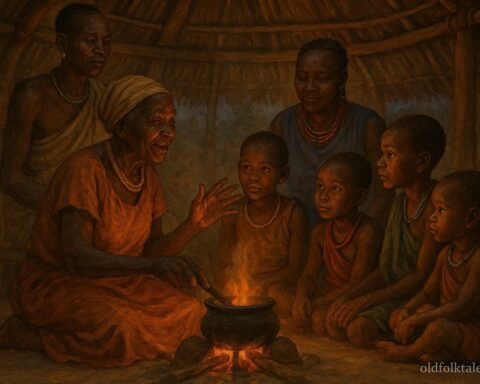
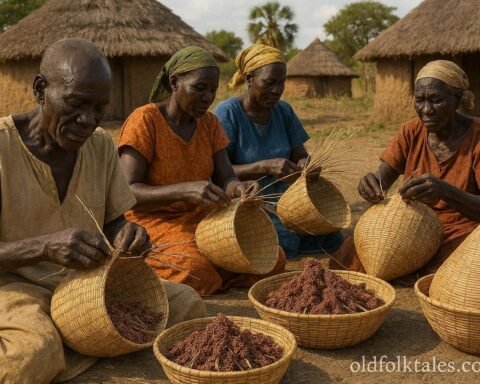
Within Shilluk and Nuer communities, weaving was never viewed as an ordinary chore. It formed an important part of family life and cultural identity. Mothers, grandmothers, and aunts patiently taught young girls and boys how to recognize the strongest reeds, prepare them correctly, and weave patterns that balanced beauty with durability. The work often took place beneath the shade of large trees or beside the calm waters of the Nile, where conversation flowed as naturally as the river itself. While busy hands shaped each basket or mat, elders shared stories about their ancestors, explained the customs of the community, and reminded younger generations that every skill deserved careful attention and respect.
In one peaceful Shilluk village lived a curious young girl named Nyawal. She admired the beautiful woven baskets that filled her grandmother’s home. Some held grain harvested during the farming season. Others stored dried fish, vegetables, or carefully protected seeds that would be planted when the rains returned. Large woven mats covered the floors where family members gathered to eat, rest, and welcome visitors. Every item displayed neat patterns that seemed almost impossible to create by hand.
One afternoon Nyawal gently picked up a beautifully woven basket.
She turned it slowly in her hands before asking,
Fascinated by this tale? Discover more North African folktales
“Grandmother, who taught you to make this?”
Her grandmother smiled warmly.
“My mother.”
“Her mother taught her.”
“And one day, I will teach you.”
Nyawal’s face brightened.
“Can we begin today?”
Her grandmother nodded.
“A weaver begins by learning to observe.”
Early the next morning they walked together toward the edge of the Nile where tall reeds swayed gently in the cool breeze. Birds called from nearby trees while small fish disturbed the quiet water with gentle ripples.
Nyawal eagerly reached toward the first group of reeds.
Her grandmother gently stopped her.
“We never gather without looking first.”
She carefully examined the plants.
Only mature reeds that stood tall and strong were selected.
Young shoots remained untouched.
Dry, brittle reeds were also left behind.
Nyawal looked puzzled.
“Why do we leave so many?”
Her grandmother answered,
“The Nile gives generously.”
“Our duty is to protect what it provides.”
“If we take everything today, tomorrow’s children will have nothing to weave.”
Together they gathered only what they needed.
Each bundle was tied carefully before being carried home.
The work had only begun.
The reeds were first cleaned to remove leaves and rough edges.
Some were placed beneath gentle sunlight to dry.
Others were soaked in clean water until they became soft enough to bend without breaking.
Nyawal became impatient.
“I want to start weaving.”
Her grandmother smiled.
“A strong basket begins long before the first strand is crossed.”
Several days later the weaving lesson finally began.
Her grandmother placed several prepared reeds across one another to form a firm base.
Slowly she added more strands.
Each reed passed over one strip and beneath another.
The pattern grew steadily.
Nyawal watched every movement.
When it became her turn, she hurried to copy what she had seen.
Within moments several reeds slipped from place.
The basket leaned to one side.
She sighed deeply.
“I cannot do it.”
Her grandmother gently untied the loose strands.
“You cannot do it yet.”
“There is a difference.”
She placed the reeds back into Nyawal’s hands.
“The Nile teaches patience.”
“So does weaving.”
Day after day Nyawal practiced.
Some mornings her fingers became tired.
Some afternoons the reeds refused to stay where she placed them.
Many baskets had to be taken apart before they could be woven again.
Her grandmother never allowed disappointment to remain for long.
Every mistake became another lesson.
“Each reed depends upon another.”
“If one becomes careless, the whole basket becomes weak.”
Those words stayed with Nyawal.
As her confidence grew, she noticed that weaving required more than steady hands.
It required careful planning.
Every pattern had to be imagined before the first strand was placed.
Every crossing supported another.
Nothing was left to chance.
Soon harvest season arrived.
Families throughout the village became busy gathering sorghum, millet, and vegetables from their fields.
Freshly woven baskets appeared everywhere.
Women carried grain from the farms.
Children gathered fruit using smaller baskets woven during their own lessons.
Fishermen filled strong reed containers with the day’s catch before returning home.
Large woven mats were spread beneath shade trees where families rested together during the hottest hours of the afternoon.
Nyawal felt proud each time she recognized something she had helped create.
One afternoon, heavy rain fell across the village.
Several baskets left outside became soaked with water.
When the rain ended, Nyawal expected her grandmother to throw away the damaged ones.
Instead, she carefully repaired every loose strand.
Broken sections were strengthened with fresh reeds.
Handles were rewoven.
Before long the baskets looked almost new again.
Nyawal asked,
“Why not make new ones?”
Her grandmother smiled.
“A good weaver respects every piece of work.”
“Repairing teaches as much as creating.”
As the years passed, Nyawal became one of the finest young weavers in the village.
Her baskets became known for their strong construction and beautiful patterns inspired by the flowing waters of the Nile.
Travelers visiting neighboring communities often admired her work.
Some exchanged grain, pottery, or carved wooden tools for her woven baskets and sleeping mats.
Although she appreciated the praise, her grandmother reminded her,
“The greatest reward is not admiration.”
“It is knowing that your hands help your community.”
Those words guided Nyawal throughout her life.
Whenever younger children gathered beside her hoping to learn, she welcomed them with the same patience her grandmother had shown her.
Before teaching them how to weave, she first led them to the river.
She showed them how to choose mature reeds.
She explained why young plants must remain.
She reminded them that every gift from nature carried a responsibility.
Only then did the weaving begin.
In time, Nyawal understood that the true beauty of weaving did not lie only in the finished basket or sleeping mat.
Its greatest beauty rested in the relationships it strengthened.
Families worked together.
Knowledge passed peacefully from one generation to another.
The reeds gathered from the Nile became lasting reminders that even the simplest gifts of nature could unite an entire community when treated with care, gratitude, and wisdom.
As the seasons continued to change, Nyawal became known throughout the surrounding villages not only for her skill but also for her generosity. Whenever a family prepared for a wedding, welcomed a newborn child, or celebrated a successful harvest, they often asked her to weave special baskets for the occasion. She accepted every request with humility because she believed the craft had never belonged to one person alone. It belonged to the entire community and to every generation that had carefully preserved it.
One year, an unusually strong flood spread across parts of the Nile. The rising water covered footpaths, reached the edges of several homes, and bent many of the reed beds that families depended upon for weaving.
When the floodwaters finally began to recede, some villagers became worried.
“The reeds have been destroyed,” one man said.
“How will we continue weaving?”
Nyawal’s grandmother calmly led a small group to the riverbank.
She carefully examined the flooded marshes.
Many reeds had indeed fallen, but fresh green shoots had already begun appearing among them.
She smiled.
“The Nile has not abandoned us.”
“It is beginning again.”
She reminded everyone that nature often renewed itself after difficult seasons. Instead of cutting the young reeds immediately, the community agreed to wait until they had grown strong enough to harvest responsibly.
The decision required patience.
Families repaired older baskets and mats while waiting for the new reeds to mature.
Nobody complained.
They understood that protecting the reed beds meant protecting their future.
Several months later, the riverbanks once again swayed with healthy reeds.
The harvest that year became one of the most successful anyone could remember.
Nyawal noticed that the community celebrated not only because the reeds had returned but because everyone had worked together to protect them.
The experience taught another important lesson.
Good craftsmanship depended upon good stewardship.
Without healthy wetlands, there could be no weaving tradition.
As Nyawal grew older, she often traveled with other women to neighboring Shilluk and Nuer villages where experienced weavers gathered to exchange ideas and techniques. Although each community created its own distinctive patterns, everyone respected the skill of the others.
Some baskets displayed bold geometric designs.
Others featured tightly woven circular patterns inspired by rippling water.
Sleeping mats varied in size according to family needs.
Fish traps reflected generations of practical knowledge about the movement of fish through the Nile.
Rather than competing with one another, the weavers celebrated the diversity of their shared heritage.
Every gathering became an opportunity to learn.
Every conversation strengthened friendships between neighboring communities.
During one gathering, an elderly Shilluk woman held up a beautifully woven basket that had belonged to her grandmother.
Although many years had passed, the basket remained strong.
Its carefully woven strands still held together despite decades of use.
She gently placed it before the younger women.
“This basket reminds us that careful work can outlive the person who made it.”
“The hands that wove it are gone.”
“The wisdom remains.”
Silence filled the gathering as everyone reflected upon her words.
Nyawal realized that every basket carried a story.
Some remembered joyful harvests.
Some recalled family celebrations.
Others reminded people of difficult seasons overcome through cooperation and perseverance.
Each woven strand connected the present with the past.
As the years passed, Nyawal became a respected teacher whose home welcomed children eager to learn the ancient craft.
She never began with weaving itself.
Instead, she first taught them to appreciate the Nile.
She explained how the wetlands sheltered birds, fish, and countless other living creatures.
She showed them how reeds protected the riverbanks from erosion.
She reminded them that every basket began with gratitude for the natural world.
Only after understanding these lessons were the children ready to weave.
The first baskets they produced were often uneven.
Some handles became loose.
Others leaned slightly to one side.
Nobody laughed.
Every experienced weaver remembered making the same mistakes.
Patient guidance replaced criticism.
Practice replaced disappointment.
Little by little, every child improved.
The tradition continued exactly as it had for generations.
Today, the weaving traditions of the Shilluk and Nuer people remain an important part of South Sudan’s cultural heritage. Ethnographic studies document the skilled use of Nile reeds to create baskets, sleeping mats, fish traps, storage containers, and other household items that supported daily life. Beyond their practical value, these woven creations represent environmental knowledge, sustainable use of natural resources, family cooperation, and the careful passing of skills from one generation to the next. They continue to remind communities that cultural heritage survives when knowledge is shared with patience and protected with respect.
The story of Weavers of the Nile Reeds reminds us that the strongest traditions are woven together through diligence, cooperation, creativity, and gratitude for the gifts of nature. Like the carefully crossed reeds that form a basket, every generation strengthens the next by preserving the wisdom entrusted to its care.
Continue your journey: Read more East African folktales
Moral Lesson
True craftsmanship is more than creating beautiful objects. It is the patient sharing of knowledge, the careful protection of nature, and the commitment to preserving cultural heritage for future generations.
Knowledge Check
1. Why were Nile reeds important to the Shilluk and Nuer communities?
They were used to weave baskets, sleeping mats, fish traps, and many household items that supported everyday life.
2. Why did Nyawal’s grandmother choose only mature reeds for harvesting?
She wanted to protect the reed beds so they would continue growing for future generations.
3. What lesson did Nyawal learn when her first basket became uneven?
She learned that weaving requires patience, careful practice, and perseverance.
4. Why did the community wait after the flood before harvesting new reeds?
They allowed the young reeds to mature, ensuring the wetlands remained healthy and the weaving tradition could continue.
5. What did the old basket shown at the gathering symbolize?
It showed that careful craftsmanship and traditional knowledge can last for generations.
6. What is the main lesson of the story?
Protecting nature, practicing patience, and passing traditional skills to others help preserve cultural heritage.
Source
Adapted from the traditional reed weaving heritage of the Shilluk and Nuer peoples of South Sudan, with reference to South Sudan craft heritage collections, ethnographic studies of Shilluk and Nuer material culture, and regional anthropological research.