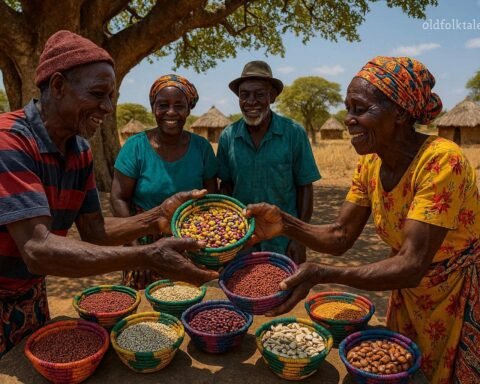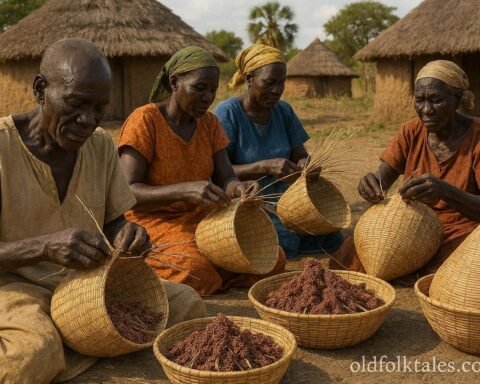
Across the rich woodlands and fertile farmlands of Western Equatoria in South Sudan, the Azande people have long been respected for their agricultural knowledge and their careful preparation for the changing seasons. Farming was more than a way of producing food. It was a tradition that united families, strengthened communities, and taught every generation the importance of planning ahead. Elders often reminded young people that a successful harvest did not end when crops were gathered from the fields. True success depended upon protecting those harvests so that every family would have enough food throughout the months ahead. For this reason, the construction and care of traditional granaries became one of the most valued skills passed from parents to children.
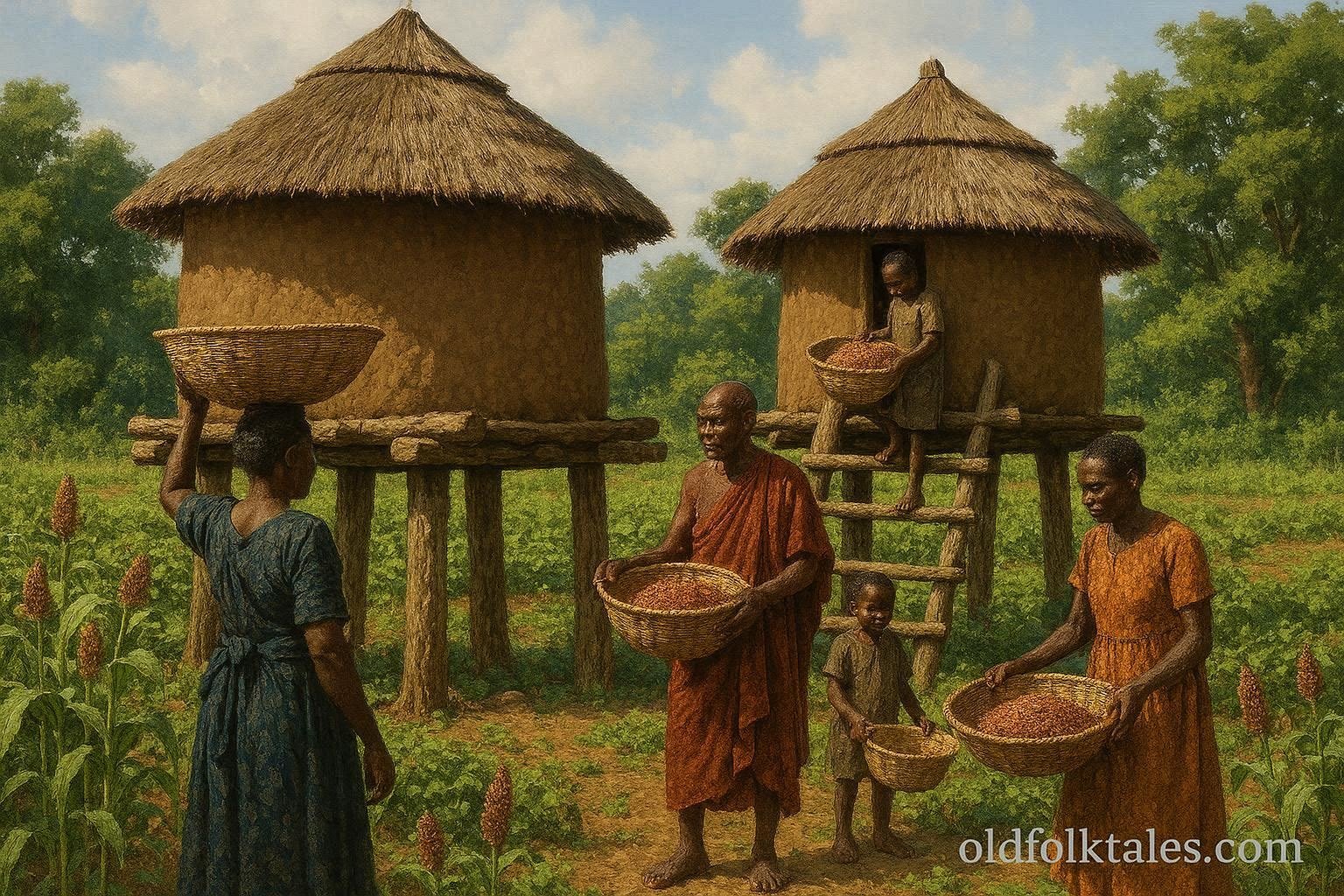
Azande granaries were built with remarkable care using locally available materials such as wood, woven reeds, grasses, and mud. Raised above the ground on sturdy supports, they protected precious grain from moisture, insects, rodents, and flooding during the rainy season. Every detail of their construction reflected generations of observation and experience. Families knew that a well built granary could preserve sorghum, millet, maize, and other crops for many months, providing security during times when fields lay waiting for the next planting season. Beyond their practical purpose, granaries became powerful symbols of foresight, cooperation, and responsible stewardship.
In one Azande village surrounded by broad fields of sorghum lived a curious boy named Kumba. Every year he watched his father and uncles repair the family granary before the harvest began. They carefully inspected every wooden post, replaced worn bundles of grass, strengthened the woven walls, and checked the raised platform that kept the grain safe above the ground.
Kumba often wondered why they spent so much time repairing an empty building.
Want more? Read more West African folktales now
One afternoon he finally asked his grandfather, Elder Bazia.
“Why do we work so hard before there is even grain to store?”
The old man smiled as he rested his hand upon one of the sturdy wooden posts.
“A wise family prepares before it has need.”
“If we wait until the harvest arrives, we have already waited too long.”
Those words stayed with Kumba.
Several weeks later the first signs of harvest appeared across the fields.
Families gathered together from sunrise until evening, cutting stalks, carrying baskets, and singing traditional work songs that celebrated another successful growing season.
The entire village worked as one.
Children gathered fallen grain.
Young people carried heavy baskets.
Older men and women supervised the careful drying of each harvest before it entered the granary.
Nothing was rushed.
Everyone understood that grain stored too early could spoil.
After many days of careful preparation, the first baskets were finally carried toward the granaries.
Before anyone entered, Elder Bazia inspected every bundle of grain.
Only dry, healthy harvests were accepted.
Kumba noticed that even damaged baskets were separated from the others.
He asked why.
His grandfather replied,
“One careless basket can spoil many careful ones.”
“Wisdom protects what hard work has earned.”
As the granary slowly filled, every family member shared responsibility.
Some arranged the grain neatly inside.
Others recorded which crops had been stored first so they could be used in the proper order during the months ahead.
Kumba admired how everyone worked without complaint.
The granary belonged to the family, but its success depended upon everyone’s effort.
One evening, heavy rain fell across the village.
Strong winds swept through the fields.
The following morning several neighboring families discovered that poorly repaired granaries had collapsed during the storm.
Much of their grain had become wet.
Without hesitation, Elder Bazia called the village together.
“We cannot allow our neighbors to lose the harvest they worked so hard to grow.”
Men carried fresh timber.
Women brought woven grass and rope.
Young people cleared away damaged materials.
By sunset, several new granaries stood ready.
The rescued grain was carefully dried before being stored safely once again.
Kumba noticed that nobody expected payment.
Helping one another was simply the right thing to do.
Later that evening he asked,
“Why do we rebuild another family’s granary?”
His grandfather answered,
“A hungry neighbor weakens the whole village.”
“When every family is secure, every family prospers.”
Months passed.
The dry season arrived.
Families visited their granaries regularly.
No one simply filled them and forgot them.
They checked for insects.
They repaired small cracks.
They replaced worn roofing.
The granary demanded constant care.
Kumba gradually learned that protecting food required as much dedication as growing it.
One afternoon, a traveling merchant arrived seeking grain to exchange for iron tools and fine woven cloth.
Some younger villagers became excited and wanted to sell much of their stored harvest immediately.
Elder Bazia advised patience.
“A full granary today must still feed our children tomorrow.”
The families agreed to trade only the grain they could safely spare.
When unexpected drought reduced the following harvest months later, the wisdom of that decision became clear.
Because the granaries had been carefully managed, every household still had enough food.
No family faced hunger.
The children continued attending community gatherings.
The elders continued sharing stories beneath the evening sky.
Life remained stable because earlier generations had planned wisely.
As Kumba grew older, he became known for his skill in building granaries.
People from neighboring villages often visited to observe his careful workmanship.
Instead of keeping his knowledge to himself, he gladly taught anyone who wished to learn.
He believed that knowledge became stronger when it was shared.
Whenever apprentices asked him what made a strong granary, they expected him to describe timber, rope, or grass.
Instead he smiled.
“A strong granary begins with patient hands.”
“It stands because people care for it together.”
Years later, Kumba became one of the village elders.
Each harvest season he gathered young boys and girls before the oldest granary in the village.
He showed them how every beam supported another.
How every roof bundle protected the harvest beneath it.
How every careful repair prevented future loss.
Then he reminded them that the granary represented more than food.
It represented responsibility.
Planning.
Cooperation.
Hope for tomorrow.
The children listened with great attention, knowing that one day the care of their families’ harvests would rest in their own hands.
Today, traditional granaries remain an important part of Azande cultural heritage. Although modern storage methods are increasingly available in some communities, many families continue to preserve the knowledge of traditional granary construction as a valuable expression of agricultural wisdom. Ethnographers and historians have documented these practices as examples of sustainable food preservation, careful resource management, and community cooperation. The granaries continue to remind younger generations that lasting prosperity is built through preparation, shared responsibility, and respect for the knowledge passed down by their ancestors.
The story of Granaries of the Azande teaches that true abundance is not measured only by a successful harvest but by the wisdom to protect it for the future.
Looking for more? Explore the magic of East African folktales here
Moral Lesson
Wise planning, cooperation, and careful stewardship help communities thrive through every season.
Knowledge Check
1. Why were Azande granaries built above the ground?
To protect stored grain from moisture, insects, rodents, and flooding.
2. Why did Elder Bazia repair the granary before the harvest?
Because preparation before it was needed ensured the harvest would be safely stored.
3. Why was damaged grain kept separate from healthy grain?
To prevent spoiled grain from affecting the rest of the harvest.
4. How did the village help families whose granaries collapsed?
They worked together to rebuild the granaries and save the stored grain.
5. Why did the elders advise against selling too much grain?
They wanted to keep enough food for future needs in case of poor harvests.
6. What does the granary symbolize in Azande tradition?
It symbolizes foresight, responsibility, cooperation, and food security.
Source
Adapted from the agricultural traditions of the Azande people of South Sudan, with reference to Azande ethnographic collections, South Sudan agricultural heritage studies, and regional cultural research.