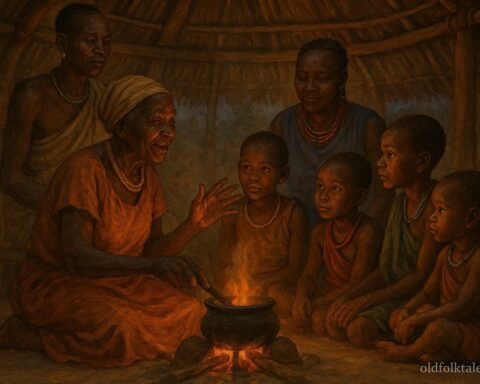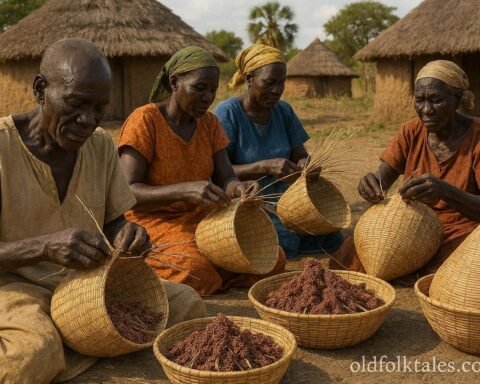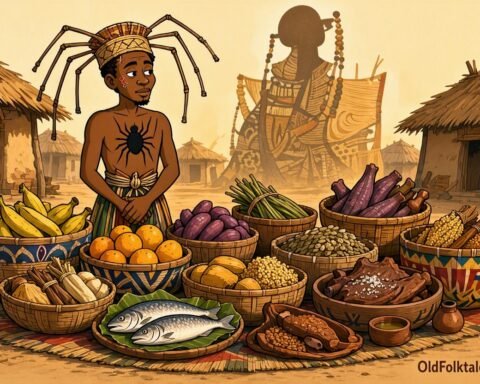
In the fertile plains of Central Equatoria in South Sudan, the Bari people have long valued peace, unity, and mutual respect as the foundations of community life. Villages were not held together by written laws alone but by customs carefully preserved through oral tradition and faithfully practiced by each generation. Whenever disagreements arose over farmland, livestock, family matters, or community responsibilities, people did not rush toward anger or revenge. Instead, they trusted the wisdom of their elders, believing that lasting peace could only be achieved when every voice was heard and every decision reflected fairness.
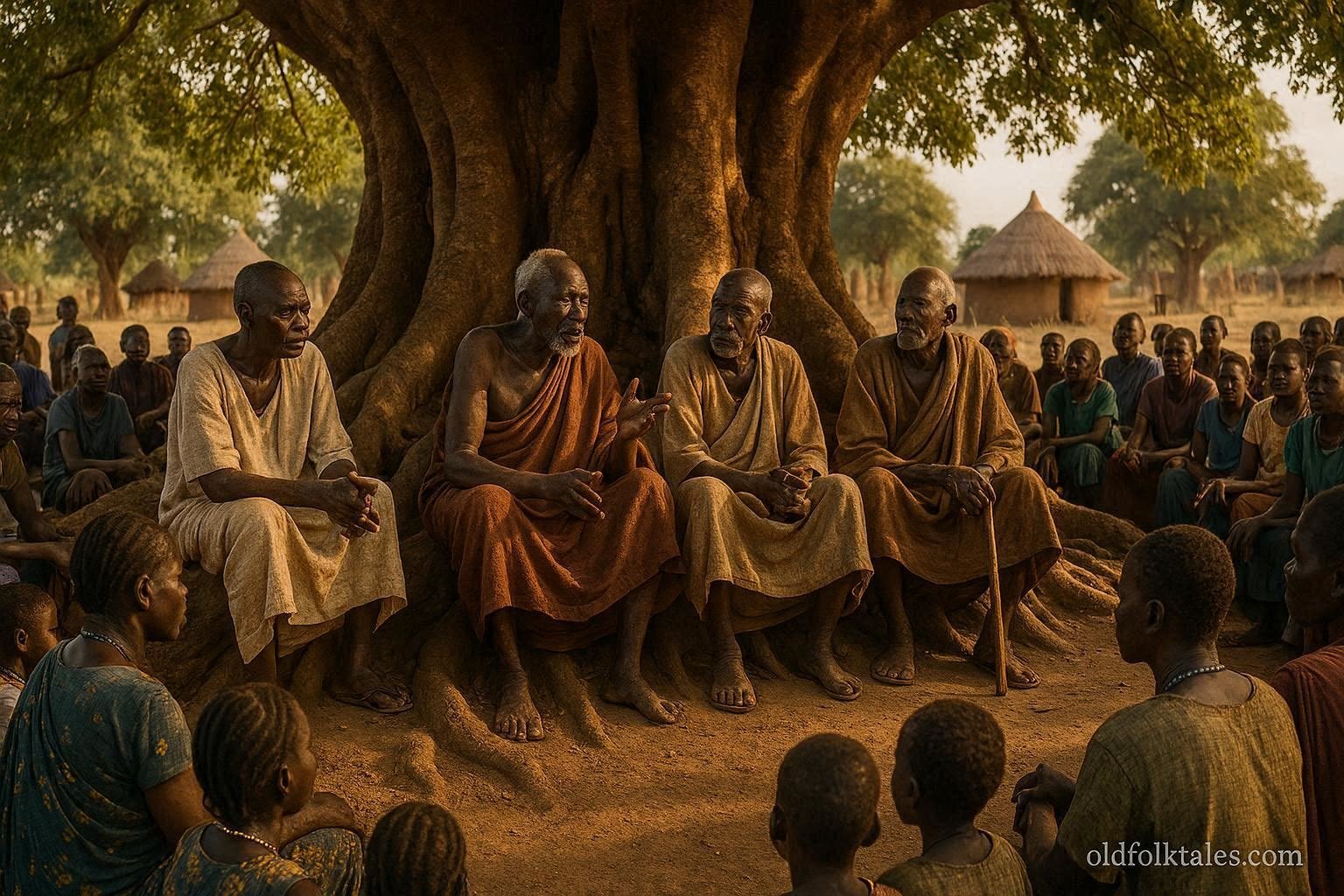
At the heart of many Bari villages stood a magnificent fig tree whose broad branches stretched across the open gathering place. Its cool shade offered comfort from the midday sun, but it also carried a deeper meaning within the community. Beneath its spreading canopy, elders met to discuss important matters, welcome visitors, settle disputes, and teach younger generations the values that shaped Bari society. The tree became a living symbol of justice, patience, and unity. It reminded everyone that while people might disagree, they always remained members of the same community whose future depended upon peace rather than division.
In one Bari village lived a thoughtful young boy named Lado. Every week he watched respected elders walk slowly toward the great fig tree carrying carved wooden stools. Villagers gathered quietly around them, knowing that another council meeting was about to begin. Children were welcome to sit nearby as long as they remained respectful and listened carefully.
Lado loved these gatherings.
He did not always understand every discussion, but he admired the calm voices of the elders and the patience with which they listened to each person.
One afternoon, he asked his grandfather, Elder Juma, why everyone trusted the council so deeply.
Keep reading: Discover more Central African folktales
His grandfather smiled.
“Because justice grows from listening.”
Lado looked toward the great tree.
“Does the tree make people wise?”
Elder Juma laughed softly.
“No.”
“But it reminds us to be patient.”
“Just as the tree has stood here through many seasons, wisdom grows slowly.”
Several days later, two neighboring farmers arrived before the council.
Heavy rains had washed away the boundary between their fields.
Each believed that a fertile strip of land belonged to his family.
Both spoke confidently.
Neither wished to surrender the harvest growing there.
Lado expected the elders to decide quickly.
Instead, Elder Juma invited each farmer to explain the situation without interruption.
After the first man finished speaking, the second was given the same opportunity.
Then several elderly villagers who remembered the original boundary shared what they knew.
Still, the council reached no immediate decision.
The elders announced that they would visit the fields together the following morning before giving their judgment.
As everyone departed, Lado whispered,
“Why wait until tomorrow?”
His grandfather replied,
“A decision made too quickly may satisfy no one.”
“The land will still be there tomorrow.”
“But trust can disappear in a single careless moment.”
The next day, the elders carefully examined the fields.
They found an old stone marker hidden beneath thick grass that confirmed the original boundary.
When the council announced its decision, both farmers accepted it peacefully.
Each thanked the elders for taking time to discover the truth instead of guessing.
Lado began to understand why patience mattered.
Several weeks later, another dispute reached the council.
A young herder had accidentally allowed his cattle to wander into a neighbor’s vegetable garden.
The crops were damaged.
The owner demanded immediate payment.
The frightened herder admitted his mistake but explained that a sudden storm had scattered the animals.
Rather than blaming either person, the elders asked practical questions.
How much of the garden had been damaged?
Could the vegetables recover?
What would restore fairness without creating bitterness?
After thoughtful discussion, the council agreed that the herder would help replant the damaged garden and assist the family until the next harvest.
Both families accepted the solution.
Instead of creating enemies, the decision restored friendship.
That evening, Lado asked,
“Why did the elders not simply punish the herder?”
Elder Juma smiled.
“Justice does more than punish.”
“It heals.”
As the months passed, Lado attended every council meeting beneath the fig tree.
He noticed that visitors from neighboring villages were always welcomed with respect.
Women, men, young people, and elders all received opportunities to speak whenever their voices were needed.
The council listened carefully before asking questions.
No one shouted.
No one interrupted.
Even when disagreements became emotional, the elders reminded everyone to remain respectful.
One dry season, a serious disagreement arose between two villages over access to a shared stream.
Water had become scarce.
Both communities feared for their crops.
Some young men wanted to defend the stream by force.
The elders refused.
Representatives from both villages gathered beneath the great fig tree.
The discussions lasted throughout the day.
Stories were shared about previous generations who had survived difficult seasons by cooperating rather than competing.
By sunset, an agreement had been reached.
The villages would draw water on alternating days while working together to clear blocked channels that increased the stream’s flow.
The solution required effort from everyone, but it prevented conflict and strengthened cooperation.
Lado admired how calm conversation had achieved what anger never could.
Years passed.
Lado grew into a thoughtful young man known for treating others with kindness and respect.
Although he had become strong enough to work the fields and care for livestock, he never forgot the lessons learned beneath the fig tree.
Whenever disagreements arose among young people, he encouraged them to listen before arguing.
Many disputes ended peacefully without ever reaching the council because the younger generation had learned from the elders’ example.
Eventually, Elder Juma grew old.
His steps became slower.
His voice grew quieter.
During one council meeting, he invited Lado to sit beside him beneath the great tree.
The elder looked toward the gathering villagers before speaking.
“Many people believe justice comes from clever words.”
He paused.
“It does not.”
“It comes from honest hearts that are willing to hear the truth.”
Lado listened carefully.
His grandfather continued.
“If you speak before listening, your judgment belongs only to yourself.”
“If you listen before speaking, your judgment belongs to the whole community.”
Those words remained with Lado for the rest of his life.
After Elder Juma passed away, the community chose Lado to join the council of elders.
On his first day beneath the great fig tree, he remembered the many afternoons he had spent quietly watching from the edge of the gathering.
Now it was his turn to protect the customs that had guided the village for generations.
Whenever young children gathered nearby with curious eyes, Lado welcomed them warmly.
He hoped they would learn what he had once learned.
That justice begins with patience.
That peace grows through respectful dialogue.
That wisdom belongs to those who are willing to listen.
Today, customary councils remain an important part of community life in many parts of South Sudan. Among the Bari people, councils of elders continue to preserve traditional methods of conflict resolution built upon dialogue, fairness, reconciliation, and collective responsibility. Researchers and cultural historians have documented these practices as valuable examples of customary governance, demonstrating how oral traditions continue to strengthen communities while preserving cultural identity.
The story of Justice Beneath the Fig Tree reminds us that true justice is never rushed. It is built through careful listening, thoughtful judgment, and a sincere desire to restore peace rather than deepen division.
Don’t stop yet! See our complete East African folktales collection
Moral Lesson
True justice is achieved when people listen with patience, judge with fairness, and seek peace for the entire community.
Knowledge Check
1. Why did the Bari elders meet beneath the fig tree?
It served as the traditional gathering place for resolving disputes, teaching customs, and making community decisions.
2. Why did the elders wait before deciding the farmers’ dispute?
They wanted to examine the land carefully and discover the truth before making a judgment.
3. How was the damaged vegetable garden dispute resolved?
The herder helped replant the garden and assisted the family until the next harvest.
4. What did Elder Juma say justice should do besides punish?
Justice should heal relationships and restore peace.
5. How did the two villages solve their disagreement over the stream?
They agreed to share the water on alternating days and work together to improve the water flow.
6. What is the main lesson of the story?
Justice grows through patience, careful listening, and a commitment to peace.
Source
Adapted from the customary governance traditions of the Bari people of South Sudan, with reference to Rift Valley Institute, South Sudan customary law studies, and Bari ethnographic research.