A man once had only one child. His wife had died, leaving him to raise their son alone. As the boy grew older, his father became increasingly aware that he would eventually have to leave him to face the world on his own.
The father knew that life could be difficult. He had lived long enough to understand that a person needed more than strength or wealth to survive. Good judgment was important, and some lessons could only be learned from experience.
So the father began teaching his son.
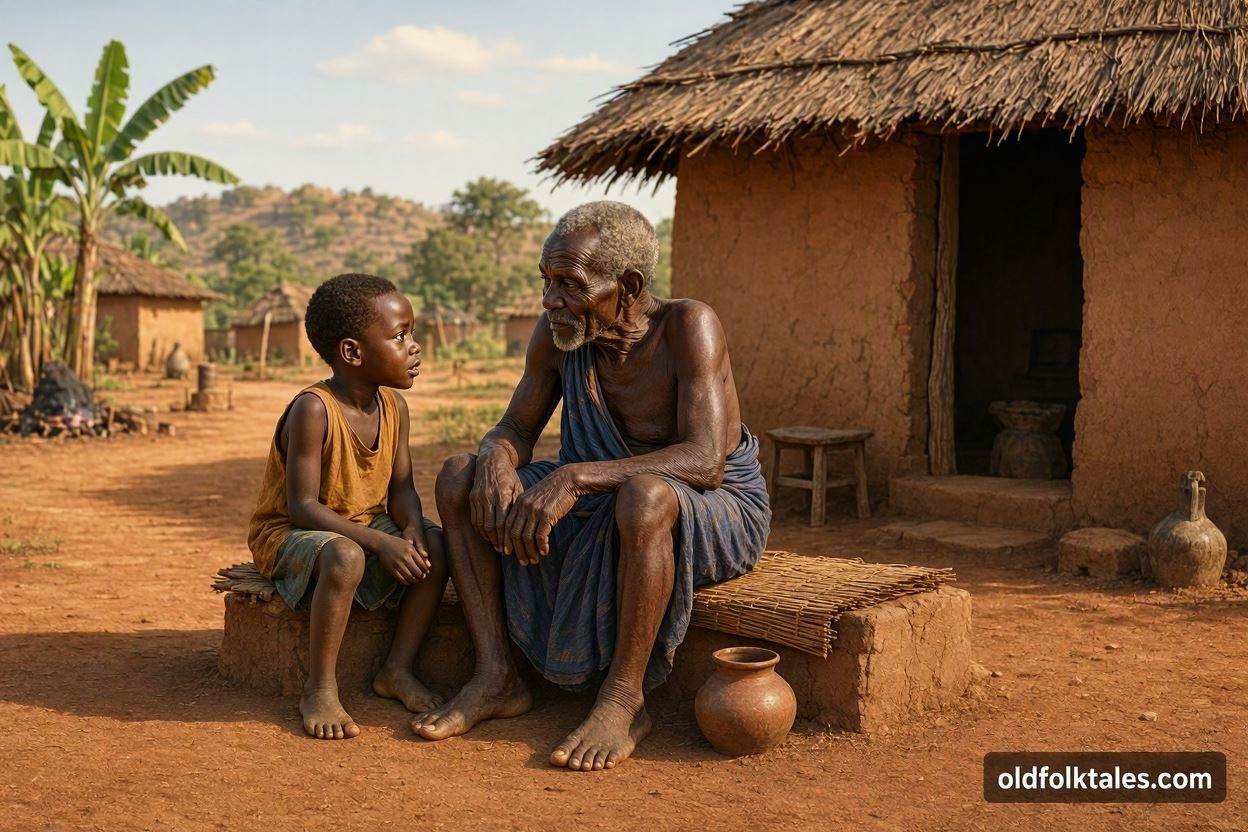
One day, he sat with him and spoke seriously about the life that awaited him. He knew that he would not always be there to guide his child, so he wanted his son to remember his words after he was gone.
“My child,” he told him, “I will eventually leave you on this earth, and the world is not an easy place. You must therefore remember what I am about to tell you.”
His first warning concerned marriage.
“Marry a woman whose heart is as good as your mother’s.”
The young man listened carefully.
His father was not simply telling him to look for beauty or wealth. His own wife had been the person who gave his son a mother’s love, and the father wanted his child to find a woman with whom he could live peacefully and share genuine affection.
Don’t stop yet! See our complete East African folktales collection
He wanted his son to choose someone whose character would allow them to live together with understanding and love.
Then the father gave him his second warning.
“Be careful when becoming too familiar with the government.”
The son may have wondered why his father would include the government in advice meant for everyday life. But his father understood that authority could be dangerous when treated carelessly.
A person might believe that a small offence was harmless, but an offence connected with government could bring serious consequences. Even someone working for the government could find himself imprisoned if he broke its rules.
The father therefore warned his son not to become careless simply because he was familiar with people in positions of authority.
Then came the third warning.
“A constant visitor is very often the one who turns against you.”
The father wanted his son to understand that familiarity did not always mean loyalty.
Someone who visited regularly might appear to be a close friend. Such a person could become so familiar that the family stopped being cautious around him. Yet the very person who seemed closest could sometimes become the person who caused harm.
The father was therefore telling his son to be careful about whom he trusted.
Finally, he gave him his fourth warning.
“A woman does not keep any secrets.”
The father explained what he meant with an example from the life of the Bisa people. A person might kill an animal in the bush and believe that the matter was known only to him. But if a woman had seen what happened, the secret might soon become known to others.
The father’s warning was therefore connected to the importance of secrecy, particularly in circumstances where revealing information could bring trouble.
The four lessons were different, but they all came from the same concern.
The father wanted his son to survive in a difficult world.
He wanted him to choose his wife carefully.
He wanted him to understand that government authority should not be treated casually.
He wanted him to be cautious about people who became too familiar.
And he wanted him to understand that some information was better kept private.
The son listened to everything his father said.
His father had raised him alone, and these were not empty words. They were the lessons of a man preparing his only child for a life in which he would eventually have to make his own decisions.
The father knew that he could not protect his son forever.
One day, the boy would have to choose his own friends.
He would have to decide whom to trust.
He would have to establish his own household.
He would have to deal with people in positions of authority.
And he would have to learn when to speak and when to remain silent.
So the father gave him something that could remain with him even after his father’s death.
He gave him advice.
The four warnings became a guide for the young man as he prepared to face life without the protection of his father.
The story does not tell us what happened to the son afterward.
It does not describe a great battle or a long journey.
Instead, it leaves us with the father’s four lessons and the knowledge that the son had been given a way to think about the dangers he might encounter.
For the father, preparing his child for adulthood was itself an act of love.
His final gift was not money or property.
It was wisdom.
Don’t miss out: Read more Southern African folktales
Moral Lesson
The story teaches that good advice can become a lasting inheritance. A parent may not be able to protect a child from every difficulty, but the lessons given before adulthood can help that child make wiser decisions.
It also reminds us that trust should be accompanied by good judgment. Marriage, friendship, authority and personal information can all affect a person’s life, so people should consider their choices carefully.
The story also reflects the social concerns of the Bisa community in which it was told. Robert Cancel explains that the warnings about government and frequent visitors were connected to tensions surrounding government control of hunting activities in the area.
Knowledge Check
1. Why did the father raise his son alone?
Answer: The boy’s mother had died, leaving his father to raise him.
2. What was the father’s first warning?
Answer: He told his son to marry a woman whose heart was as good as his mother’s.
3. Why did the father warn his son about the government?
Answer: He wanted him to understand that government authority should be treated carefully because even a seemingly minor offence could have serious consequences.
4. What did the father say about frequent visitors?
Answer: He warned that a person who visits constantly may eventually turn against you.
5. What did the father teach his son about secrets?
Answer: He warned him to be careful about keeping information private because secrets could easily become known to others.
6. What is the greatest gift the father gave his son?
Answer: The greatest gift was his wisdom and advice, which could guide his son after he was no longer there to protect him.
Source
Robert Cancel, Storytelling in Northern Zambia: Theory, Method, Practice and Other Necessary Fictions (2013), “Bisa Storytelling 7,” told by Kabuswe C. Nabwalya.