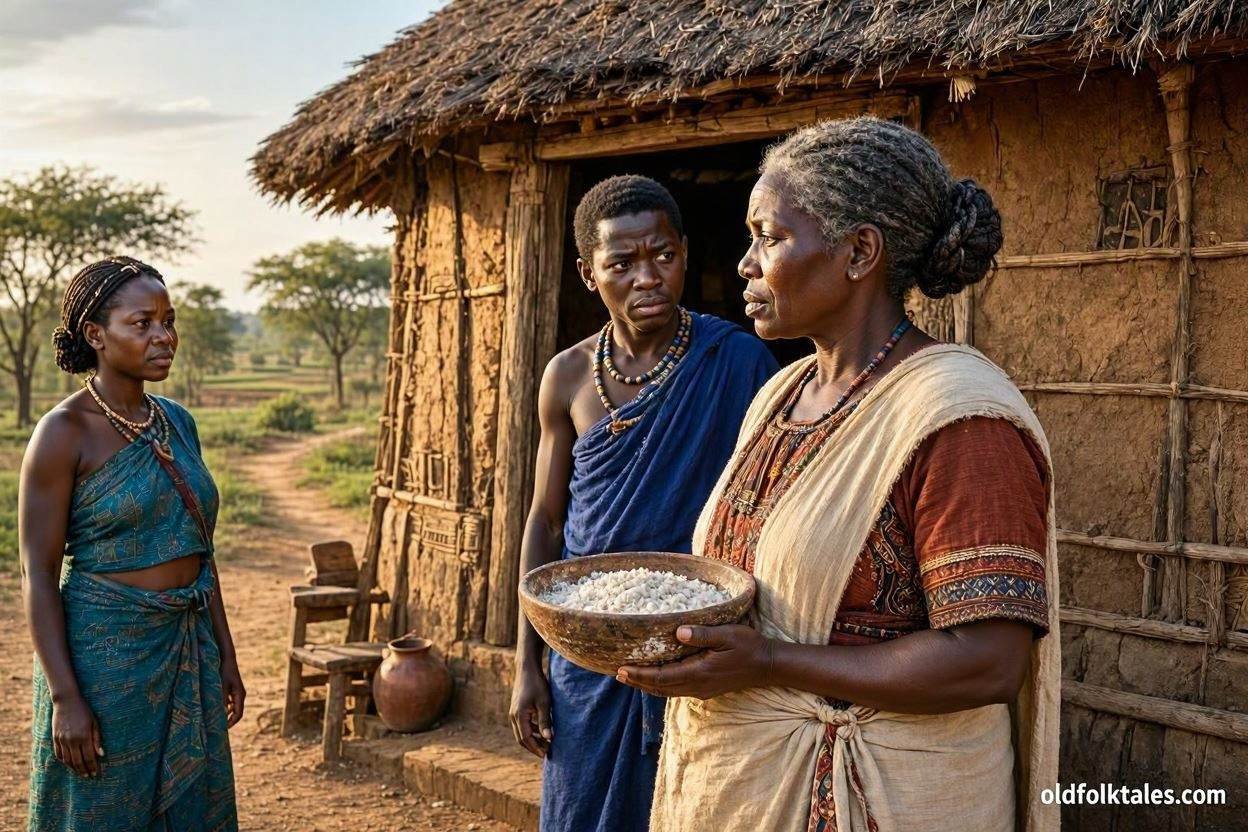
Rose was the daughter of a hunter. She grew up in a family whose life was closely connected to the traditions and customs of the Lunda community.
One day, Rose travelled with her father into the bush. During their journey, something unexpected happened. Rose became pregnant, and in time she gave birth to twins, a boy and a girl.
The twins grew up together. They were raised within the same family and watched the years pass as they moved from childhood into adulthood.
As the children became older, the time came when they began to think about marriage and the responsibilities that came with growing up.
Then the young man made a surprising announcement.
Looking for more? Explore the magic of East African folktales here
He told his family that he wanted to marry.
His parents wanted to know who he intended to marry. The question seemed simple enough, but the young man’s answer soon made the situation strange.
He insisted that he already knew the woman he wanted.
His behaviour became increasingly unusual. He withdrew from the others and remained inside the house. When his parents called him to come and eat, he refused.
His mother eventually brought food to him.
When she entered, the young man looked at her and asked who she was.
She told him that she was his mother.
But the young man continued speaking about the woman he wanted. He sang about Rose, mentioning her connection with the crocodile clan.
His parents were left wondering what he meant.
The young man continued to insist that Rose was the woman he wanted to marry. Other women could be brought before him, but he rejected them.
He wanted Rose.
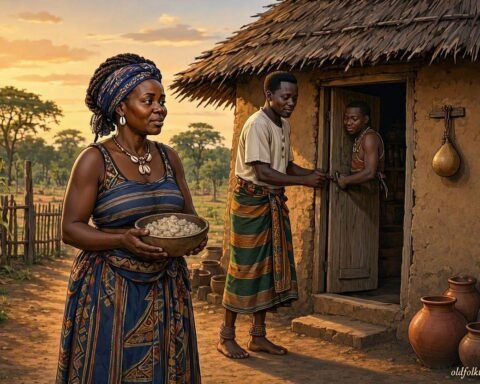
Eventually, Rose herself came to the house carrying ubwali.
She approached the door and knocked.
The young man asked who was there.
Rose told him her name.
When he heard that it was Rose, he allowed her to enter.
She brought him the food, and he ate the ubwali she had prepared.
And there the story ends.
There is no detailed wedding.
There is no explanation of the young man’s strange choice.
There is no final conversation that resolves the mystery.
Instead, the storyteller leaves the listeners with a series of questions.
Why did the young man insist on Rose?
Who exactly was the Rose he was singing about?
What was the significance of the crocodile clan?
And what connection existed between Rose and the young man?
The story does not provide all the answers.
That uncertainty is part of what makes the narrative unusual.
Rather than explaining everything, the storyteller allows the audience to think about what they have heard. The events are presented without a complete explanation, leaving the listeners to consider the possible meaning behind the young man’s words and actions.
Rose’s story had begun with her journey into the bush with her father and the unexpected birth of her twins. Years later, one of those children made a strange announcement about marriage, bringing the family into a situation that was difficult to understand.
The young man’s determination was unmistakable. He did not simply mention the woman once and forget about her. He continued to insist that Rose was the person he wanted.
When Rose finally appeared at the door, the mystery deepened rather than disappeared.
She brought him food.
He accepted it.
And the story stopped there.
Perhaps the original listeners understood references and cultural meanings that are difficult to recover today. Perhaps the story was intended to challenge the audience to work out what had been left unsaid. It may even have functioned as a kind of conundrum, where the unanswered question was part of the entertainment.
Whatever its original purpose, the tale demonstrates that traditional storytelling does not always have to provide a clear explanation at the end.
Sometimes a storyteller can leave a mystery hanging.
Sometimes the audience is expected to discuss it.
And sometimes the most memorable part of a story is the question that remains after the final words have been spoken.
Rose and her twins therefore remain at the centre of an unusual Lunda narrative, one in which family, identity and marriage become connected by a mystery that the storyteller never completely resolves.
Love this story? Discover our full Southern African folktales collection
Moral Lesson
This tale does not contain a clearly stated conventional moral. Its strength lies in its mystery and ambiguity rather than in a simple lesson.
It encourages listeners to pay attention to what is said and what is left unsaid. It also demonstrates an important feature of oral storytelling, where some narratives are designed to provoke thought, discussion and interpretation rather than provide a straightforward answer.
Knowledge Check
1. Who was Rose?
Answer: Rose was the daughter of a hunter.
2. What happened after Rose travelled into the bush with her father?
Answer: Rose became pregnant and later gave birth to twins, a boy and a girl.
3. What did Rose’s son announce when he became an adult?
Answer: He announced that he wanted to marry.
4. Who did the young man insist that he wanted?
Answer: He repeatedly insisted that he wanted Rose.
5. What did Rose bring when she came to the young man’s door?
Answer: She brought ubwali.
6. Does the documented story explain the mystery completely?
Answer: No. The narrative ends without fully explaining the young man’s desire for Rose, leaving the mystery open to interpretation.
Source
Robert Cancel, Storytelling in Northern Zambia: Theory, Method, Practice and Other Necessary Fictions, “Lunda Storytelling 8,” told by Emeliya Muleya.