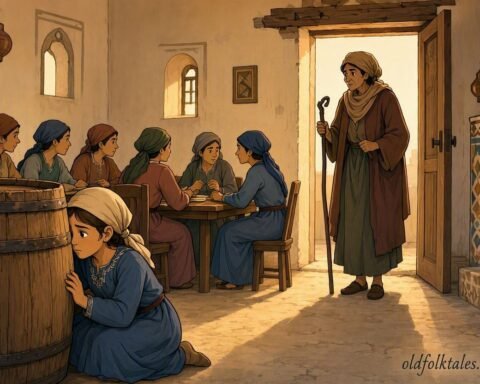
Two co-wives lived under the same roof, but their relationship was marked by constant rivalry. Jealousy had taken root between them, and each woman wanted her own daughter to be regarded as the better of the two.
The rivalry gradually affected the girls. Instead of growing up simply as sisters within the same household, they were raised in an atmosphere of comparison. Every difference between them became another reason for their mothers to compete.
One of the women had a daughter named Shams Ṭiyāḥ. Despite the hostility around her, Shams Ṭiyāḥ’s mother did not allow the rivalry to determine how she treated the other girl. Whenever the child came near her, she welcomed her kindly and sometimes gave her sweets.
The other co-wife behaved very differently. Her jealousy prevented her from showing the same kindness. When Shams Ṭiyāḥ came near her, she refused to give her food and would sometimes rather throw food to the dogs than share it with the child.
The girls grew up watching these contrasting examples.
One learned compassion.
The other learned comparison.
Don’t stop yet! See our complete East African folktales collection
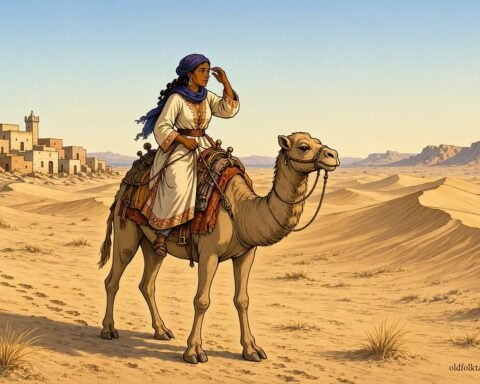
One day, the jealous co-wife sent her daughter on an errand to fetch an egg. The girl left home and followed the road, carrying out the task her mother had given her.
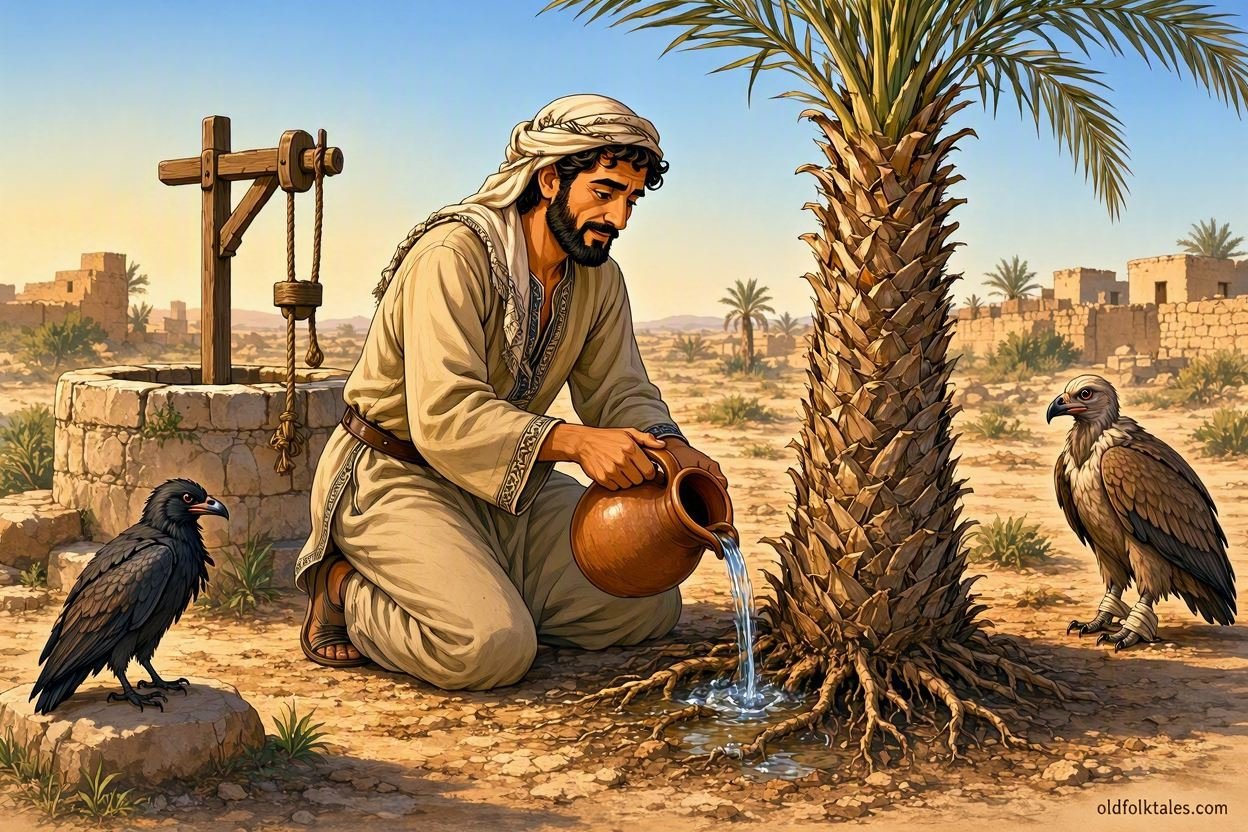
Along the way, she came upon a thirsty palm tree.
The tree called out to her and asked for water.
The girl heard the request but continued walking. She did not want to interrupt her journey to help a tree. She had been sent on an errand, and completing that errand was all that mattered to her.
Further along, she encountered a crow with an injured wing.
The bird pleaded with her for help.
The girl refused.
She continued along the road until she found a vulture with an injured leg. The bird also needed assistance, but the girl ignored its suffering and continued on her way.
She eventually reached her destination, obtained the egg and returned home.
Later, Shams Ṭiyāḥ was sent along the same road.
Her journey began in exactly the same way, but her response to what she encountered was completely different.
When she reached the thirsty palm tree, she stopped.
She looked at the tree and understood that it needed water. Nearby was a well, so she drew water and carried it to the palm tree. She watered it carefully before continuing on her way.
The palm tree blessed her for her kindness.
Shams Ṭiyāḥ continued walking.
Soon, she encountered the crow with the injured wing.
The bird asked for help.
Shams Ṭiyāḥ stopped immediately.
She tended to the injured wing and helped the bird recover.
The crow blessed her.
Further along the road, she found the injured vulture.
Again, she stopped.
She helped the bird with its injured leg instead of ignoring it.
The vulture also blessed her.
Shams Ṭiyāḥ continued her journey, unaware that these simple acts of compassion would soon change her life.
As she travelled, the blessings began to take effect.
Her hair became extraordinarily long and beautiful. Her eyes became dark and striking, and her complexion became bright and radiant.
By the time she returned home, she looked completely transformed.
Her mother was astonished.
She could hardly believe that the girl who had left the house earlier was the same daughter standing before her.
Shams Ṭiyāḥ explained what had happened. She told her mother about the thirsty palm tree, the injured crow and the injured vulture.
Her mother listened carefully and understood that the transformation had followed the kindness her daughter had shown during her journey.
But the transformation did not remain a private family matter.
The other co-wife eventually learned what had happened.
Her jealousy intensified.
Instead of asking what Shams Ṭiyāḥ had done to deserve such blessings, she focused only on the result. She wanted her own daughter to receive the same transformation.
She therefore sent her daughter along the same road.
The girl encountered the palm tree.
She heard its request for water.
But she did not stop.
She continued walking.
She then encountered the injured crow.
Again, she refused to help.
When she reached the injured vulture, she ignored it as well.
She completed her errand and returned home.
Her mother waited eagerly.
She expected her daughter to return transformed, just as Shams Ṭiyāḥ had.
But nothing had changed.
The girl looked exactly as she had when she left.
Her mother was disappointed.
She could not understand why the same journey had produced such different results.
Yet the difference between the two girls was clear.
Shams Ṭiyāḥ had helped the creatures because they were suffering. She had not stopped to calculate what she might receive in return. She had simply seen a thirsty tree and given it water. She had seen injured birds and helped them.
The other girl had encountered the same opportunities but had refused them.
She wanted the reward without repeating the kindness that had brought it.
The story therefore turns the rivalry between the two households into a lesson about character.
The two girls travelled along the same road.
They encountered the same palm tree.
They encountered the same birds.
They had the same opportunities to act.
But they made different choices.
And those choices produced different consequences.
The blessings that came to Shams Ṭiyāḥ were not the result of her mother’s rivalry with the other woman. They were the result of what Shams Ṭiyāḥ herself chose to do when confronted with suffering.
Her kindness reached beyond the boundaries of her household.
She did not ask whether the palm tree belonged to someone she liked.
She did not ask whether the crow or vulture could reward her.
She helped because help was needed.
That is what makes her transformation significant.
The physical changes are extraordinary, but the deeper transformation is in the way the story presents kindness as a force capable of changing a person’s destiny.
The rivalry between the mothers creates bitterness.
The kindness of Shams Ṭiyāḥ breaks that pattern.
Her story also shows how easily children can inherit the attitudes of adults. The girls are raised within a household where comparison and jealousy are constantly present. Yet Shams Ṭiyāḥ demonstrates that a person can respond differently.
She does not allow the cruelty around her to make her cruel.
Instead, she chooses compassion.
The jealous co-wife wants her daughter to compete with Shams Ṭiyāḥ, but the journey proves that genuine kindness cannot simply be copied for the sake of receiving a reward.
The palm tree and the birds respond to the girl’s character, not to her desire for beauty.
By the end of the tale, the contrast is unmistakable.
One girl sees suffering and stops to help.
The other sees suffering and walks away.
One receives unexpected blessings.
The other returns with nothing.
The story leaves its strongest lesson in that contrast.
Kindness may appear small at the moment it is offered. A little water, a repaired wing or assistance to an injured creature may seem insignificant.
But in a folktale, such small actions can open the door to extraordinary consequences.
Shams Ṭiyāḥ did not know what awaited her when she stopped beside the palm tree.
She did not know that the injured birds would bless her.
She did not know that her appearance would change.
She simply chose to help.
And that choice changed her fate.
Fascinated by this tale? Discover more North African folktales
Moral Lesson
True kindness should not depend on the reward we expect to receive. Compassion given sincerely can bring unexpected blessings, while jealousy and constant comparison can prevent people from seeing the value of their own character.
Knowledge Check
1. What caused the rivalry between the two co-wives?
Jealousy and constant comparison created hostility between them.
2. How did Shams Ṭiyāḥ respond when she encountered the thirsty palm tree?
She stopped and brought water from a nearby well to water it.
3. Which injured creatures did Shams Ṭiyāḥ help?
She helped an injured crow and an injured vulture.
4. What happened after Shams Ṭiyāḥ showed kindness?
The palm tree and birds blessed her, and her appearance was wonderfully transformed.
5. Why did the other girl fail to receive the same blessings?
She refused to help the thirsty palm tree and injured birds.
6. What is the main lesson of the story?
Genuine kindness can bring unexpected blessings, while jealousy and seeking rewards without compassion can lead to disappointment.
Source
Adapted from Ahmad Youssef Aqila, Khararif Libiyya, 2008. The tale Shams Ṭiyāḥ / شَمْس اطْياح is a documented Libyan folk narrative.