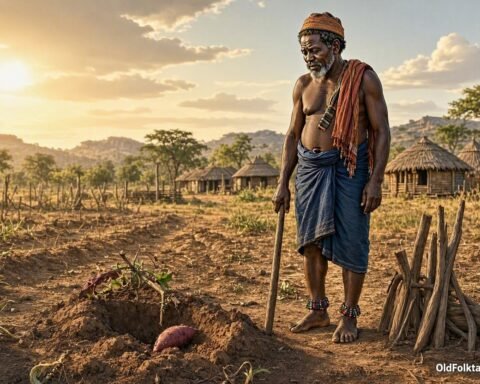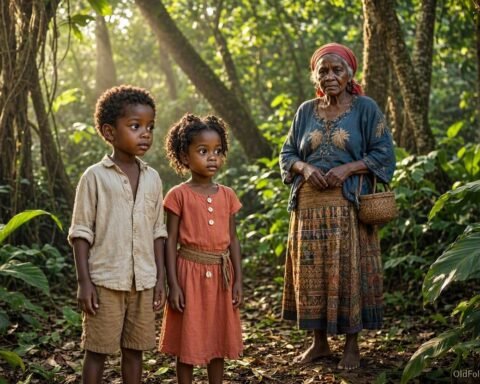
Deep in the bush, a hunter lived with his wife and their six children. The man was unusual and mysterious, and he was known by the name Kalyaneka, meaning “I eat alone.” Although his wife wondered about his strange name and where he had come from, she accepted him as her husband, and together they raised their children.
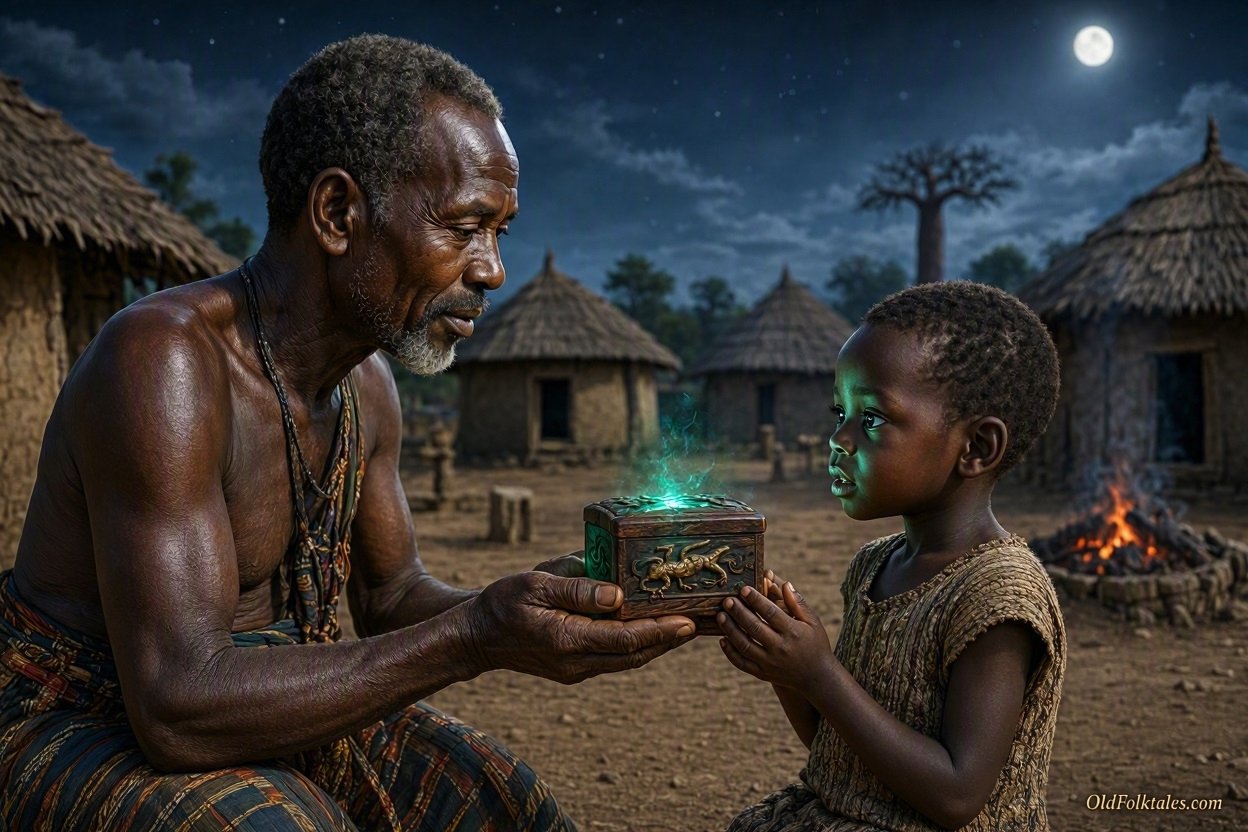
As the children grew older, their father began thinking about the knowledge he possessed and what would happen when he was no longer around. He believed that his children could benefit from the supernatural power he had acquired. To him, the power could bring respect and make a person feared by others. He therefore decided to offer it to his children.
He first called his eldest child and explained what he wanted to give him. The boy listened but refused. He did not want the power and explained that he was a Christian.
The father was disappointed, but he did not give up. He approached his other children one after another. Each time, he made the same offer. He told them that the power would make people respect them and help them overcome difficulties.
Looking for more? Explore the magic of East African folktales here
Yet the children continued to refuse.
Some told him that they were Christians. Others simply did not want the mysterious power. They could not see why they should accept something they did not understand.
The father became frustrated. He could not understand why his children were turning away from something he considered valuable. Still, he respected their decisions and eventually approached his youngest child.
The youngest listened carefully as his father explained the offer.
Unlike his brothers and sisters, he accepted.
The father was pleased. At last, one of his children had agreed to receive the knowledge he had been offering. He passed the mysterious power to the boy and taught him how to use it.
The boy was excited. He believed that he had received something that would make him powerful and respected. He did not yet understand that power without wisdom could become dangerous.
Not long afterward, the father and his youngest son set out on a journey to Mporokoso. They travelled through the bush, following paths that stretched between villages and fields.
The journey was long, and before long the boy became thirsty.
When they encountered people carrying water, the boy approached them and asked for some. However, they refused to give him any. They told him that he could fetch his own water.
The boy became angry.
He returned to his father and asked whether he should use the supernatural power he had been given against the people who had refused him water.
His father stopped him.
“Be patient,” he told him.
The boy did not understand. His father had promised him power, yet he could not even use it when someone refused to help him.
They continued their journey.
After some time, hunger also became a problem. The boy saw people digging cassava and asked for some food. Again, his request was refused because he had no money to pay for it.
He returned to his father.
“They refused to give me food,” he complained. “Can I use the power?”
Again, his father told him to be patient.
The boy became increasingly frustrated. He had accepted the supernatural gift because he believed it would solve his problems. Yet his father kept preventing him from using it.
Eventually, they reached a village where two relatives were involved in a serious argument. Their disagreement had become so intense that neither person was willing to listen to the other.
The father looked at his son.
“This is your opportunity,” he told him.
The boy used the knowledge his father had given him.
The situation suddenly changed.
The boy began to understand that the power was not simply a tool for satisfying his immediate desires. It was something dangerous that could affect people in ways he did not fully understand.
His father then spoke a proverb that carried a deeper warning about the consequences of possessing knowledge beyond one’s understanding.
The boy had wanted power because he thought it would bring him respect. He had believed that it would make life easier and allow him to overcome anyone who stood in his way.
But power did not automatically give him wisdom.
He had accepted his father’s offer without asking enough questions about its consequences. His brothers and sisters had refused because they were unwilling to accept something they did not understand. The youngest had been more eager to experience power than to consider its dangers.
That difference eventually became important.
The journey that began with excitement became a lesson about the cost of accepting dangerous knowledge. The boy discovered that supernatural power could not be treated like an ordinary gift. It carried responsibilities and consequences that he had not considered.
The story ends with a powerful warning. The youngest child ultimately paid a deadly price for accepting the supernatural knowledge. What he had believed would make him powerful became the very thing that brought about his destruction.
The tale therefore reminds listeners that not every gift should be accepted simply because it appears powerful. Some gifts carry responsibilities that are greater than the person receiving them can understand.
The father had offered his children power.
Most of them said no.
The youngest said yes.
And his choice changed everything.
Don’t miss out: Read more Southern African folktales
Moral Lesson
Power without wisdom can become dangerous. We should not accept gifts or opportunities simply because they promise influence, respect or control. It is important to understand the consequences of our choices before accepting them.
Knowledge Check
1. How many children did the hunter and his wife have?
Answer: They had six children.
2. What did the father offer his children?
Answer: He offered them supernatural knowledge and power.
3. Why did most of the children refuse the offer?
Answer: They did not want the power, and some said they were Christians.
4. Who accepted the father’s offer?
Answer: The youngest child accepted it.
5. What did the boy want to do when people refused to give him water and food?
Answer: He wanted to use his supernatural power against them, but his father told him to be patient.
6. What happened to the youngest child in the end?
Answer: The dangerous power he accepted ultimately led to his destruction.
Source
Adapted from “Bwile Storytelling 6,” told by Samson Kapongwe and documented by Robert Cancel in Storytelling in Northern Zambia: Theory, Method, Practice and Other Necessary Fictions (Open Book Publishers, 2013), pp. 233–238.