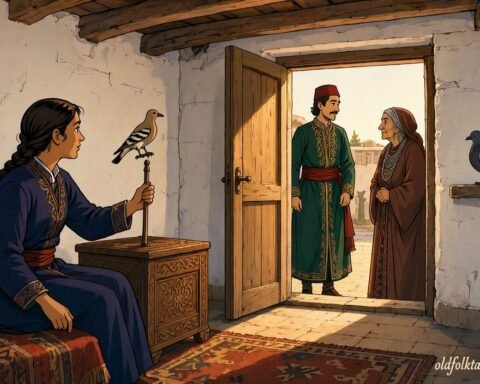
A shepherd worked for a wealthy man who owned a large flock of sheep. Every day, he led the animals away from the house and into the countryside where they could graze. His work was not difficult, but it required patience. He had to keep the flock together, watch for danger and make sure the animals returned safely at the end of the day.
The shepherd had one particular habit that made his days in the countryside more enjoyable. He carried a flute with him wherever he went.
Whenever the sheep settled down to graze, the shepherd would sit nearby, take out his flute and begin to play. He enjoyed the sound of the instrument and often spent long periods entertaining himself with different tunes.
But the music had an unusual effect.
Whenever the shepherd played, the sheep stopped paying attention to their food. They raised their heads and listened to the sound coming from the flute. Instead of spending the day eating grass, they spent much of their time standing around the shepherd.
Want more? Read more West African folktales now
The shepherd’s master eventually noticed that his sheep were not growing as they should.
He wondered what could be happening. The flock was taken to good grazing land every day, yet the animals seemed strangely thin.
One day, the master decided to follow the shepherd.
He went into the countryside without allowing the shepherd to notice him. He hid himself among the bushes and waited.
The shepherd arrived with the flock as usual. Once the sheep had settled down, he sat comfortably and took out his flute.
He began to play.
The master watched carefully.
Then something happened that he could hardly believe.
The music affected him too.
As soon as the shepherd played, the master began to dance.
He could not remain still. His feet moved against his will, and his body followed the rhythm of the flute. He danced among the bushes while the shepherd continued playing.
The bushes scratched his clothes and his skin. By the time the shepherd stopped playing, the master was covered with scratches.
He hurried home.
When his wives saw him, they were shocked.
“What happened to you?” they asked.
The master told them what had happened.
“I followed the shepherd today. He played his flute, and the moment he began to play, I started dancing. I could not stop myself.”
His wives looked at him.
They did not believe him.
“That cannot be true,” they said. “Nobody can be forced to dance simply because someone plays a flute.”
The master insisted that he was telling the truth.
His wives still refused to believe him.
Finally, he decided to prove it.
“If you do not believe me,” he said, “tie me to this post and let the shepherd play his flute. You will see what happens.”
The women agreed.
They tied their husband firmly to a post and waited for the shepherd to return.
When the shepherd arrived, the master gave him an instruction.
“Play your flute.”
The shepherd took out his instrument and began to play.
The moment the music started, the master began to move.
Even though he was tied to the post, his body danced to the sound of the flute. He struggled against the rope, twisting and moving as though the music had taken control of him.
But something went terribly wrong.
As he danced, his body struck against the post. His head hit a nail that had been fixed there.
The injury killed him.
The shepherd stood helplessly with his flute while the man’s family gathered around his body.
The master’s son was devastated.
He turned toward the shepherd.
“You are responsible for my father’s death,” he said.
The shepherd shook his head.
“I did not intend to harm him. I only played my flute because he told me to.”
But the son would not accept the explanation.
“You played the flute, and my father died. You must answer for what happened.”
The shepherd knew there was no point arguing with him.
“If you believe I am guilty, let us go before the cadi. Let him decide.”
The two men set off together.
As they travelled, they came across a farmer working with his oxen.
The farmer noticed that the two men appeared troubled and asked what had happened.
The master’s son explained that his father had died after the shepherd played his flute.
The shepherd then gave his own explanation.
“I did not kill him. I played my flute, and he danced.”
The farmer laughed.
“You expect me to believe that?”
The shepherd looked at him.
“You do not believe me?”
“No,” the farmer replied. “A person dances because he chooses to dance. A flute cannot force someone to move.”
The shepherd said nothing.
The farmer continued.
“If your flute truly has such power, play it and make me dance.”
The shepherd accepted the challenge.
He lifted the flute and began to play.
The farmer started dancing.
At first, he seemed surprised. He tried to resist the movement, but the music continued and his body followed the rhythm.
The farmer danced while his oxen stood nearby.
He was so distracted that he could no longer keep his attention on them.
The animals wandered away.
Before the farmer could stop them, they went toward a ravine and fell into it.
The farmer stopped dancing and rushed toward them, but it was too late.
His oxen had been lost.
The farmer turned furiously toward the shepherd.
“You must pay for my oxen!”
The shepherd answered calmly.
“Come with us before the cadi. He can decide who should pay.”
The farmer had no choice but to agree.
The three men continued their journey.
Now the case before the cadi had become even stranger. The son wanted justice for his father’s death. The farmer wanted compensation for his lost oxen. The shepherd continued to insist that he had not deliberately harmed anyone.
Eventually, they arrived before the cadi.
The cadi listened to the accusations.
The master’s son spoke first.
“This shepherd caused my father’s death.”
The farmer then explained what had happened to his oxen.
“He played his flute, and I began dancing. While I was dancing, my oxen wandered into a ravine and were lost.”
The cadi turned toward the shepherd.
“What do you have to say?”
The shepherd gave the same answer he had given before.
“I only played my flute. I did not order anyone to dance. They challenged me to play, and the music made them move.”
The cadi considered the strange case.
Perhaps he did not believe that the flute could truly have such power.
Perhaps he simply wanted to see the matter with his own eyes.
Whatever his reason, the cadi gave the shepherd an instruction.
“Play your flute.”
The shepherd obeyed.
He took out his flute and began to play.
The music filled the room.
The cadi began to dance.
The people around him began dancing too.
Those who had been sitting quietly suddenly found themselves moving to the sound of the instrument. The cadi could not control his own body any more than the master or the farmer had been able to.
The dancing became wild.
The people moved about the room until some of them fell from the upper floor of the cadi’s house.
They were killed.
The strange case had ended in an even greater tragedy.
The shepherd survived.
The flute that had first been nothing more than a source of entertainment had now brought him through a series of deaths and disputes. His master had died. The farmer had lost his oxen. The cadi and others had died after the music filled the house.
The shepherd had repeatedly tried to explain what happened, but each person who heard his story had refused to believe him.
His master had doubted him.
His wives had doubted the master.
The farmer had mocked the shepherd.
Even the cadi had chosen to test the strange claim instead of simply accepting that something he considered impossible might actually happen.
Each attempt to prove the shepherd wrong had brought another consequence.
The flute player had not needed to threaten anyone.
He had not needed to fight anyone.
He simply played.
The people who challenged him discovered the truth for themselves.
The shepherd eventually remained in the cadi’s house and inherited the possessions of those who had died.
His strange experience had begun with a simple tune played while watching sheep in the countryside. No one could have imagined that the same tune would lead to such a terrible series of events.
The story places the shepherd’s flute in the section devoted to falsehood and deception, yet the shepherd himself does not need to invent elaborate lies. The deception comes from appearances and disbelief. The people around him assume that they already know what is possible. Because they cannot imagine that music could make a person dance against his will, they reject the warning before testing it.
The master’s experience should have been enough.
He had felt the power of the flute himself, yet when he returned home, those around him dismissed what he had said.
The farmer also had an opportunity to listen.
Instead, he challenged the shepherd.
The cadi had the final opportunity to avoid another tragedy. Rather than accepting the strange account or considering it carefully, he chose to test the flute himself.
By then, however, the consequences were beyond anyone’s control.
The shepherd’s dangerous trick was not simply the ability to play music. It was the strange power of a tune that nobody believed could affect them until they heard it.
The story leaves the shepherd with the possessions of those who died, but the events that brought him there remain a warning about disbelief, pride and the consequences of challenging something without understanding it.
A strange claim may sound impossible, but dismissing it without caution can sometimes create greater danger than the claim itself.
Fascinated by this tale? Discover more North African folktales
Moral Lesson
Do not dismiss a warning simply because it sounds impossible. The people in the story repeatedly refuse to believe what they are told, and each attempt to prove the shepherd wrong brings more serious consequences.
Knowledge Check
1. Why did the shepherd carry a flute while tending the sheep?
He enjoyed playing music while watching his master’s flock.
2. What happened when the shepherd’s master heard the flute?
He began dancing and could not stop while the shepherd continued playing.
3. How did the shepherd’s master die?
He was tied to a post while the shepherd played, and he struck his head against a nail while dancing.
4. What happened to the farmer’s oxen?
The farmer began dancing to the flute, leaving his oxen unattended, and they fell into a ravine.
5. Why did the cadi ask the shepherd to play the flute?
He wanted to test whether the flute really had the strange power the shepherd described.
6. What lesson does the story teach about disbelief and deception?
It teaches that people should listen carefully to warnings instead of dismissing them simply because they seem impossible.
Source
Adapted from Joseph Rivière, Recueil de contes populaires de la Kabylie du Djurdjura, 1882, “Le joueur de flûte,” beginning on page 91, in the section Le Mensonge, meaning “Falsehood” or “Deception.”