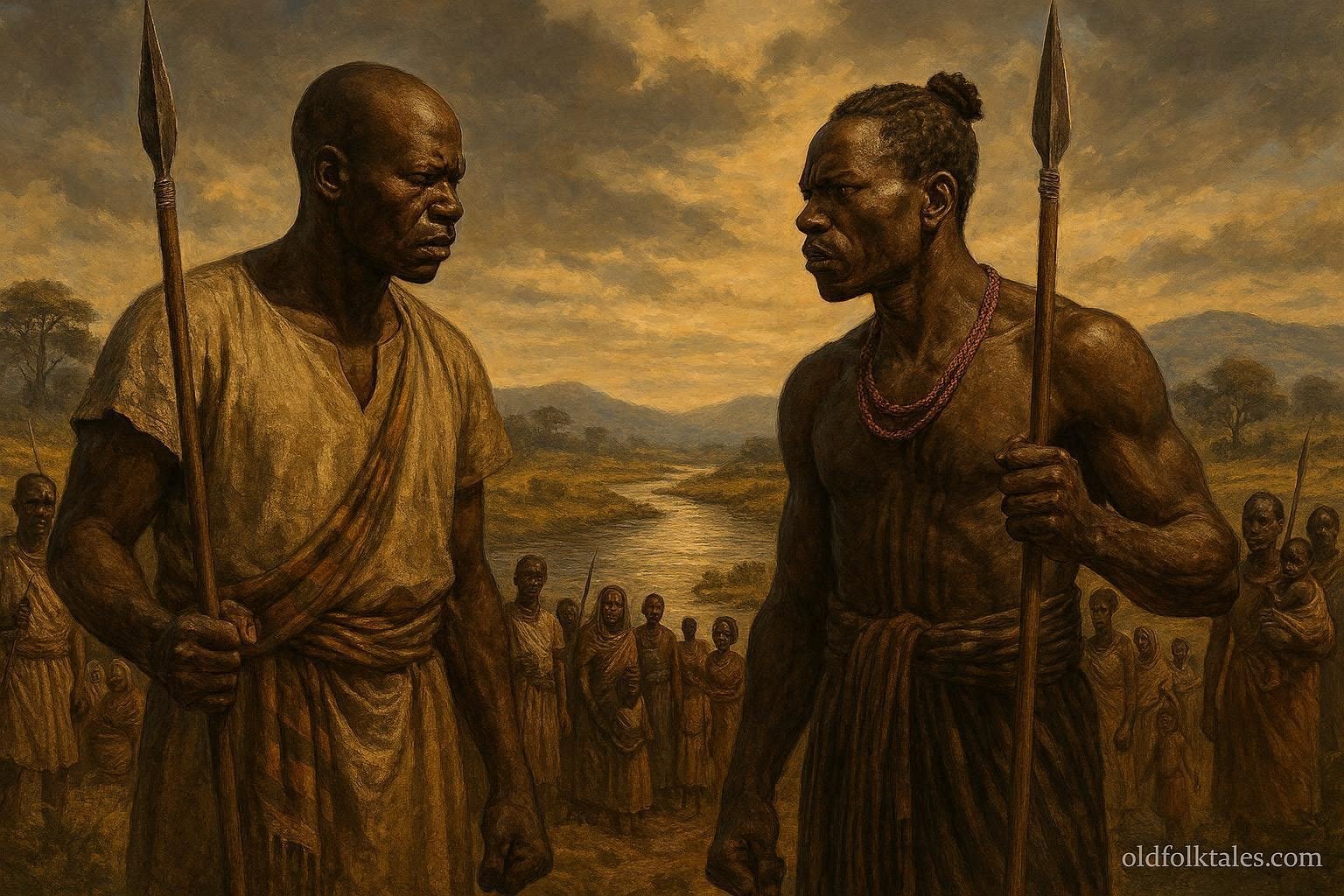
Among the Acholi and Alur peoples of northern Uganda and neighboring regions, few stories are as widely known as the tradition of Labongo and Gipir. Passed down through generations of storytellers, elders, and oral historians, the narrative explains the origins of a historic separation that influenced migration patterns, cultural identities, and the development of distinct communities. Although different versions exist, the story remains one of the most significant founding traditions in the Nilotic oral heritage of East Africa.
According to tradition, Labongo and Gipir were brothers who lived during a time when their people shared a common homeland. They belonged to a prosperous community where families worked together, cared for livestock, cultivated crops, and maintained strong social bonds. The brothers themselves were respected figures whose leadership and abilities earned admiration from those around them.
Labongo was often described as thoughtful, patient, and deliberate in his decisions. He preferred careful discussion before taking action and was known for seeking peaceful solutions to problems. Gipir, on the other hand, was remembered as energetic, determined, and independent. He acted quickly when faced with challenges and believed strongly in defending what he considered right.
Despite their differences, the brothers maintained a close relationship for many years.
If you enjoyed this story, explore our full West African folktales collection
Their community prospered under shared leadership and cooperation. Families worked together, ceremonies strengthened social ties, and people enjoyed relative stability. Elders later described this period as a time of unity when the future appeared full of promise.
One day, however, an event occurred that would change everything.
Different versions of the tradition describe the incident in slightly different ways. In many accounts, the conflict began with a valuable possession, often described as a spear or another important object associated with authority and status. During an interaction between the brothers, the item became lost in a river.
The loss immediately created tension.
Labongo believed the object should be recovered through patience and cooperation. Gipir believed stronger action was necessary. As discussions continued, frustration grew on both sides. What began as a disagreement over a single event gradually expanded into a deeper conflict involving pride, trust, and responsibility.
Members of the community attempted to mediate.
Elders encouraged reconciliation and urged the brothers to remember the importance of family unity. Friends and relatives hoped the disagreement would fade with time. Yet neither brother was willing to abandon his position completely.
As the dispute intensified, supporters began aligning themselves with one side or the other.
Families found themselves drawn into arguments that had originally involved only the brothers. Conversations became increasingly difficult. Mutual trust weakened. The unity that had once characterized the community started to disappear.
Eventually, the situation reached a turning point.
Recognizing that continued conflict threatened the stability of the entire society, the brothers made a difficult decision. Rather than remaining together in constant disagreement, they would separate.
The decision carried enormous consequences.
People loyal to Labongo chose to accompany him. Others followed Gipir. What had once been a single community divided into separate groups, each preparing to establish its own future.
The migrations that followed became central to the oral traditions of both peoples.
Labongo led his followers toward new territories where they established settlements, developed institutions, and preserved traditions that would eventually contribute to the identity of the Acholi people.
Gipir and his followers traveled in different directions, founding communities that later became associated with the Alur people and related groups.
The journeys were not easy.
Families crossed rivers, traveled through unfamiliar landscapes, and faced challenges associated with establishing new homes. Food had to be secured, settlements organized, and relationships built with neighboring communities. Success required determination, cooperation, and resilience.
Throughout these migrations, memories of the separation remained vivid.
Parents shared the story with their children. Elders preserved details through oral tradition. Generations learned that their histories were connected to a shared origin despite the distance that eventually separated them.
As the new communities grew, they developed distinct customs and leadership structures. Local experiences influenced cultural practices, and each group adapted to its environment. Yet traces of their common ancestry remained visible in language, traditions, and historical memory.
Over time, the story of Labongo and Gipir became more than an explanation of migration.
It evolved into a lesson about the consequences of unresolved conflict.
Storytellers emphasized that disagreements are a natural part of human relationships. Families, leaders, and communities will inevitably encounter differences of opinion. The true challenge lies in managing those disagreements wisely.
Many elders pointed out that the original dispute may have seemed small compared to its eventual consequences.
A disagreement that might have been resolved through compromise instead contributed to the separation of entire peoples. This lesson encouraged listeners to value dialogue, patience, and reconciliation.
At the same time, the tradition also celebrated resilience.
The descendants of both brothers overcame significant challenges during their migrations. They established successful communities, preserved cultural knowledge, and created identities that endured across generations.
For this reason, the narrative contains both sadness and hope.
It acknowledges the pain caused by division while honoring the strength demonstrated by those who built new lives after the separation.
Historians and anthropologists have long studied the story because it provides insight into how communities understand their origins. While oral traditions may contain symbolic elements, they often preserve memories of historical migrations, social transformations, and relationships between neighboring peoples.
Among the Acholi and Alur, the story continues to serve as an important cultural reference point.
It reminds listeners that identity is shaped not only by present circumstances but also by the journeys and experiences of earlier generations. It highlights the importance of remembering shared origins even when communities develop along different paths.
Today, the tradition remains one of the most widely recognized narratives in northern Uganda. It is told during cultural gatherings, educational programs, and discussions about history and heritage. Each retelling reinforces the lessons preserved within the story.
The legacy of Labongo and Gipir endures because it speaks to universal human experiences. Families encounter disagreements. Communities face difficult choices. People migrate in search of better opportunities. Through all these challenges, individuals must decide whether conflict will divide them permanently or inspire greater understanding.
For generations, the story has encouraged reflection on these questions.
It reminds listeners that actions can have consequences far beyond what is immediately visible. It teaches the value of wisdom in resolving disputes. Most importantly, it preserves the memory of a shared heritage that continues to connect peoples across East Africa.
Looking for more? Explore the magic of East African folktales here
Moral Lesson
Small disagreements can have lasting consequences, making patience, dialogue, and reconciliation essential for preserving unity.
Knowledge Check
1. Who were Labongo and Gipir?
They were brothers remembered in Acholi and Alur oral traditions.
2. What caused the conflict between them?
A disagreement involving a valuable possession that was lost and how it should be recovered.
3. What happened when the dispute could not be resolved?
The brothers separated, and their followers migrated in different directions.
4. Which communities are associated with the descendants of the brothers?
The Acholi and Alur peoples.
5. Why is the story important today?
It explains shared origins and teaches lessons about conflict and migration.
6. What is the main lesson of the tradition?
Disagreements should be handled wisely to prevent unnecessary division.
Source
Adapted from Acholi and Alur oral traditions, Nilotic migration narratives, and materials preserved in Nilotic oral history archives and Great Lakes oral heritage collections.