In the eastern region of the Democratic Republic of Congo, where forests stretched across the hills of Maniema and rivers cut through deep valleys, the Bembe people preserved many traditions connected to ancestry, morality, and communal justice. Elders believed that the living were never completely separated from those who came before them. The ancestors remained present through memory, ritual, and spiritual signs that guided the behavior of the community.
Among the many stories passed down through generations, one of the most respected was the tale of the Ancestral Bell of Maniema, a sacred object believed to awaken whenever injustice threatened the moral balance of the village.
Long ago, before the villages of Maniema became large trading centers, there existed a small settlement surrounded by dense forest and fertile land. The people of the settlement depended on farming, fishing, and cooperation for survival. Every family contributed to the wellbeing of the community, and disputes were usually settled peacefully through the guidance of elders.
At the center of the village stood an ancient tree beside a ceremonial ground where important gatherings were held. Beneath this ground, according to oral tradition, rested a sacred bronze bell buried generations earlier by the ancestors themselves. Few people had ever seen it directly, but everyone knew the story.
Want to dive deeper? Read more North African folktales today
The elders taught that the bell was created during a time of great disorder when greed and betrayal nearly destroyed the unity of the people. It was said that the ancestors buried the bell beneath the ceremonial ground after performing sacred rituals, declaring that it would remain silent as long as truth and justice guided the village. But if corruption, dishonesty, or cruelty ever spread too far, the bell would ring on its own to warn the people that moral balance had been broken.
For many generations, the bell remained silent.
Children grew up hearing stories about it around evening fires, but most believed it was only symbolic, a lesson created by elders to encourage good behavior. Life in the village continued peacefully, and the people focused more on farming seasons and community ceremonies than on ancient warnings buried beneath the earth.
However, as years passed, changes slowly began to affect the settlement.
Trade routes expanded through the region, bringing greater wealth into the village. New goods arrived from distant communities, including fine cloth, iron tools, and decorative ornaments. At first, this prosperity strengthened the settlement, but over time, competition and greed also began to grow.
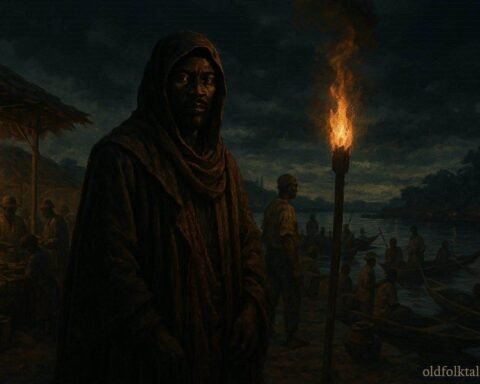
One of the village leaders during this period was a man named Mufara. He was respected for his intelligence and speaking ability, and many believed he would guide the community wisely. But as trade increased, Mufara became increasingly concerned with wealth and influence. He began secretly taking larger portions of goods collected for communal use and gave favorable decisions to families who offered him gifts.
At first, these actions remained hidden.
People noticed small changes but hesitated to speak openly against a respected leader. Families who complained found themselves ignored during community meetings. Hunters accused of wrongdoing without evidence were punished unfairly, while powerful individuals escaped accountability for similar actions.
The elders became uneasy as tension spread through the village. Arguments increased, trust weakened, and families who once cooperated began to suspect one another. Still, no one openly challenged Mufara because of his influence within the settlement.
Then, one night during the dry season, something happened that none of the villagers could explain.
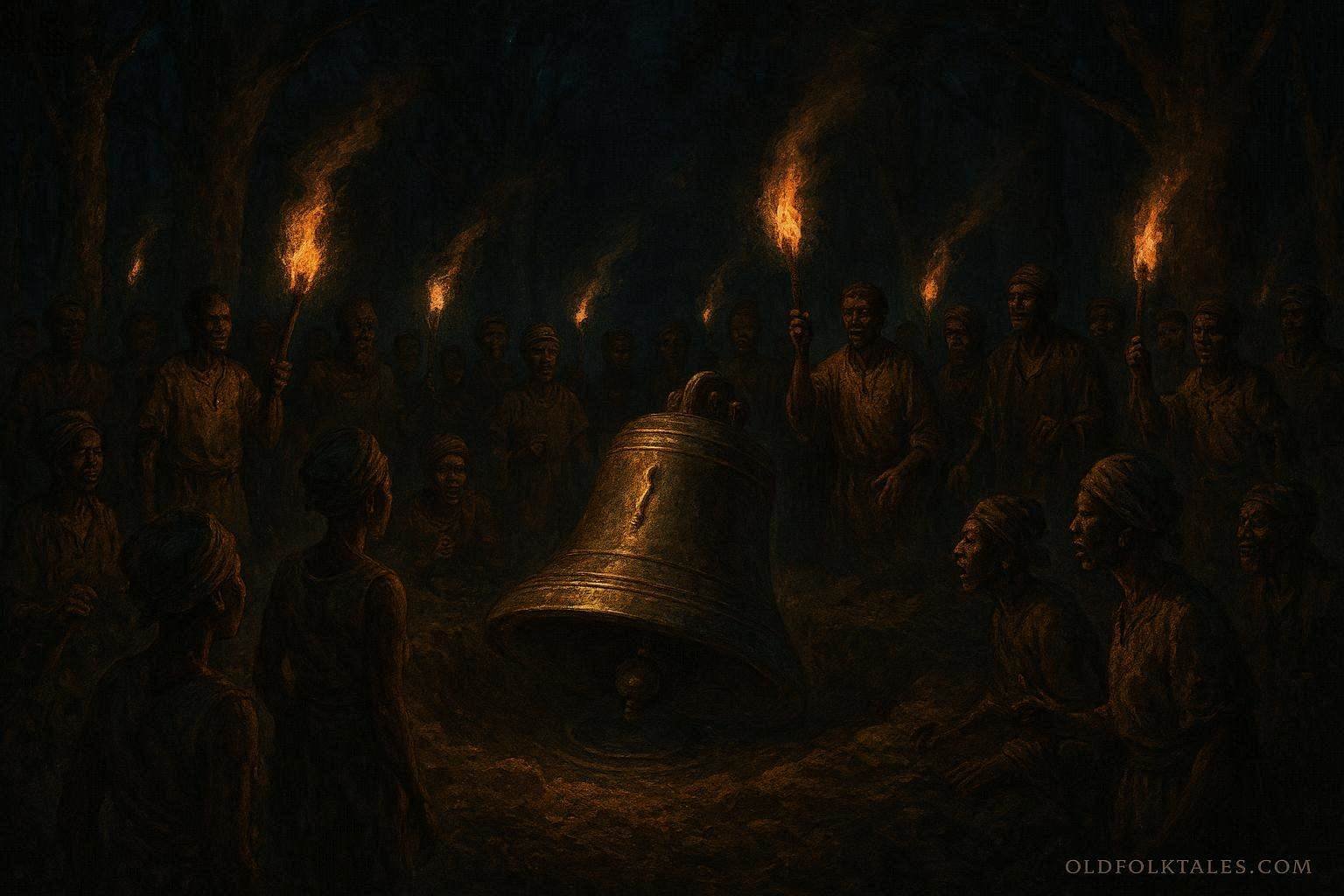
As the village slept, a deep metallic sound echoed through the darkness.
The sound came slowly at first.
One heavy ring.
Then another.
The noise carried across the entire settlement, vibrating through the night air like distant thunder.
Villagers woke in confusion and fear. Some rushed outside carrying fire torches, believing strangers had entered the village. Others thought the sound came from spirits moving through the forest.
But when they gathered near the ceremonial ground, the ringing stopped.
The elders stood silently beneath the ancient tree, staring at the earth where the sacred bell was believed to rest buried beneath generations of soil.
No one spoke for several moments.
Then the oldest elder whispered that the ancestors were warning the community.
The following morning, the entire village gathered to discuss the mysterious event. Some believed the sound had been caused by natural forces, but the elders disagreed. They reminded the people of the ancient tradition surrounding the buried bell and warned that injustice had begun to poison the moral balance of the settlement.
Mufara dismissed the warning publicly.
He claimed fear and superstition were controlling the minds of the villagers. His supporters agreed, insisting that the sound meant nothing.
But over the following weeks, the bell rang again.
Each time, it happened after acts of injustice or dishonesty within the community.
It rang after a widow’s farmland was unfairly taken by a wealthy family.
It rang after a young hunter was falsely accused of theft.
It rang after communal food supplies disappeared under suspicious circumstances.
With every ringing, fear spread deeper through the settlement.
People began whispering that the ancestors themselves were demanding truth.
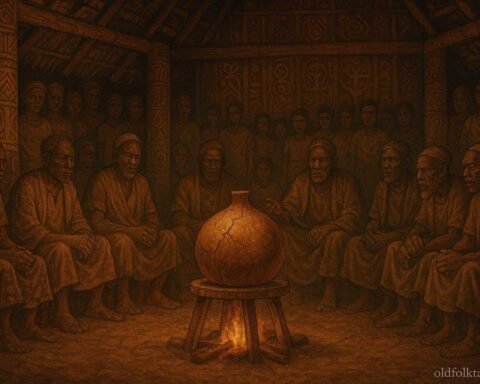
The elders finally decided that the matter could no longer be ignored. A gathering was called at the ceremonial ground, where every family was required to attend. The atmosphere was tense as villagers assembled beneath the ancient tree where the bell remained hidden underground.
The oldest elder stepped forward and addressed the people.
He explained that the bell was not punishing the village but warning it. The ancestors, he said, had created the bell as a reminder that justice was necessary for the survival of the community. Without fairness and accountability, even prosperous settlements would eventually collapse from division and distrust.
The elder then called for anyone responsible for corruption or dishonesty to confess openly before the entire village.
At first, no one moved.
Silence filled the gathering space.
Then, from the edge of the crowd, a young trader stepped forward and admitted he had secretly hidden communal supplies during a recent shortage. Another villager confessed to falsely accusing a neighbor during a land dispute.
Finally, all eyes turned toward Mufara.
The village leader stood motionless for a long time. His expression shifted between pride and fear as the crowd waited.
Then, according to oral tradition, the bell rang once more beneath the earth.
The sound echoed so deeply that even the ground beneath their feet seemed to tremble.
Overcome by fear and shame, Mufara finally confessed to taking resources meant for the community and manipulating judgments for personal gain.
The confession shocked many villagers, but the elders remained calm. They explained that the purpose of truth was not destruction but restoration. Mufara was removed from leadership, required to return what he had taken, and ordered to participate in acts of public reconciliation to rebuild trust within the village.
After these events, the ringing of the bell stopped.
Peace gradually returned to the settlement. Families began cooperating again, disputes were handled more fairly, and leaders became more cautious in their responsibilities. The story of the bell spread to neighboring communities, becoming a powerful reminder that justice was not only a social responsibility but also a sacred obligation watched over by the ancestors.
Generations later, the Ancestral Bell of Maniema continued to be remembered throughout the region. Elders told the story to young people as a warning against corruption and dishonesty. Even though few believed the bell physically remained beneath the ceremonial ground, its symbolic meaning endured.
For the Bembe people, the story represented a deeper truth that communities cannot survive without justice, accountability, and moral balance.
And in the quiet villages of Maniema, some elders still say that when injustice grows too powerful, the ancestors always find a way to make themselves heard.
Keep reading: Discover more Central African folktales
Moral Lesson
A community cannot survive without justice, honesty, and accountability.
Knowledge Check
- Where is the story set?
It is set in Maniema in the Democratic Republic of Congo. - What was buried beneath the ceremonial ground?
A sacred ancestral bell believed to warn against injustice. - When did the bell begin ringing?
It rang whenever acts of dishonesty or injustice occurred in the village. - Who was Mufara?
He was a village leader who became corrupted by wealth and power. - What happened after the villagers confessed their wrongdoing?
Peace and fairness gradually returned to the community. - What is the lesson of the story?
Justice and honesty are necessary for peace and unity.
Source
Central African folklore. Adapted from eastern Congo moral and justice traditions documented in Maniema oral historical studies.