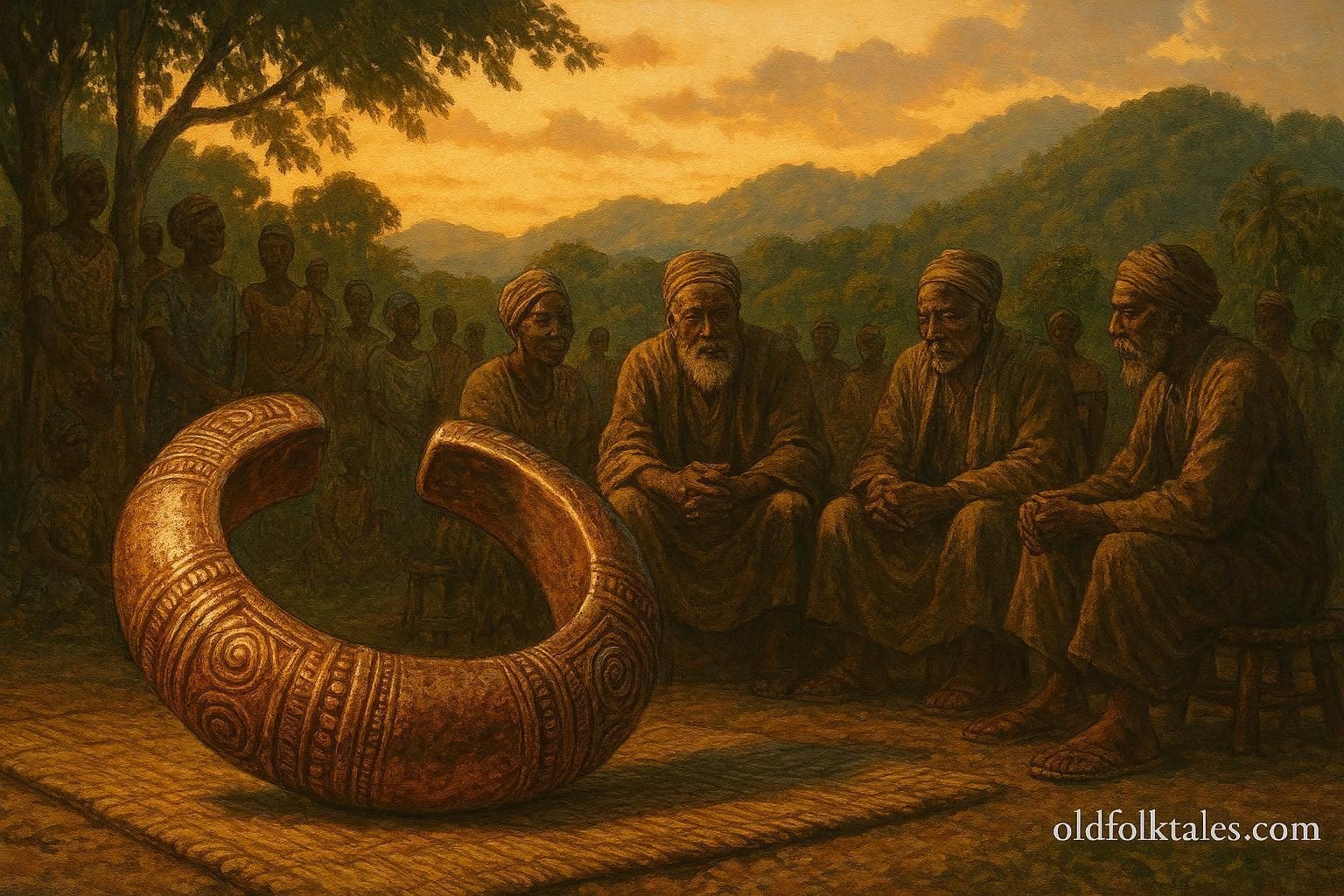
Nestled among the green hills of Bioko Island was the community of Riaba, a place known for its fertile land, strong family traditions, and respect for ancestral customs. The people of Riaba believed that every generation inherited not only land and possessions but also responsibilities. Elders often reminded the young that the choices of one generation could shape the lives of those who followed.
Among the most treasured objects in the community was an old copper bracelet. It was neither the largest nor the most valuable possession in material terms, yet it held immense significance. According to oral tradition, the bracelet had belonged to one of the earliest ancestors who helped establish peace among several neighboring families during a period of conflict many generations earlier.
The bracelet was simple in appearance. Its surface showed the marks of age, and its copper shine had softened over time. Yet whenever it was brought out during important gatherings, people treated it with great respect. Elders said it symbolized fairness, unity, and the duty of every family to seek peace before allowing disagreements to grow into divisions.
For generations, the bracelet remained in the care of a respected lineage whose responsibility was to preserve it and present it during major community discussions. Whenever disputes arose, the bracelet was often placed at the center of meetings as a reminder of the values shared by everyone present.
Don’t stop yet! See our complete East African folktales collection
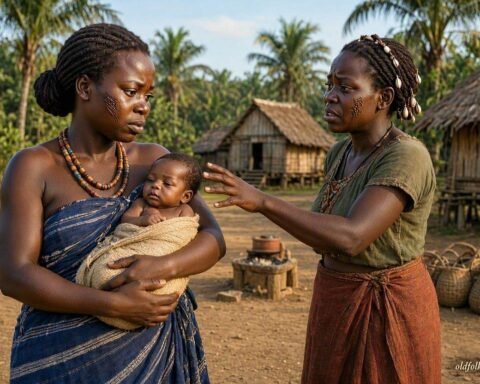
Many years after the bracelet first became a symbol of unity, a disagreement emerged between two large families in Riaba. What began as a minor misunderstanding over farmland boundaries gradually became more serious. Each family believed it had inherited rightful ownership of a particular piece of land. At first, the matter seemed easy to resolve, but pride and stubbornness soon complicated the situation.
As weeks turned into months, tensions increased. Relatives who had once celebrated together began avoiding one another. Community gatherings became uncomfortable. Rumors spread from household to household, and even young people who did not fully understand the dispute found themselves taking sides.
Concerned elders decided to organize a meeting to restore harmony. As was customary, they requested that the copper bracelet be brought from its place of safekeeping.
However, when the family responsible for the bracelet searched for it, they made a troubling discovery.
The bracelet was gone.
At first, they believed it had simply been misplaced. Every corner of the family compound was searched. Storage chests were opened, shelves examined, and old containers inspected. Yet the bracelet could not be found.
News of its disappearance spread quickly through Riaba.
People were shocked. The bracelet had never been lost before. Some suspected theft. Others feared that its disappearance was connected to the growing conflict between the families. A few elders quietly suggested that perhaps the ancestors were sending a message.
The meeting proceeded without the bracelet, but the absence of the relic seemed to affect everyone present. Discussions became difficult. Participants focused more on defending their positions than finding solutions. No agreement was reached, and the dispute continued.
Months later, another disagreement emerged within the community, unrelated to the farmland conflict. This time, the issue involved the sharing of water from a stream during a particularly dry season. Once again, arguments intensified. Once again, the elders attempted mediation.
On the morning of the gathering, something unexpected happened.
A young boy collecting firewood near an old tree discovered a familiar object resting among fallen leaves. Curious, he picked it up and carried it to the elders.
It was the copper bracelet.
The entire community was astonished.
No one could explain how the bracelet had arrived there. The tree stood far from the place where the relic had been stored. Yet despite months of searching, the bracelet appeared undamaged and unchanged.
The elders accepted its return with gratitude and placed it at the center of the meeting.
That day, discussions unfolded differently. Seeing the bracelet reminded people of the stories associated with it. Elders recounted the history of the ancestor who had ended conflict through patience and fairness. Participants listened more carefully. Accusations gave way to dialogue, and by evening, an agreement had been reached.
Peace returned, and the bracelet was once again placed in safekeeping.
Years passed, and life in Riaba continued peacefully. The story of the bracelet’s disappearance became part of local folklore, often told during community gatherings. Most people regarded it as a mysterious but meaningful event.
Then another period of conflict arrived.
A disagreement involving inheritance divided several branches of an extended family. The issue threatened relationships that had remained strong for generations. As emotions grew stronger, people began speaking less to one another. Old grievances resurfaced, and unity weakened.
During this time, the copper bracelet disappeared again.
This second disappearance caused even greater concern than the first. The timing seemed too significant to ignore. Elders urged patience and encouraged people to focus on resolving their differences.
For many months, the bracelet remained missing.
Then, shortly before an important reconciliation gathering, it was discovered once more. This time, it appeared inside a meeting house that had been locked for weeks. No one could explain how it had arrived there.
The bracelet was placed before the community, and once again its presence changed the atmosphere of the discussions.
People reflected on the lessons of previous generations. They remembered that conflicts eventually end, but damaged relationships can last much longer. Gradually, compromises were made. Apologies were offered. Trust began to return.
After this second event, many people became convinced that the bracelet possessed a special connection to the community’s well-being. Whether through ancestral guidance, coincidence, or symbolic power, it seemed to appear whenever harmony needed to be restored.
Over time, the bracelet became more than a family heirloom.
It became a living reminder of collective responsibility.
Whenever disputes arose, elders encouraged people to think about the bracelet’s lesson before taking sides. They emphasized that justice required careful listening, reconciliation required courage, and heritage required stewardship.
As generations passed, stories about the bracelet continued to grow. Some claimed it could never remain hidden when conflict threatened the community. Others believed it appeared only when people were ready to seek peace. Regardless of interpretation, everyone agreed that its meaning was more important than its mystery.
The people of Riaba came to understand that the true power of the bracelet was not found in the copper itself. Its power came from the values it represented. It reminded them that communities survive not because disagreements never occur, but because people are willing to resolve them with fairness and respect.
Even today, the legend of the Copper Bracelet of Riaba remains a cherished part of Bubi oral tradition. It continues to teach that justice must be balanced with compassion, that reconciliation strengthens communities, and that heritage carries responsibilities that every generation must honor.
If you liked this story, see our Central African folktales collection
Moral Lesson
Lasting peace is achieved when people choose reconciliation, fairness, and respect over division and resentment.
Knowledge Check
1. What was the Copper Bracelet of Riaba?
It was a treasured family heirloom that symbolized unity, justice, and peace.
2. Why was the bracelet important to the community?
It reminded people of ancestral values and was used during important discussions.
3. What happened when conflicts arose?
The bracelet mysteriously disappeared and later reappeared.
4. How did the bracelet influence community meetings?
Its presence encouraged reflection, dialogue, and reconciliation.
5. What did the people believe about the bracelet?
Many believed it appeared whenever harmony needed to be restored.
6. What is the main lesson of the story?
Justice and reconciliation are essential for maintaining strong communities.
Source
Adapted from Bubi family relic traditions and oral heritage narratives preserved in Equatorial Guinea oral heritage archives.