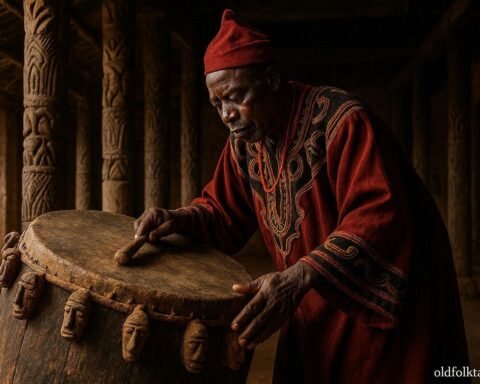
In the fertile lands of western Cameroon, where green hills surrounded prosperous settlements and skilled craftsmen filled the royal city with remarkable works of art, the Bamum Kingdom flourished through strong leadership, respect for tradition, and careful governance. Its rulers protected trade, encouraged learning, welcomed visitors from distant lands, and relied upon the guidance of trusted advisers who understood the customs preserved through generations.
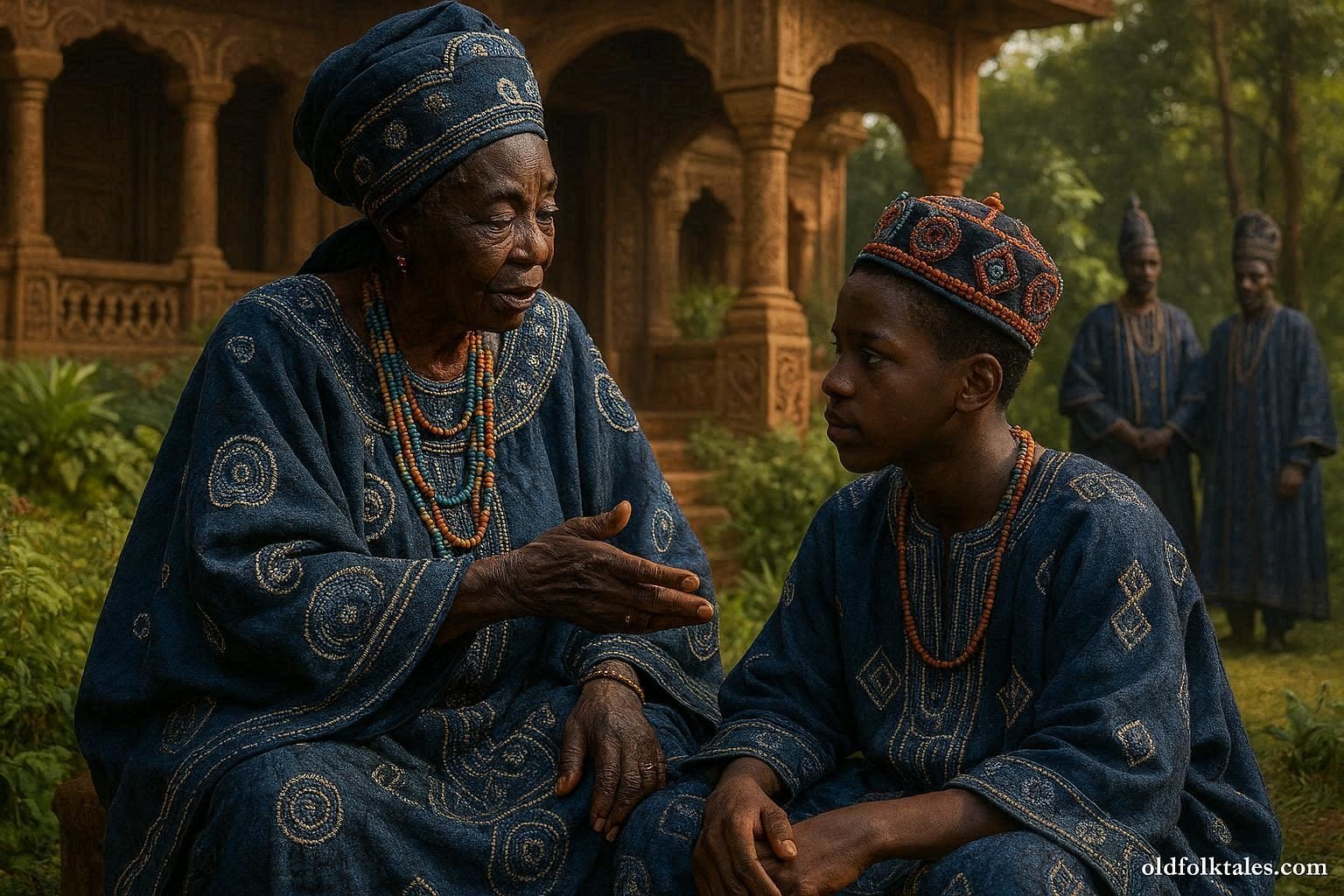
Among the most respected voices in the kingdom was the Queen Mother. Although the king carried the responsibility of ruling, the Queen Mother occupied a position of great honor within the royal court. She preserved the history of the royal family, advised during times of uncertainty, welcomed important visitors, and reminded each generation that the strength of a kingdom rested upon wisdom rather than pride.
The elders often said that while a king might speak for the kingdom, the Queen Mother helped ensure that every important decision reflected the values of the ancestors.
One such Queen Mother was remembered for guiding the kingdom during a difficult period when an aging ruler prepared to pass responsibility to his young son.
Want more? Read more West African folktales now
The prince had grown into a capable young man.
He had learned horseback riding, hunting, military discipline, and the customs of the royal court.
He studied the history of earlier rulers and listened carefully as royal historians recounted the achievements of the kingdom’s ancestors.
Yet despite his education, the Queen Mother knew that knowledge alone could not prepare someone for leadership.
A ruler needed patience.
He needed compassion.
Most importantly, he needed the humility to accept advice from others.
One quiet morning, she invited the prince to walk with her through the palace gardens before the court assembled.
The air was cool, and birds called from the trees surrounding the palace walls.
The Queen Mother paused beside a broad tree whose branches stretched in every direction.
“What do you notice?” she asked.
“The tree is strong,” the prince replied.
“It is,” she said.
“But why?”
The prince studied it carefully.
“Its roots are deep.”
The Queen Mother smiled.
“A ruler is much like this tree. The throne is seen by everyone, just as the trunk is easily noticed. But what keeps the kingdom standing is often hidden from sight. Wise advisers, respected elders, loyal families, and the traditions of our ancestors are the roots that give strength to every ruler.”
The prince remembered her words.
Over the following weeks, the Queen Mother continued her lessons.
Instead of gathering him only inside the royal court, she took him throughout the kingdom.
They visited farmers preparing their fields before the rainy season.
She encouraged him to ask about their work rather than simply observe it.
The farmers explained how each season demanded patience and cooperation.
One poor harvest could affect many villages.
A wise ruler, they said, understood the importance of preparing before difficulties arrived.
On another day, they visited skilled blacksmiths.
The craftsmen shaped iron with steady hands, heating and cooling the metal until strong farming tools emerged from glowing fires.
The Queen Mother asked the prince what he had learned.
“They are patient,” he answered.
“They do not rush their work.”
She nodded.
“A hurried decision can weaken a kingdom just as hurried craftsmanship weakens iron.”
Another journey led them to the great marketplace.
Merchants from neighboring regions exchanged cloth, salt, beads, carved objects, livestock, and other valuable goods.
Different languages could be heard throughout the market, yet business continued peacefully because traders honored agreements built upon mutual trust.
The Queen Mother explained that prosperous kingdoms depended not only upon wealth but also upon honesty and good relationships with neighboring peoples.
One afternoon, as they returned to the palace, messengers arrived with troubling news.
Two respected nobles disagreed over the leadership of several villages near the kingdom’s border.
Each claimed that earlier agreements supported his position.
Supporters gathered behind both men.
Some members of the court urged the king to decide immediately before tensions increased.
The aging ruler listened carefully but remained silent.
Instead, he invited the Queen Mother to speak.
She requested that both nobles appear before the royal council three days later.
Some advisers questioned the delay.
“The matter is urgent,” one insisted.
The Queen Mother replied calmly.
“A decision made without understanding creates greater problems than the disagreement itself.”
During the following days she quietly gathered information.
She invited village elders to share their memories.
Royal historians searched records preserved within the palace.
Messengers visited neighboring communities to learn how earlier agreements had been understood.
When the council finally assembled, every voice was heard respectfully.
Only after examining the evidence from many perspectives did the king announce a judgment accepted by both sides.
The prince watched carefully.
Later he asked the Queen Mother why she had delayed the decision.
She answered gently.
“Justice begins with listening.”
Those words became one of the greatest lessons of his education.
As the years passed, the king’s health declined.
The time approached for the prince to inherit the throne.
Preparations for the royal succession filled the palace with activity.
Artisans repaired ceremonial objects.
Musicians rehearsed traditional performances.
Royal attendants welcomed visitors traveling from distant communities to witness the important occasion.
Despite the excitement surrounding the ceremony, the Queen Mother remained calm.
On the evening before the prince’s installation, she invited him into a quiet chamber where several treasured royal objects had been carefully preserved through generations.
She pointed first toward an elaborately carved stool.
“This reminds the ruler that every generation temporarily holds authority.”
Next she indicated beautifully woven cloth displayed upon the walls.
“Many threads create one fabric.”
“So too does every family strengthen the kingdom.”
Finally she looked directly at the young prince.
“The greatest mistake any ruler can make is believing he governs alone.”
The prince bowed respectfully.
“I will remember.”
The following morning the royal court filled with dignitaries, elders, craftsmen, musicians, and representatives from communities throughout the kingdom.
Traditional ceremonies celebrated continuity between generations.
Blessings were offered for wisdom, peace, and prosperity.
When the new ruler accepted the responsibilities of kingship, many people noticed the Queen Mother watching quietly from her honored place within the court.
She smiled with confidence, knowing that the lessons shared over many years would now guide the kingdom’s future.
Her confidence was tested sooner than expected.
Several months after the succession, unusually heavy rains damaged roads connecting important trading settlements.
Merchants requested immediate repairs.
Farmers feared shortages if transportation remained interrupted.
Some advisers urged expensive construction projects that would burden the kingdom’s treasury.
Others proposed delaying repairs until the following season.
The young ruler remembered his mother’s teaching.
He invited traders, engineers, village leaders, and farmers to discuss possible solutions together.
Instead of accepting the first suggestion presented to him, he listened carefully to every perspective.
Together they developed a practical plan that restored travel while protecting the kingdom’s resources.
The Queen Mother quietly observed from the side of the gathering.
She recognized not only a successful decision but also a ruler who understood that wisdom grows through consultation.
Years later, the kingdom enjoyed peace and prosperity.
Visitors often praised the fairness of its ruler.
Whenever they complimented his judgment, he replied with humility.
“My teachers deserve the praise.”
Among those teachers, none had shaped him more profoundly than the Queen Mother.
Her lessons continued influencing every important decision long after her voice had fallen silent.
Future generations preserved stories celebrating the wisdom of Bamum Queen Mothers, recognizing that leadership within the kingdom had always depended upon more than one person.
Kings ruled.
Councils advised.
Elders preserved tradition.
The Queen Mother ensured that the past continued guiding the future.
Today, historians studying the Bamum Kingdom recognize the important place of royal women within its political and cultural institutions. Oral traditions continue to celebrate the Queen Mother as a guardian of memory, diplomacy, and wise counsel, reminding every generation that the strongest kingdoms are built upon thoughtful leadership and shared wisdom.
Click here to explore more Central African folktales
Moral Lesson
True leadership is strengthened by wisdom, humility, and the willingness to listen to others before making important decisions.
Knowledge Check
1. What important role did the Bamum Queen Mother serve in the kingdom?
She advised the ruler, preserved royal traditions, guided succession, and promoted wise leadership.
2. Why did the Queen Mother compare a ruler to a tree?
To teach that a ruler’s strength comes from deep roots such as tradition, wise advisers, and the support of the people.
3. What lesson did the prince learn from the farmers and blacksmiths?
That patience, preparation, and careful work are essential for good leadership.
4. How did the Queen Mother handle the dispute between the two nobles?
She gathered information, consulted elders and historians, and encouraged careful listening before a judgment was made.
5. How did the new ruler solve the problem of the damaged trade roads?
He invited traders, farmers, engineers, and village leaders to discuss solutions together before making a decision.
6. What is the main lesson of the story?
A wise leader listens carefully, values good counsel, and serves the people with humility.
Source
Adapted from Bamum royal oral traditions, historical studies of the Bamum Kingdom, and materials preserved in the Bamum royal archives and Foumban Palace oral history collections.