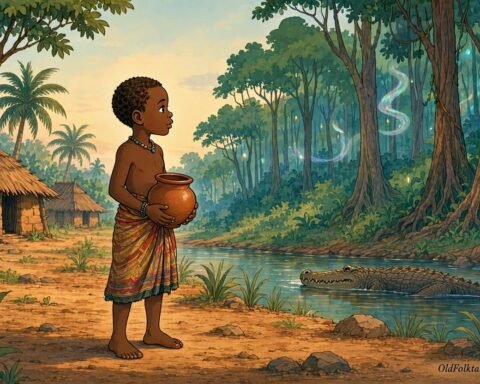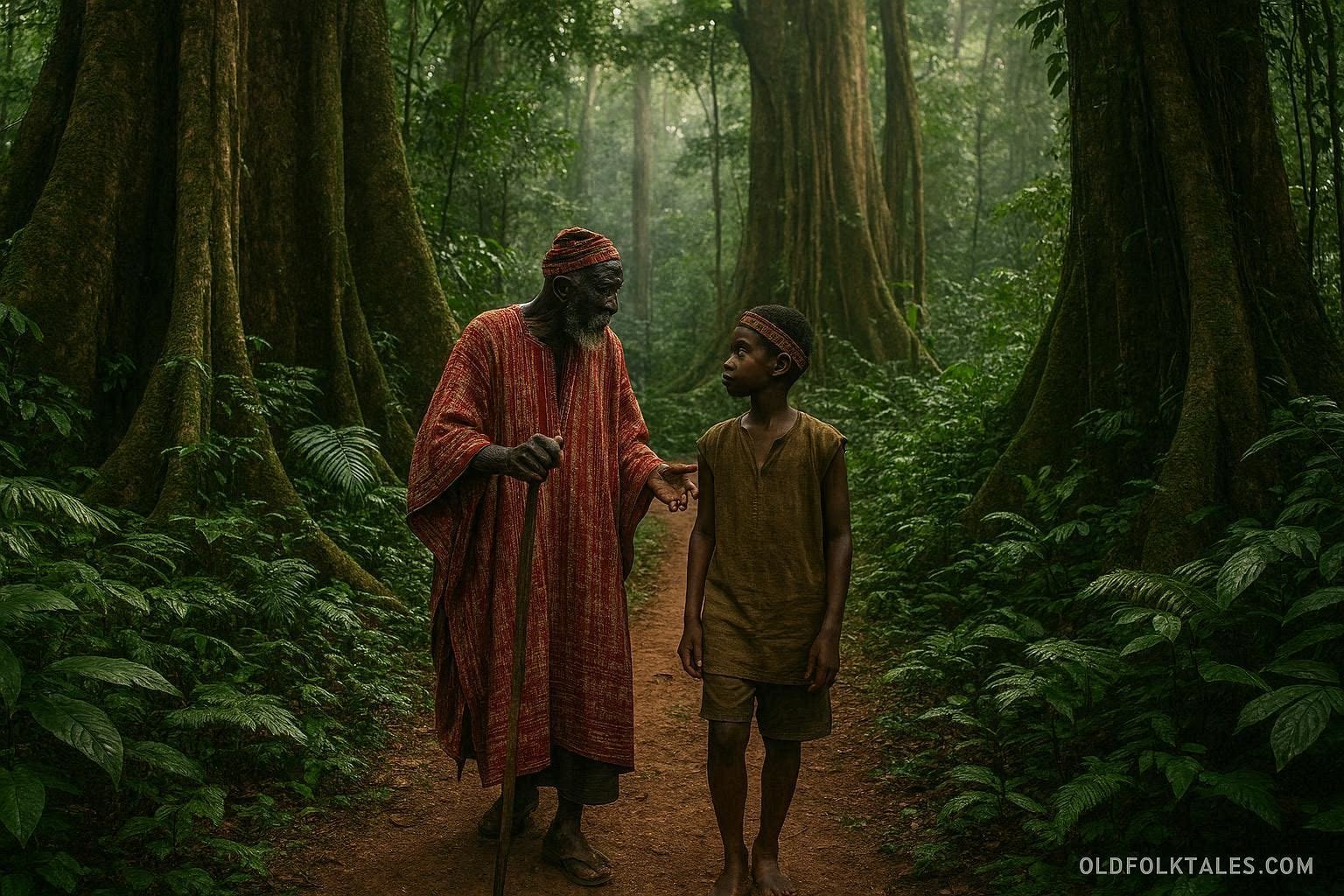
In the rolling hills and dense rainforests of southwest Cameroon, the Bakossi people have long lived in close harmony with the natural world. Towering trees, flowing streams, and rich forests provided food, medicine, building materials, and shelter for countless generations. Yet some parts of the forest were treated differently. They were regarded as sacred places where the community honored ancestral memory, observed important customs, and learned lessons about living responsibly with nature.
The elders taught that these forests belonged to no single person.
They belonged to every generation—those who had lived before, those living in the present, and those yet to be born.
For this reason, the sacred forests were carefully protected.
One village was guided by an elderly custodian named Mbonde.
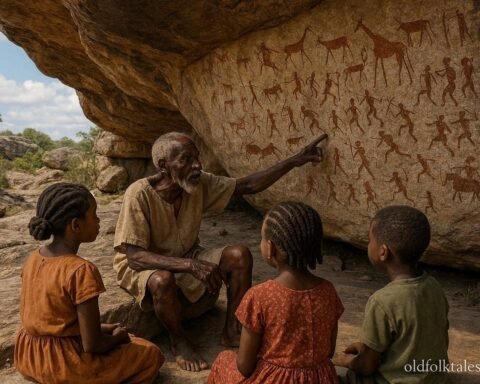
For many years, Mbonde had cared for the sacred forest and ensured that its customs were respected. Whenever young people asked why certain trees could not be cut or why particular places remained undisturbed, he answered with patience rather than anger.
“The forest gives because it is respected,” he often said.
Among those eager to learn was a curious young villager named Ewane.
Love this story? Discover our full Southern African folktales collection
He loved exploring the hills surrounding his village and dreamed of knowing every path through the forest. Yet he had never entered the sacred woodland, for only elders and those receiving instruction were permitted to visit certain areas.
One season, Mbonde invited Ewane to accompany him.
The young man accepted with excitement.
As they entered beneath the tall trees, the sounds of the village gradually faded.
Birdsong echoed through the forest canopy.
Butterflies drifted between shafts of sunlight.
Ancient trees stretched high above them while clear streams flowed quietly over smooth stones.
Ewane expected the elders to point out hidden treasures.
Instead, they stopped beside a towering tree whose trunk was wider than several people standing together.
Mbonde rested his hand upon its bark.
“This tree was already old when our great-grandparents were children,” he said.
“It has witnessed the lives of many generations.”
The young man listened quietly.
As they continued walking, Mbonde showed him medicinal plants known only to experienced healers, vines used for weaving, and fruit trees that fed both people and wildlife.
He explained that nothing should ever be taken wastefully.
“The forest provides enough,” he said.
“But only when we take with wisdom.”
Later they reached a peaceful clearing where village elders sometimes gathered to settle important matters.
Here, beneath the shade of ancient trees, disagreements were discussed calmly until fair solutions could be found.
Ewane was surprised.
“I thought this place was only for ceremonies,” he admitted.
Mbonde smiled.
“It is also a place where people remember that peace grows best in quiet places.”
During the journey, they came upon a small stream whose water remained remarkably clear.
The elder explained that no one polluted its banks because it supplied clean water for both the village and the forest’s many creatures.
Caring for the stream, he said, was another way of honoring the ancestors who had protected it before them.
As the rainy season approached, several young villagers suggested cutting large trees near the sacred forest to build new houses more quickly.
Some believed the forest contained more timber than the village would ever need.
Before any decision was made, the elders gathered beneath the village meeting tree.
Mbonde invited Ewane to listen.
Patiently, the elders explained how the sacred forest helped protect nearby streams, prevented soil from washing away during heavy rains, and provided plants used in traditional medicine.
Removing too many trees, they warned, would affect not only the forest but the entire community.
After careful discussion, the villagers agreed to gather timber only from designated areas outside the protected woodland.
They also planted young trees to replace those that had been harvested elsewhere.
Ewane admired how every decision balanced present needs with future responsibilities.
Months later, visitors from a neighboring village arrived to learn how the Bakossi cared for their forests.
Rather than boasting about their customs, the elders welcomed them warmly and shared practical knowledge about conservation, responsible harvesting, and community cooperation.
The visitors returned home inspired to strengthen similar traditions in their own forests.
Years passed.
Mbonde grew older and entrusted the care of the sacred forest to Ewane.
Before doing so, he offered one final piece of advice.
“Do not protect the forest because it is old.”
“Protect it because future generations deserve to know it.”
Ewane accepted the responsibility with humility.
He guided children along the forest paths, teaching them the names of native trees, the importance of clean streams, and the value of taking only what was needed.
He reminded them that every generation borrowed the forest from those yet to come.
The sacred forests continued to stand through changing times.
Their towering trees remained places of learning, remembrance, and community gathering.
While many things changed beyond the hills, the Bakossi people continued to preserve these treasured landscapes as symbols of heritage, stewardship, and respect for nature.
Today, ethnographic studies recognize the sacred forests of the Bakossi as important cultural landscapes where traditional ecological knowledge, community values, and ancestral memory have been preserved through generations of careful stewardship.
The story of The Sacred Forests of the Bakossi reminds us that protecting nature is also a way of protecting the wisdom, history, and future of our communities.
Keep reading: Discover more Central African folktales
Moral Lesson
When we care for nature with wisdom and respect, we preserve a lasting inheritance for future generations.
Knowledge Check
1. Why were the sacred forests important to the Bakossi people?
They preserved ancestral memory, protected nature, and served as places of learning and community gatherings.
2. What did Mbonde teach Ewane about the forest?
That it should be respected, used wisely, and protected for future generations.
3. Why did the elders refuse to cut trees from the sacred forest?
Because the forest protected streams, prevented erosion, and preserved important plants and traditions.
4. What did the Bakossi share with neighboring villagers?
Their knowledge of forest conservation and responsible use of natural resources.
5. What responsibility did Ewane receive?
He became the new custodian of the sacred forest and its traditions.
6. What is the main lesson of the story?
Respecting and protecting nature helps preserve both cultural heritage and the well-being of future generations.
Source
Adapted from Bakossi oral traditions, ethnographic studies of sacred forests in southwest Cameroon, and materials preserved in the Bakossi ethnographic archives.