Beside a wide river in eastern Zambia stood a Chewa village that had depended on the water for generations. The river provided fish, nourished crops, and connected families living along its banks. It was considered the heart of the community, and many traditions were linked to its flowing waters. Among the stories shared by elders, none was more mysterious than the legend of the Floating Stones.
The tale claimed that beneath the river rested a collection of ancient stones unlike any others. Most of the time, they remained hidden beneath the water and were never seen. However, during important moments in the history of the community, the stones would rise to the surface and begin moving in unusual patterns. The appearance of the stones was considered rare, sometimes occurring only once in a generation.
Many villagers knew the story but had never witnessed the phenomenon themselves. Some believed it completely, while others treated it as a fascinating tale from the past. Even so, the legend remained an important part of local tradition.
Among those who loved hearing the story was a young girl named Chikondi. She often sat with her grandfather in the evenings, listening as he recounted the wisdom and experiences of earlier generations. Her favorite tale was always the Dance of the Floating Stones.
Don’t stop yet! See our complete East African folktales collection
One evening, she asked her grandfather whether the stones truly existed.
The old man gazed toward the river before answering.
“I have never seen them myself,” he said. “But my grandmother did. She always said the stones appeared when the community stood at the edge of an important change.”
Chikondi wondered what kind of change could be important enough to awaken stones from the bottom of a river.
Years passed peacefully. The village enjoyed good harvests, and families lived in harmony. Then one season brought unexpected difficulties. Rainfall became unpredictable, and water levels in parts of the river began to decrease. Farmers worried about their crops, while fishermen noticed changes in fish migration patterns.
Village leaders met frequently to discuss possible solutions. Some suggested expanding farming areas. Others proposed changing fishing practices. The decisions would affect everyone, and disagreements soon emerged.
As discussions continued, strange events began occurring near a bend in the river known as Mwala Point. Fishermen reported seeing unusual ripples where the water was normally calm. Children claimed they heard faint knocking sounds beneath the surface during the early morning hours.
The reports reminded many elders of the ancient legend.
One dawn, shortly before sunrise, a fisherman named Banda paddled his canoe toward Mwala Point. As he approached the area, he stopped suddenly.
Several large stones were rising from the river.
Word spread quickly through the village.
Men, women, and children hurried to the riverbank.
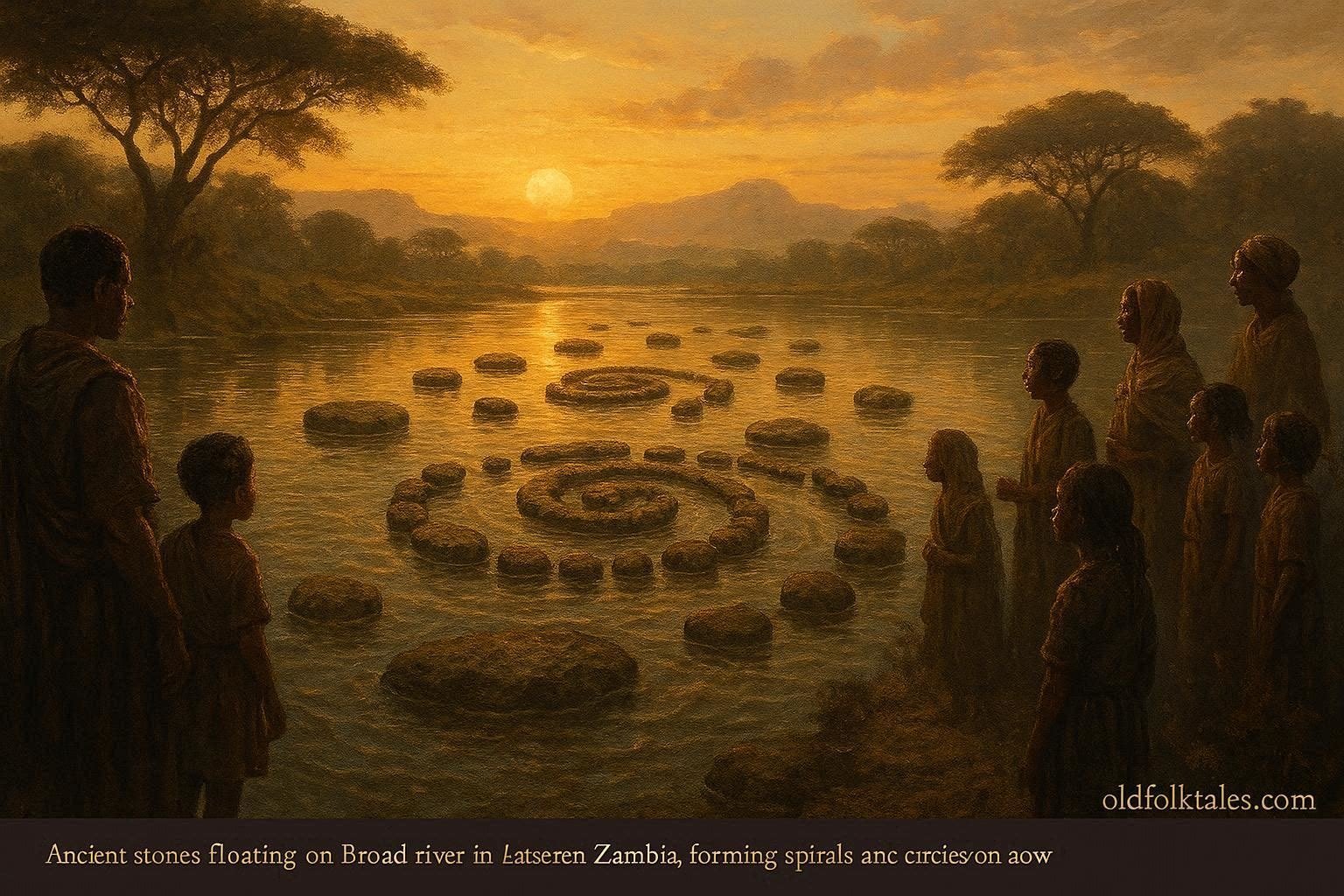
They watched in amazement as more stones emerged from the water. Instead of sinking under their own weight, they floated gracefully upon the surface.
Then something even more remarkable happened.
The stones began to move.
Slowly at first, they drifted into a large circle. After several minutes, they shifted into a spiral pattern. Later, they formed lines that crossed one another before returning to circular formations again.
No one spoke.
The villagers watched silently as the strange dance continued throughout the morning.
By midday, the stones gradually sank beneath the water and disappeared.
The event became the only topic of conversation throughout the region.
People debated the meaning of the mysterious patterns. Some believed the stones were warning of danger. Others believed they were encouraging the community to work together before making important decisions.
Among the elders was a respected woman named Namakau. After listening to many opinions, she addressed the gathering.
“The stones do not decide our future,” she said. “They remind us that every generation faces moments that shape what comes next. The responsibility remains ours.”
Her words resonated throughout the village.
Instead of arguing, community members began working together to find solutions. Farmers shared knowledge about conserving water. Fishermen adjusted their methods to protect fish populations. Families volunteered their time to improve irrigation channels and strengthen food storage systems.
The cooperation produced positive results.
Within a few seasons, the village adapted successfully to the changing conditions. Crops improved, resources were managed more carefully, and the community became stronger than before.
Many people believed the appearance of the Floating Stones had encouraged the unity that made their success possible.
Years later, Chikondi became one of the village elders. She often shared the story of the day she witnessed the Dance of the Floating Stones. Young listeners would gather around her, eager to hear every detail.
When they asked what the stones truly meant, she always gave the same answer.
“They reminded us that change will always come. What matters is how we respond when it arrives.”
Generations continued to pass down the legend.
Sometimes decades went by without another sighting.
Yet the story never faded.
The river continued flowing through the land, carrying memories of the past and hopes for the future. And somewhere beneath its waters, the mysterious stones were said to rest, waiting patiently for the next moment that would shape the destiny of the community.
Love this story? Discover our full Southern African folktales collection
Moral Lesson
Important changes are easier to face when people work together with wisdom, unity, and responsibility.
Knowledge Check
1. What were the Floating Stones?
They were mysterious stones believed to rise from a river during important moments in community history.
2. Who was Chikondi?
She was a young girl who loved listening to stories about the Floating Stones.
3. Where did the stones appear?
They emerged from a section of the river known as Mwala Point.
4. What did the stones do?
They floated on the water and moved in circles, spirals, and other formations.
5. What lesson did Elder Namakau teach?
She taught that people must take responsibility for shaping their own future.
6. What is the main lesson of the story?
Communities become stronger when they face change through cooperation and wise decision-making.
Source
Adapted from Chewa oral traditions and river miracle legends preserved in Eastern Zambia folklore archives.