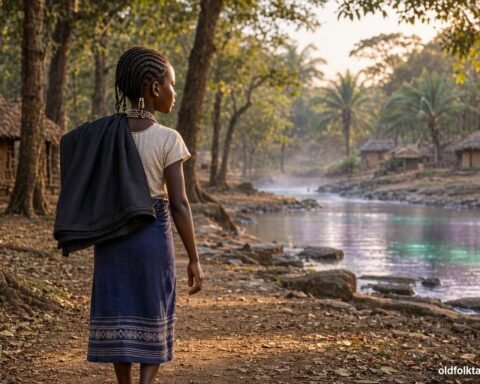
Along the southern coast of Côte d’Ivoire, where lagoons meet the sea and fishing has sustained families for generations, stood the thriving community of Grand Lahou. The people of the region depended on the waters for food, trade, and livelihood. Every morning before sunrise, fishermen pushed their canoes into the calm waters, guided by experience, observation, and knowledge passed down from their ancestors.
Among these fishermen lived a young man named Kouassi. He was hardworking, ambitious, and respected for his skill on the water. From an early age, he had learned how to cast nets, read currents, and understand the habits of different fish species. His father and grandfather had been fishermen before him, and he hoped one day to become one of the most successful fishermen in Grand Lahou.
In those days, the lagoons were rich with fish. Nets returned full, markets remained busy, and families rarely worried about food. The abundance of the waters seemed endless. Many people believed the lagoon would always provide regardless of how much was taken from it.
Keep reading: Discover more Central African folktales
As Kouassi grew older, he became increasingly focused on increasing his catch. Whenever he heard of a productive fishing area, he hurried there before others arrived. He spent longer hours on the water and searched for ways to bring home more fish than any of his fellow fishermen.
At first, his efforts were rewarded.
His catches were larger than those of many others. Traders sought his fish at the market, and his earnings increased steadily. People admired his determination, and some younger fishermen attempted to imitate his methods.
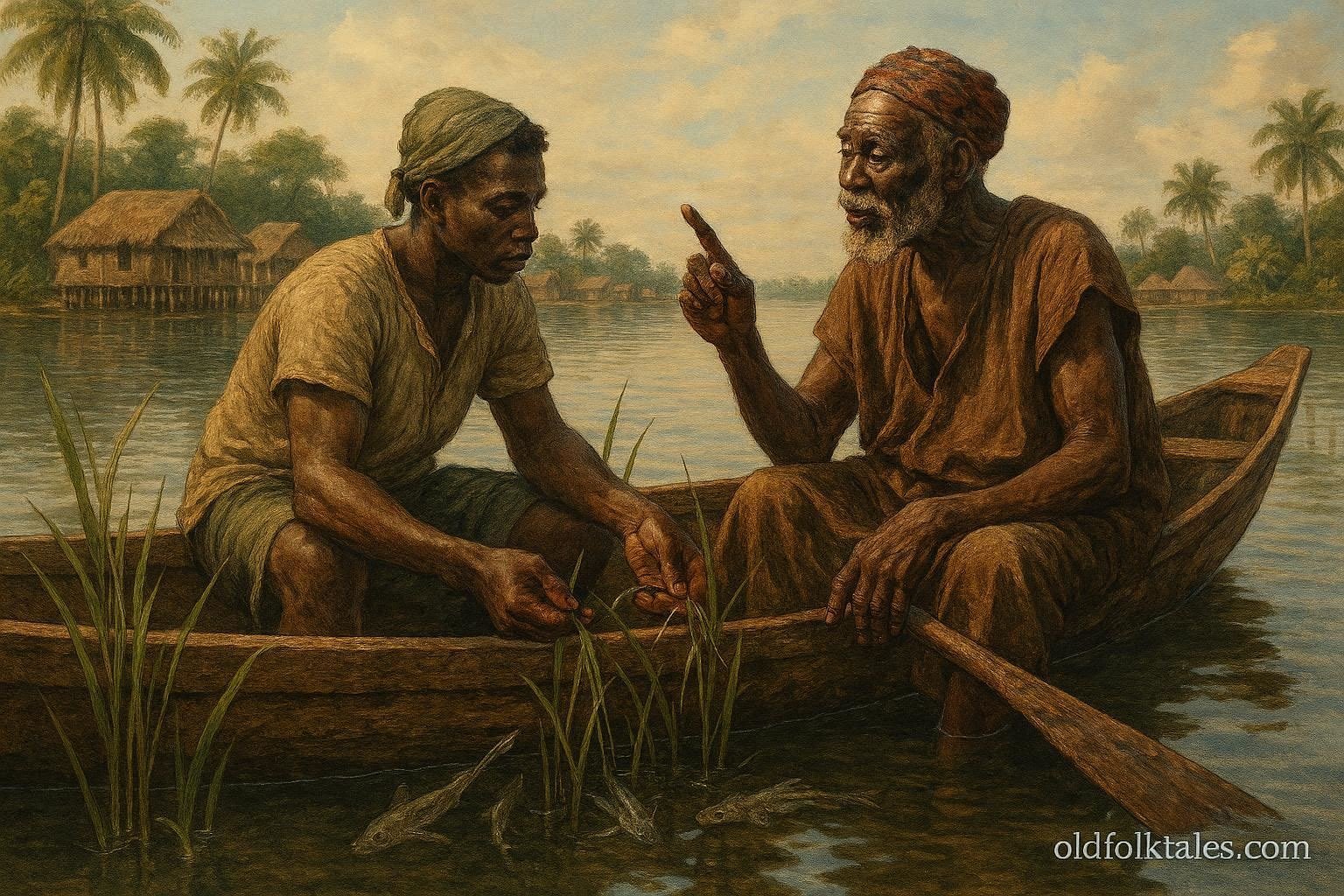
One season, while exploring a quiet section of the lagoon, Kouassi discovered an area filled with young fish. The water seemed alive with movement. Schools of small fish gathered among reeds and shallow vegetation near the shoreline.
Excited by his discovery, Kouassi prepared to cast his net.
Before he could do so, he noticed an elderly fisherman sitting nearby in a canoe. The old man watched the water carefully but made no attempt to fish.
Curious, Kouassi paddled closer.
The elder greeted him warmly and asked what had brought him to that part of the lagoon.
Kouassi proudly explained that he had found a place filled with fish and intended to make the most of the opportunity.
The old fisherman listened quietly before shaking his head.
He explained that the area was known among experienced fishermen as a breeding ground. Young fish gathered there to grow before moving into deeper waters. For generations, elders had encouraged fishermen to avoid disturbing such places. Protecting them ensured healthy fish populations throughout the lagoon.
Kouassi listened respectfully, but he remained unconvinced.
To him, the fish represented an opportunity. He reasoned that if the fish were present, they were meant to be caught. Thanking the elder for his advice, he cast his net anyway.
His catch was enormous.
When he returned to the village, people were amazed by the quantity of fish he had brought home. Traders quickly purchased everything he had caught. Encouraged by his success, Kouassi returned to the breeding ground again and again.
Soon other fishermen learned of the area and followed his example.
For a time, everyone benefited. Large catches became common, and market stalls overflowed with fish. Many believed they had discovered a secret that would guarantee prosperity for years to come.
Yet the old fisherman remained concerned.
He continued warning people that breeding grounds existed for a reason. If young fish were removed before reaching maturity, future harvests would decline.
Few listened.
The immediate rewards seemed far more convincing than distant warnings.
As months passed, subtle changes began to appear.
The fish in the breeding grounds became less numerous. Areas that once teemed with life grew quieter. Fishermen who had grown accustomed to large catches found themselves spending longer hours on the water.
The following season brought even greater difficulties.
Fish populations throughout the lagoon appeared smaller than before. Nets returned half full. Traders complained about shortages. Families who depended on fishing began noticing a decline in income.
At first, many blamed weather conditions or bad luck.
Others believed the fish had simply moved elsewhere.
But the old fisherman understood what was happening.
He gathered community elders and explained that years of harvesting young fish from protected breeding areas had disrupted the natural cycle that sustained the lagoon.
The elders called a meeting.
Fishermen from across the region attended. During the gathering, the old fisherman shared knowledge passed down through generations. He explained how fish populations depended upon safe places where young fish could mature. Removing them too early reduced the number of adult fish available in future years.
As the discussion continued, Kouassi began to reflect on his actions.
He remembered the elder’s warning and realized that his pursuit of short term success had contributed to a much larger problem. He felt responsible for encouraging others to exploit the breeding grounds.
When the meeting ended, Kouassi approached the elder.
He admitted his mistake and asked how the damage could be repaired.
The old fisherman smiled kindly.
He explained that while the situation was serious, it was not hopeless. Nature often recovers when people act responsibly. The community would need patience, discipline, and cooperation.
Together, the fishermen developed a plan.
Certain breeding areas would be protected during key seasons. Fishing in those zones would be restricted until young fish had sufficient time to mature. Elders would share traditional ecological knowledge with younger generations. Community leaders would monitor the protected areas and encourage compliance.
The changes were not easy.
Some fishermen worried about losing income. Others questioned whether temporary restrictions would make a difference. Yet most agreed that protecting the future was worth the sacrifice.
Kouassi became one of the strongest supporters of the new measures.
He spoke openly about his mistakes and encouraged others to think beyond immediate gains. Whenever younger fishermen asked why certain areas were protected, he patiently explained the importance of breeding grounds.
Years passed.
Slowly, the lagoon began to recover.
Fish populations increased. Protected areas once again became nurseries filled with young fish. Adult fish returned in greater numbers to the deeper waters. The community’s catches improved steadily, and prosperity gradually returned.
More importantly, attitudes changed.
People no longer viewed the lagoon as an endless resource. Instead, they understood that its health depended upon responsible stewardship. The lessons learned from the decline became part of local tradition.
As Kouassi grew older, he became known not only as a skilled fisherman but also as a teacher. He shared the story of the breeding grounds with each new generation. Children learned that true wisdom involves thinking beyond the present and considering the needs of those who will come after.
The story of the Fisher of Grand Lahou survived because it taught a lesson that remained relevant long after the original events had passed.
The lagoon provided abundance, but only when treated with respect.
By protecting places where life begins, the community ensured that future generations could continue to benefit from the gifts of the water.
Even today, the tale reminds listeners that prosperity is not created solely by taking resources. Lasting prosperity comes from balancing use with protection, opportunity with responsibility, and present needs with future well being.
Click here to discover more legendary tales from West Africa
Moral Lesson
Protecting natural resources today ensures prosperity and sustainability for future generations.
Knowledge Check
1. Where did Kouassi discover the young fish?
In a breeding ground located in a quiet section of the lagoon.
2. Why did the elder advise him not to fish there?
Because the area was a nursery where young fish needed time to mature.
3. What happened after fishermen repeatedly harvested from the breeding grounds?
Fish populations began to decline throughout the lagoon.
4. How did the community respond to the problem?
They created protected areas and restricted fishing in breeding grounds.
5. What role did Kouassi play afterward?
He became an advocate for conservation and taught younger fishermen.
6. What is the main lesson of the story?
Responsible stewardship of natural resources benefits future generations.
Source
Adapted from Avikam coastal traditions and lagoon community folklore preserved in lagoon community folklore collections of southern Côte d’Ivoire.