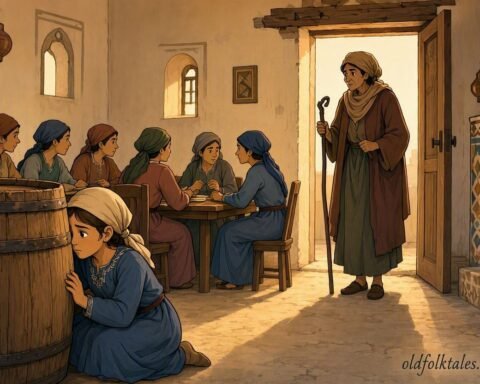
Among the Tonga communities of southern Zambia, elders told a remarkable story about a hidden valley that few people had ever seen. Surrounded by hills and thick vegetation, the valley was believed to hold one of the most sacred objects in local tradition—the Horn of the Sleeping Elephant. According to legend, the horn possessed a unique power. It would remain silent for years, sometimes even generations, but whenever leaders neglected their duties, its voice would echo across the land.
The story began many generations ago during a time when a wise chief named Hamusonde governed the region. He was known for listening carefully to his people, settling disputes fairly, and ensuring that no family was forgotten during difficult seasons. Under his leadership, the community prospered, and peace prevailed throughout the area.
As Hamusonde grew older, he often spoke about the importance of responsibility.
“A leader does not stand above the people,” he would say. “A leader stands among them.”
The villagers respected his wisdom and repeated his teachings long after hearing them.
When the chief eventually passed away, leadership was entrusted to his son, Mweemba. At first, the young leader tried to follow his father’s example. He attended community gatherings, listened to concerns, and worked to maintain harmony.
Looking for more? Explore the magic of East African folktales here
Over time, however, things began to change.
As the years passed, Mweemba became increasingly concerned with his own comfort and reputation. He spent less time meeting with villagers and more time enjoying celebrations and personal privileges. Important matters were delayed. Complaints went unanswered. Problems that once would have received immediate attention were ignored.
The people grew concerned.
Farmers struggled with disputes over land.
Families requested assistance during difficult harvest seasons.
Young people sought guidance about community matters.
Yet their concerns rarely reached the chief.
One dry season, as dissatisfaction spread throughout the region, a strange sound echoed across the countryside.
It was unlike anything anyone had ever heard.
The sound resembled the call of a great elephant, yet it also carried the deep tone of a ceremonial horn.
The mysterious note rolled across hills and valleys before fading into silence.
Villagers stopped whatever they were doing.
Elders exchanged worried glances.
Many immediately remembered the ancient legend.
According to tradition, the Horn of the Sleeping Elephant sounded only when leadership had lost its way.
News of the event spread quickly.
Some people dismissed it as an unusual natural sound.
Others believed it carried an important message.
A respected elder named Nalishuwa advised the community not to ignore the warning.
“The horn does not punish,” she explained. “It reminds leaders of their obligations.”
Despite the discussions, Mweemba paid little attention to the reports.
He dismissed the story as superstition and continued neglecting his responsibilities.
Several weeks later, the horn sounded again.
This time the echo was louder.
The sound carried across distant settlements, reaching villages that had never before reported hearing it.
Concerned by the repeated warning, a group of elders requested a meeting with the chief.
Reluctantly, Mweemba agreed.
During the gathering, the elders spoke honestly about the growing problems facing the community. They reminded him of his father’s teachings and described the hardships many families were experiencing.
At first, Mweemba defended his actions.
But as he listened to the concerns of farmers, traders, parents, and village leaders, he realized how disconnected he had become from the people he was meant to serve.
For the first time in many years, he reflected on the true meaning of leadership.
That evening, he left the village and traveled alone into the hills.
Following directions preserved in old stories, he searched for the hidden valley said to contain the sacred horn.
After a long journey, he reached a secluded place unlike any he had ever seen.
At the center of the valley rested the enormous skeleton of an elephant.
Beside it lay a magnificent ivory horn.
As Mweemba approached, a gentle wind swept through the valley.
The horn released a low, powerful note.
The sound filled the air with a sense of solemnity and reflection.
In that moment, Mweemba understood the lesson.
The horn was not calling attention to the failures of the people.
It was calling attention to the responsibilities of those who led them.
The following day, he returned home with a renewed sense of purpose.
He began meeting regularly with villagers.
He listened carefully to concerns.
He resolved disputes fairly and ensured resources were distributed responsibly.
Gradually, trust was restored.
The community once again flourished under attentive leadership.
From that time forward, the Horn of the Sleeping Elephant remained silent.
Years later, when Mweemba himself became an elder, he shared the story with younger leaders.
He taught them that authority was not a reward but a responsibility.
Power carried obligations.
Respect had to be earned through service.
And leadership required constant attention to the needs of the community.
Generations passed, and the legend endured.
Some believed the horn was a magical artifact placed in the valley by ancestral spirits.
Others viewed it as a symbol created to preserve important values.
Regardless of its origin, the lesson remained the same.
A community prospers when leaders remain accountable to the people they serve.
Whenever responsibility is forgotten, reminders will eventually come.
And somewhere beyond the hills, hidden from ordinary sight, the Horn of the Sleeping Elephant waits quietly for the moment it may be needed again.
Love this story? Discover our full Southern African folktales collection
Moral Lesson
True leadership requires accountability, service, and a commitment to the well-being of the community.
Knowledge Check
1. What was the Horn of the Sleeping Elephant?
It was a sacred ivory horn said to sound whenever leaders neglected their duties.
2. Who was Chief Hamusonde?
He was a wise leader known for serving his people fairly and responsibly.
3. Why did the horn sound during Mweemba’s rule?
Because he had become disconnected from the needs of the community.
4. What did Mweemba learn from his journey?
He learned that leadership is a responsibility, not a privilege.
5. Where was the sacred horn located?
It was hidden in a secluded valley known only through ancient stories.
6. What is the main lesson of the story?
Leaders must remain accountable and serve the people with fairness and dedication.
Source
Adapted from Tonga oral traditions and leadership legends preserved in Zambian ethnographic folklore archives.