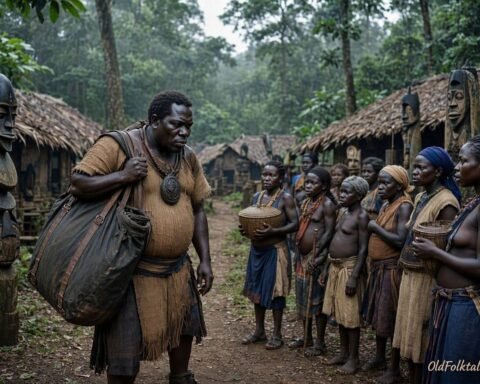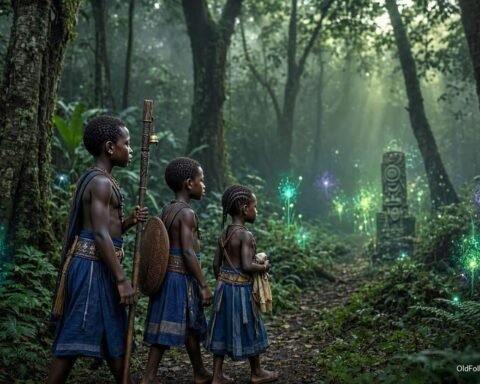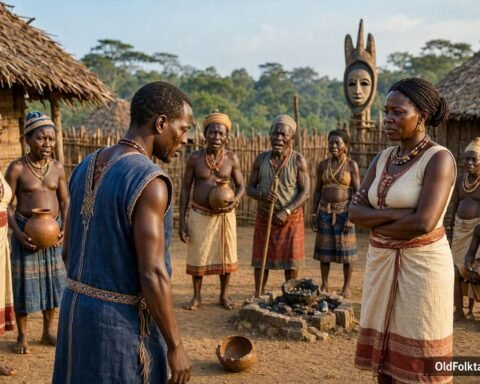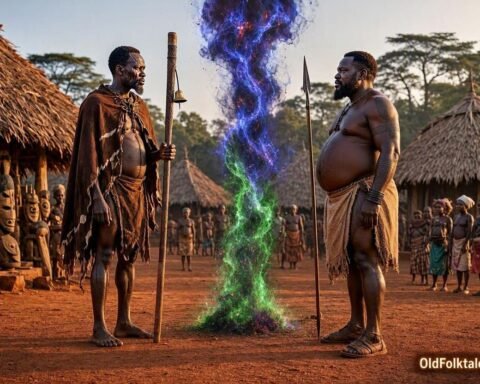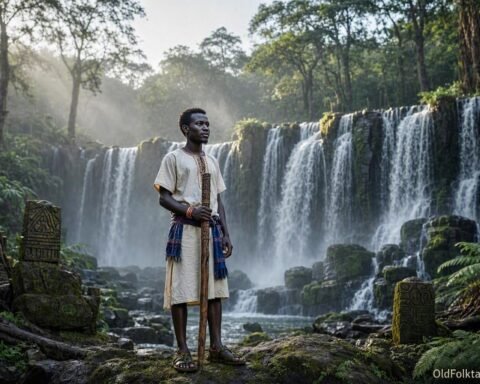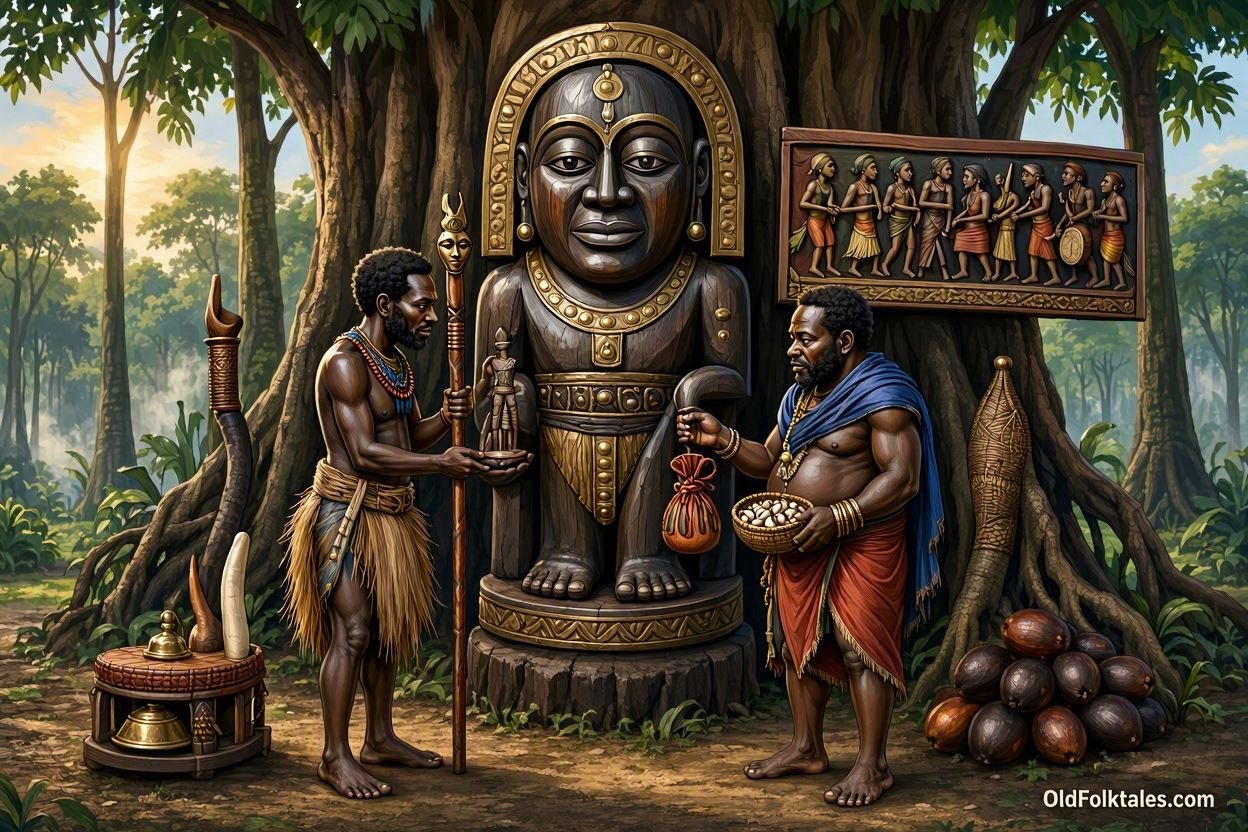
Before wealth had a colour and before people compared one person’s possessions with another’s, the world was believed to have been different. People lived without knowing that some would one day have great riches while others would struggle for the necessities of life. The earth was there for everyone, the forests offered their fruits, the rivers carried their water and the land provided places where families could build their homes.
But the world was not destined to remain equal.
In those early days, the Creator, Nzamö, watched the people who had been placed upon the earth. He saw their strengths, their desires and the different paths they were beginning to follow. Among the people were two men who would eventually become associated with two very different destinies.
One was Black.
The other was White.
At that time, neither man possessed the great wealth that later generations would associate with his people. Neither carried the signs of power that would eventually separate one society from another. They were simply human beings living beneath the same sky.
The Creator observed them and decided that each would receive a particular destiny.
He called them before him.
The two men approached.
Looking for more? Explore the magic of East African folktales here
Nzamö looked at the Black man first.
“You will go back to your people,” he said. “You will raise families and populate the earth. Your people will become numerous.”
The Black man listened carefully.
Then Nzamö turned toward the White man.
“You too will go and populate the earth,” he said. “But your destiny will be different.”
The two men waited.
Neither knew what the Creator intended.
Then Nzamö spoke of the possessions that would shape their futures.
The White man, he declared, would become rich in material things. He would gather wealth and possess goods beyond what he had imagined. His people would come to be associated with material prosperity.
The Black man, however, would follow another path.
His people would become numerous, but they would not receive the same material abundance.
The words were difficult to understand.
Why should two people created by the same Creator receive different fortunes?
Why should one inherit wealth while another inherited people?
Why should one be surrounded by material possessions while the other struggled to obtain them?
The two men returned to their people carrying destinies they did not yet fully understand.
For many generations, the meaning of those words remained hidden in the future.
Families grew.
Children were born.
Villages became larger.
People cultivated the land, hunted in the forest, fished in the rivers and exchanged what they possessed with their neighbours. At first, nobody thought of the world as divided between rich and poor in the way later generations would understand it.
Then the world began to change.
New travellers appeared.
Strangers came from distant lands.
They brought objects that were unfamiliar to the people of the forest. Cloth, manufactured goods, metal objects and other possessions entered the African world through trade and later through the expanding colonial presence.
The new goods attracted attention.
People saw that some strangers possessed things that were difficult to obtain locally. Material wealth became increasingly visible.
The old question of destiny began to take on a new meaning.
Why did some people seem to possess so much while others possessed so little?
Why did Europeans appear surrounded by manufactured wealth while many Africans were expected to provide labour and resources?
Why did the people who had lived on the land for generations increasingly find themselves at a material disadvantage?
The old legend of Nsas offered one way of thinking about this disturbing reality.
The story did not simply describe wealth.
It gave inequality an origin.
It transformed a painful difference between peoples into something that could be remembered through a traditional story.
According to the legend, the unequal fortunes of Black and White people had been determined from the beginning.
The Black man had been given people.
The White man had been given material wealth.
One would multiply through descendants.
The other would accumulate possessions.
As generations passed, the contrast became more visible.
The descendants of the Black man filled the earth with families and communities. They cultivated the land, raised children and maintained their traditions.
But material wealth remained difficult to accumulate.
The descendants of the White man, meanwhile, became associated with money, manufactured goods and material possessions.
The difference became a source of frustration.
People could see wealth with their own eyes.
They could see the goods brought by Europeans.
They could see the power that wealth created.
They could also see the poverty and hardship surrounding many African communities.
The legend therefore became more than a story about the beginning of the world.
It became a way of speaking about the world people were actually experiencing.
There was sadness within it, but there was also an attempt to make sense of inequality.
If wealth had been assigned by divine decision, then perhaps the terrible difference between the two worlds had not been caused by any natural superiority of one people over another.
Perhaps it was simply the destiny that had been imposed upon them.
But the story also contained an uncomfortable question.
If destiny could change the fortunes of peoples, could people themselves change their destiny?
As the colonial period continued, the meaning of the legend began to shift.
The world was no longer simply a place where people accepted whatever fate had given them.
People began to observe the sources of wealth around them.
They saw trade.
They saw European businesses.
They saw money.
They saw political authority.
They saw education and new forms of power.
And gradually, some began to believe that the answer was not simply to accept poverty as destiny.
They wanted to understand how the wealthy had become wealthy.
They wanted access to education.
They wanted opportunities to earn money.
They wanted political and economic power.
The old story therefore remained relevant even as its meaning changed.
It had begun as an explanation of unequal fortunes.
But later generations could hear another message within it.
If one group had learned how to accumulate wealth, another group could learn too.
The descendants of the Black man did not have to remain permanently trapped in the destiny described by the old story.
They could seek knowledge.
They could trade.
They could build businesses.
They could pursue education.
They could organize their communities.
They could challenge the conditions that kept them poor.
In this way, the legend of Nsas became connected to a much larger human question.
Are our fortunes decided before we are born, or can people change the conditions they inherit?
The forest had witnessed many generations come and go.
It had seen people arrive with nothing and leave behind children, houses, farms and memories.
It had also witnessed strangers arrive carrying unfamiliar possessions.
Yet the earth itself had never declared one person more human than another.
The river did not ask who was rich before allowing someone to drink.
The forest did not ask about wealth before giving fruit.
The soil did not choose which child deserved to eat.
These things belonged to everyone.
And perhaps that was the deeper question hidden beneath the old legend.
People may inherit circumstances.
They may inherit poverty, wealth, privilege or hardship.
But inheritance does not necessarily have to become destiny.
A child born into poverty may grow into a person who changes the fortunes of an entire family.
A community with little material wealth may possess knowledge, culture, courage and traditions that money cannot purchase.
And a people who have suffered inequality can still imagine a different future.
The legend of Nsas survives because it speaks to that tension.
It remembers a time when the unequal fortunes of peoples were explained through the language of creation and destiny.
It also preserves the memory of a historical period when the contrast between African poverty and European material wealth became impossible to ignore.
For the Fang people who preserved the story, the myth offered a way to give meaning to an unequal world.
For readers today, it offers something else as well.
It invites us to ask how societies explain inequality, how history shapes traditional stories and how people transform painful experiences into narratives that survive from one generation to another.
The world described in the legend may have been divided by different fortunes.
But the story itself belongs to everyone who has ever wondered why some people are born with advantages while others must struggle for what they need.
And that question remains as powerful today as it was when the story was first remembered.
Keep reading: Discover more Central African folktales
Moral Lesson
The legend reminds us that people often create stories to understand inequality and difficult changes in their world. Circumstances may be inherited, but they do not have to determine the worth, potential or future of a person or a community.
Knowledge Check
1. Who is Nzamö in the legend?
Answer: Nzamö is the Creator who determines the different destinies of the Black man and the White man.
2. What different destinies were given to the two men?
Answer: The Black man was associated with having many descendants, while the White man was given a destiny connected with material wealth.
3. What historical situation gave the legend a new significance?
Answer: The colonial encounter and the growing visible inequality between African communities and Europeans gave the legend new significance.
4. Why did material possessions become important in the meaning of the legend?
Answer: Europeans introduced and controlled many manufactured goods and forms of material wealth that became highly visible during the colonial period.
5. Does the legend provide a scientific explanation for differences between Black and White people?
Answer: No. It is a traditional Fang myth that reflects a particular cultural attempt to understand inequality and historical circumstances.
6. What larger question does the legend encourage us to consider?
Answer: It encourages us to consider whether the circumstances people inherit must determine their future or whether individuals and societies can change them.
Source
Primary documented source: Henri Trilles, Contes et légendes fang du Gabon, “La Légende du Nsas,” p. 54. The collection places the story among the Légendes religieuses ou Légendes des Origines.