In a quiet village tucked between rolling hills and sunlit fields, where the air carried the soft scent of earth and ripening fruit, life moved in harmony with the land. The people of this place rose with the dawn, worked beneath the wide sky, and rested as the stars slowly stitched themselves across the night.
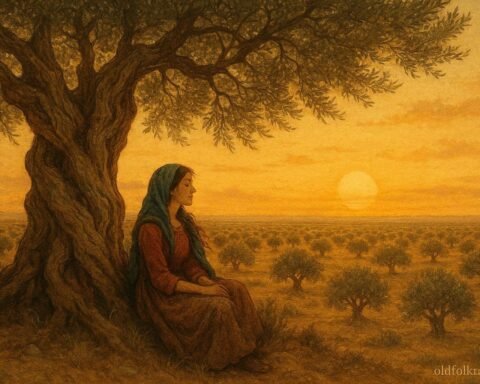
Surrounding the village were groves of olive trees, gnarled, silver-green, and ancient beyond memory. Their roots ran deep into the soil, holding not only water but stories passed from one generation to the next. These trees were more than crops; they were companions, witnesses to births, marriages, and seasons of both hardship and abundance.
Looking for more? Explore the magic of East African folktales here
Among them stood one tree unlike the rest.
It grew at the far edge of the largest grove, slightly apart, as though it had chosen its place with quiet intention. Its trunk was wider, its bark more deeply etched, and its branches spread outward like arms offering both shade and quiet protection. The elders spoke of it in hushed tones, calling it the oldest of all, a tree that had seen centuries pass like drifting clouds.
They said it held a secret.
No one could say exactly when the belief began, but over time, a quiet understanding settled among the villagers: those who tended the land with care, who worked with patience and respect, seemed always to receive more from their harvests. Their olives were fuller, their oil richer, their trees more generous.
And somehow, it was always said that the blessing began near that ancient tree.
People did not approach it with demands. They did not strip its branches or dig greedily at its roots. Instead, they worked around it gently, speaking softly as they passed, as though aware that the land itself was listening.
For many years, this way of life continued.
Then, one season, a new farmer came into the village.
He was not unfamiliar with the land, but he carried a different way of thinking, one shaped not by patience, but by urgency. He saw the groves not as living companions, but as opportunity. Where others saw balance, he saw potential for more.
When he first heard of the ancient tree, he laughed.
“A tree does not choose who prospers,” he said. “The land gives to those who take from it wisely, and take much.”
The villagers exchanged quiet glances but said little. Some tried to explain, not with warnings, but with gentle advice.
“The land is not something to conquer,” one elder told him. “It is something to understand.”
But the farmer only nodded politely, his mind already turning.
He watched the others carefully. He saw how they pruned with restraint, how they harvested without stripping branches bare, how they allowed the soil to rest. To him, it seemed like wasted effort, too slow, too cautious.
“I will show them what true abundance looks like,” he thought.
When the next season began, the farmer set his plan into motion.
He worked his section of the grove tirelessly, but not with care, with force. He pruned deeply, cutting branches far beyond what was needed. He harvested early and often, taking every olive he could find. He dug into the soil, turning it again and again, believing that more effort would yield more reward.
And soon, he turned his attention to the ancient tree.
Unlike the others, he did not approach it with quiet respect. He circled it, studying its branches, its roots, its position in the land.
“If there is something special here,” he said to himself, “then it must be used fully.”
He began to clear the area around it more aggressively than the others ever had. He dug deeper at its base, loosened the soil, and removed smaller plants that had long grown beside it. He cut branches that had stood untouched for years, gathering their fruit with eager hands.
At first, nothing seemed to change.
The tree remained as it was, silent, unmoving.
The farmer smiled, satisfied.
“You see?” he said to himself. “There is no secret. Only opportunity.”
But as the days passed, something began to shift.
The leaves of the ancient tree, once vibrant in their muted green, grew dull. The olives that formed on its branches were fewer, smaller, and less full than before. The soil around it, once rich and dark, began to dry more quickly under the sun.
The farmer frowned but continued his work.
“Perhaps it needs more,” he muttered.
So he worked harder.
He watered more frequently, dug deeper, pruned further. But the more he pushed, the more the tree seemed to withdraw. Its branches bore less fruit, its presence growing quiet in a way that felt heavier than silence.
Meanwhile, something else began to happen.
The surrounding grove, once thriving, began to reflect the same change. Trees near the ancient one showed signs of strain. Their yields lessened, their leaves lost some of their luster.
The villagers noticed.
At first, they said little. But as the season wore on, concern grew.
“This has not happened before,” one woman said, examining her harvest.
“The land feels… unsettled,” another added.
Their eyes turned, slowly but surely, toward the edge of the grove, toward the ancient tree, and the farmer who now worked it with restless intensity.
At last, the elders gathered and approached him.
“You must stop,” one of them said, his voice calm but firm. “The land is not responding well.”
The farmer straightened, wiping sweat from his brow.
“I am doing what is necessary,” he replied. “If the tree weakens, it is because it needs more care, not less.”
“This is not care,” another elder said quietly. “This is force.”
But the farmer shook his head.
“You fear what you do not understand,” he said. “I will restore this grove to greater abundance than you have ever seen.”
The elders exchanged glances, but they did not argue further. Instead, they returned to their work, tending their trees as they always had, gently, patiently, with respect.
Days passed.
The farmer’s harvest continued to decline.
At last, one evening, as the sun dipped low and cast long shadows across the grove, he stood before the ancient tree and felt something he had not yet allowed himself to admit.
Doubt.
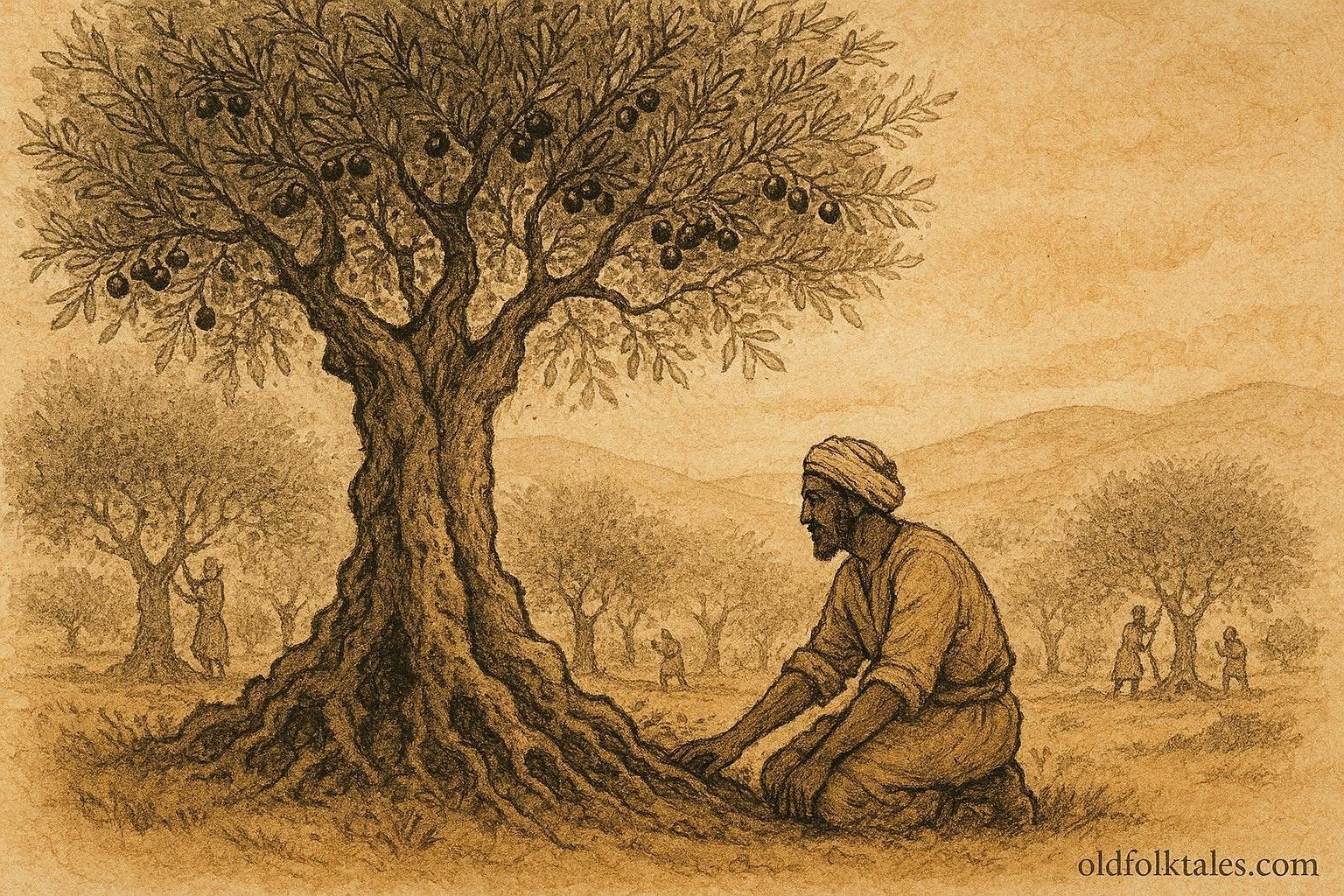
He placed his hand against its rough bark. It felt warm, but distant, as though the life within it had retreated beyond reach.
“What is wrong with you?” he asked aloud.
The wind moved softly through the branches, carrying with it a quiet stillness.
For the first time, the farmer said nothing more.
He sat beneath the tree as night approached, listening, not for answers, but simply to the silence.
And in that silence, something shifted within him.
He remembered the words of the elders. He remembered the way the others worked, not with urgency, but with care. He began to see, not what the tree had failed to give, but what he had taken without thought.
The next morning, he returned to the grove, but not as before.
He did not dig.
He did not cut.
Instead, he cleared only what was necessary, leaving the soil undisturbed. He gathered fallen branches instead of cutting new ones. He allowed the tree to stand as it was, offering no demands, only quiet presence.
Days passed, then weeks.
At first, nothing changed.
But slowly, almost imperceptibly, the leaves began to regain their color. The soil held moisture a little longer. Small olives formed once more along the branches.
The farmer watched, this time with patience.
Around him, the grove responded as well. The neighboring trees grew stronger, their yields improving as the balance of the land returned.
The villagers noticed, and though they said little, there was understanding in their silence.
One evening, the farmer approached the elders.
“I did not understand,” he said simply.
The eldest among them nodded.
“The land does not withhold out of cruelty,” he said. “It responds to how it is treated.”
The farmer bowed his head.
From that day forward, he worked as the others did, not seeking to take more, but to care better. And in time, his harvests grew, not beyond all others, but in harmony with them.
As for the ancient tree, it remained as it always had, quiet, watchful, and rooted deeply in the wisdom of the earth.
And though no one ever claimed to know its true secret, the villagers understood something far greater:
That prosperity is not something taken from the land, but something grown with it.
Fascinated by this tale? Discover more North African folktales
Moral Lesson
True prosperity comes from respecting and nurturing the land, not exploiting it. Harmony with nature ensures lasting abundance, while greed leads to loss.
Knowledge Check
- What is the central message of The Olive Tree’s Secret?
The story teaches that sustainable care and respect for nature lead to lasting prosperity, while greed causes decline. - What made the ancient olive tree special in the folktale?
It symbolized the land’s response to human behavior, granting abundance only to those who treated it with care. - Why did the selfish farmer fail at first?
He overworked and exploited the land, ignoring the balance needed for healthy growth. - How did the farmer eventually restore the grove?
He changed his approach, working with patience and respect instead of force and greed. - What does the olive tree symbolize in Tunisian culture?
It represents endurance, wisdom, and the deep connection between people and the land. - What cultural values are reflected in this folktale?
The story reflects values of stewardship, sustainability, tradition, and communal harmony in Tunisian farming communities.
Source: African folktale, Tunisia. Adapted from Tunisian rural folktales tied to agricultural life, preserved in oral tradition and later recorded in folklore archives (c. 1970s).
Cultural Origin: Indigenous Berber and Arab farming communities of Tunisia