In the days when riverside settlements flourished along the Zambezi River, the Tonga people lived in close-knit communities connected by trade, farming, and fishing. The river provided life to the land, and its waters linked villages that depended on one another for survival. Although each settlement had its own elders and customs, they often worked together to solve problems and maintain peace throughout the region.
Among these communities existed a remarkable legend known as the Reed Crown of the Zambezi. According to tradition, the crown had been woven generations earlier from special river reeds gathered during a season of great harmony. Elders believed the crown possessed a unique gift: whenever disputes threatened to divide the people, it would reveal the individual best suited to lead them.
For many years, the crown remained safely stored inside a ceremonial shelter near the river. It was rarely displayed and was treated with great respect. Most people never saw it, but everyone knew its story.
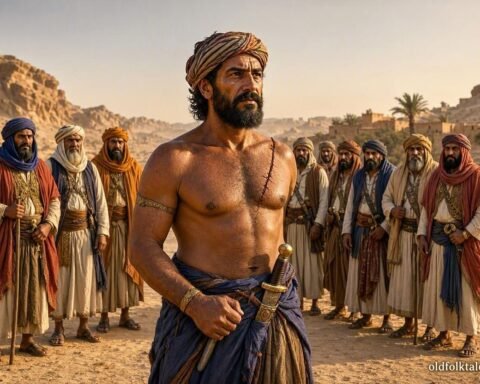
One generation, a respected leader named Chief Sikalumbi guided the riverside settlements through many challenges. He settled disputes fairly, encouraged cooperation among villages, and ensured that resources were shared during difficult times. Because of his wisdom, the region enjoyed many years of stability.
Continue your journey: Read more East African folktales
When Sikalumbi grew old, concern spread throughout the settlements.
The chief had no clear successor.
Several respected individuals believed they were capable of leading the people after his passing. Some were skilled speakers. Others were successful farmers or experienced traders. While each candidate had supporters, disagreements soon emerged regarding who should inherit the responsibility.
As debates intensified, unity among the villages began to weaken.
Families argued.
Friendships became strained.
Different settlements started supporting different candidates.
The elders feared the conflict would grow worse.
Remembering the ancient tradition, they decided it was time to bring forth the Reed Crown.
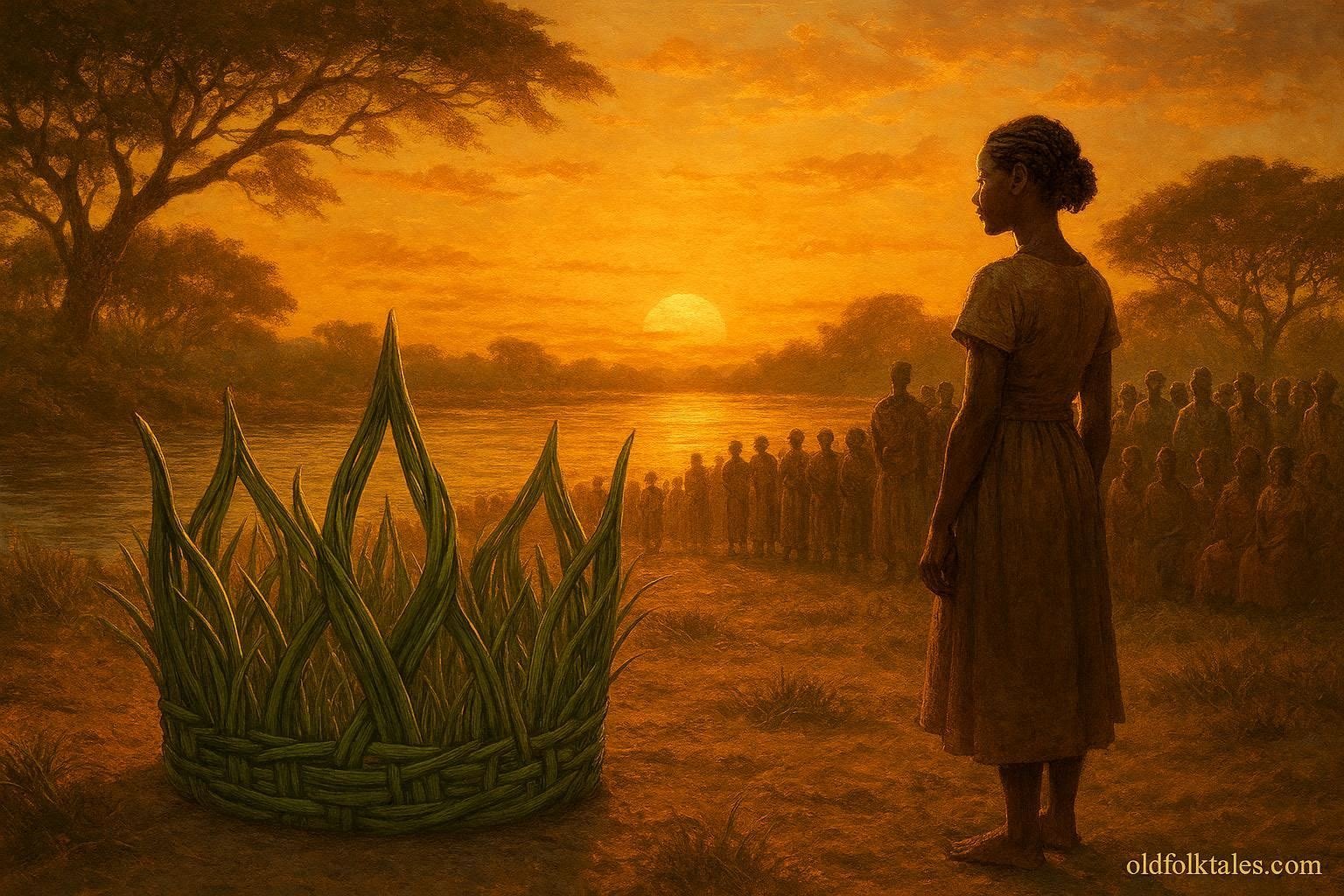
Representatives from every settlement gathered near the river for a ceremonial assembly. The crown was carefully carried from its shelter and placed upon a woven mat in the center of the gathering.
The people waited silently.
The elders explained that each candidate would approach the crown one at a time.
The first candidate stepped forward confidently.
He believed his experience made him the obvious choice.
However, when he reached for the crown, the reeds became dry and brittle. The crowd murmured quietly as he stepped back in disappointment.
The second candidate approached.
She was admired for her wealth and influence throughout the region.
Yet when she touched the crown, nothing happened.
The reeds remained unchanged.
One by one, the remaining candidates presented themselves.
None received a sign.
As the day progressed, uncertainty returned.
Then an elder noticed a young woman standing among the crowd.
Her name was Namwisha.
She was not among the official candidates.
Most people knew her as someone who spent her time helping resolve disputes between families and organizing community projects during difficult seasons.
When the elder asked why she had come, Namwisha replied simply.
“I came because the future of the settlements concerns all of us.”
The gathering fell silent.
After a brief discussion, the elders invited her to approach the crown.
As Namwisha stepped forward, a gentle breeze moved across the river.
The reeds began to shimmer.
Moments later, the woven crown lifted slightly and settled comfortably upon her head.
The crowd watched in astonishment.
The reeds remained fresh and green despite the heat of the day.
The elders exchanged knowing smiles.
According to tradition, the crown had made its choice.
Although surprised, Namwisha accepted the responsibility with humility. She reminded the people that leadership was not a reward but a duty.
Over the following years, she worked tirelessly to strengthen relationships between the settlements. She encouraged cooperation, promoted fair decision-making, and ensured that every village had a voice in important matters.
Under her leadership, unity returned.
Trade improved.
Disputes decreased.
The riverside communities prospered once again.
As time passed, the story of the Reed Crown spread throughout the region. Future generations remembered how the sacred crown had chosen a leader based not on status or ambition, but on character and service.
Whenever disagreements arose in later years, elders would retell the tale.
They reminded young people that true leadership comes from a desire to help others rather than a desire for power.
Some believed the crown possessed magical abilities granted by ancestral spirits connected to the river.
Others believed the crown simply reflected the wisdom of the community.
Whatever the explanation, its lesson remained timeless.
The strongest leaders are those who unite rather than divide.
They listen before speaking.
They serve before demanding.
And they place the needs of the people above their own ambitions.
To this day, stories of the Reed Crown of the Zambezi continue to be shared along the river, reminding each generation that leadership is measured not by authority, but by responsibility.
Love this story? Discover our full Southern African folktales collection
Moral Lesson
True leadership is earned through service, humility, and a commitment to bringing people together.
Knowledge Check
1. What was the Reed Crown made from?
It was woven from special reeds gathered from the Zambezi River.
2. When was the crown used?
It appeared during times when disputes threatened unity among the settlements.
3. Who was Chief Sikalumbi?
He was a respected leader who guided the riverside communities wisely.
4. Who did the crown choose as the new leader?
It chose Namwisha, a humble woman known for helping others.
5. Why did the crown select Namwisha?
Because she demonstrated responsibility, unity, and service to the community.
6. What is the main lesson of the story?
The best leaders are those who serve others and work to unite people.
Source
Adapted from Tonga oral traditions and leadership legends preserved in Zambezi Valley oral history archives.