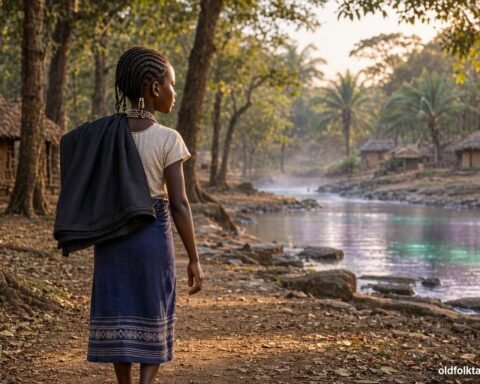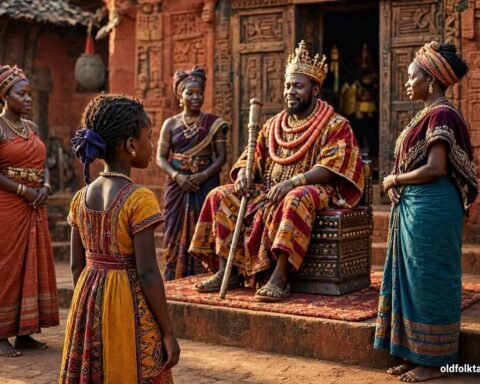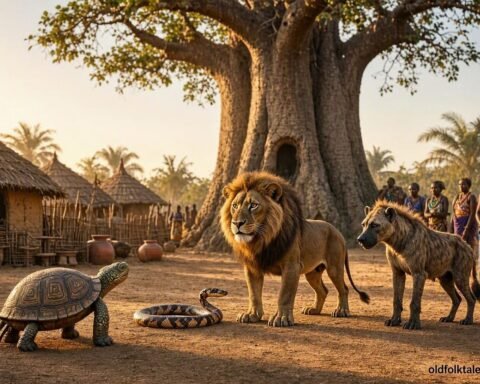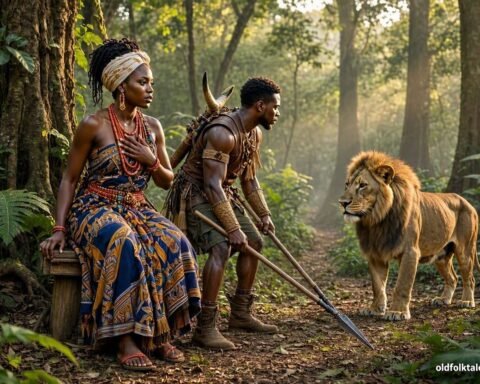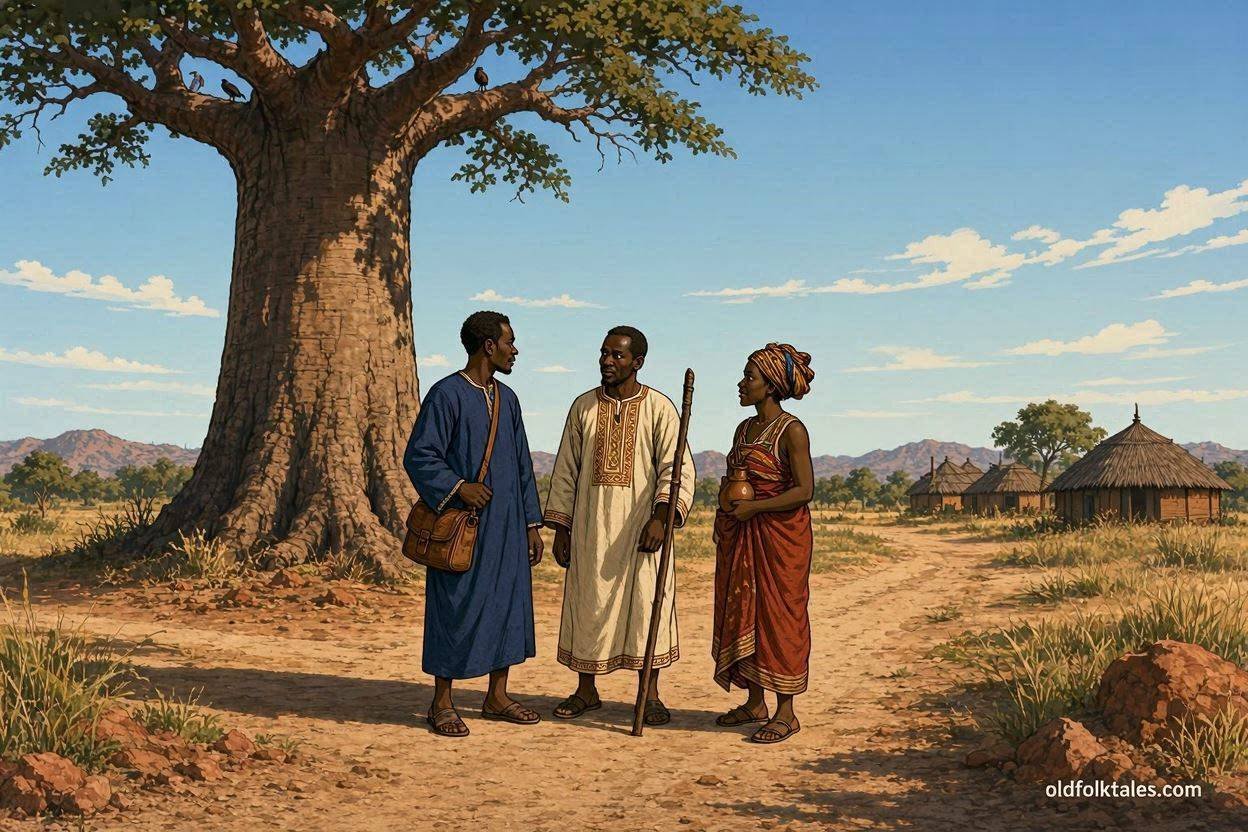
In the rolling plains of Wolof country, where ancient baobab trees watched over winding footpaths and villages welcomed weary strangers with bowls of cool water, there stood a crossroads known throughout the land as Tangana.
The elders often said that every traveler who passed through Tangana left with more than he had brought. Some found friendship, others discovered courage, while a few learned lessons they had spent their entire lives avoiding.
One dry season, three travelers arrived at the crossroads on the very same afternoon.
The first was a wealthy merchant named Demba. His robes were embroidered with fine thread, and his leather bags were filled with goods collected from distant markets. He often reminded everyone that experience had made him the wisest man he knew.
The second was a respected scholar named Bakary. He had memorized sacred writings, studied with famous teachers, and spoke with such confidence that many believed no question could ever confuse him.
The third traveler was a quiet farmer named Samba.
Love this story? Discover our full Southern African folktales collection
His clothes were plain.
His sandals were worn.
He carried little more than a walking staff, a water calabash, and a humble smile.
When the three men met beneath the shade of an enormous baobab, conversation quickly turned into competition.
“I have crossed more kingdoms than either of you,” Demba declared proudly.
“Wisdom comes from seeing the world.”
Bakary smiled politely.
“You have seen many places, but knowledge lives in the mind. Years of study have taught me truths that cannot be bought in any marketplace.”
Both men looked toward Samba.
“And what wisdom do you claim to possess?”
Samba laughed softly.
“I claim none.”
The merchant exchanged amused glances with the scholar.
“A man without wisdom admits it quickly.”
Samba simply nodded.
“Perhaps.”
As evening approached, the three men reached a small village preparing for its annual harvest celebration.
The village chief welcomed them warmly.
“You are honored guests,” he said.
“Rest here tonight.”
During the feast, musicians played drums while children danced around great cooking fires.
Suddenly, an elderly widow hurried into the gathering.
She was frightened.
“My grandson is missing!”
The joyful celebration immediately became silent.
The child had disappeared while gathering firewood before sunset.
Darkness was approaching.
The forest surrounding the village was vast.
The chief turned toward the three visitors.
“You have all spoken confidently of wisdom.”
“Will you help us?”
The merchant stepped forward first.
“I know business routes better than anyone.”
He ordered several young men to search every main path leading away from the village.
“They will find him quickly.”
The searchers returned hours later.
The boy was nowhere to be found.
Bakary then spoke confidently.
“The child is surely frightened.”
He gathered everyone together and organized loud groups to call the boy’s name from every direction.
Still there was no answer.
Finally, everyone looked toward Samba.
The quiet farmer asked only one question.
“What kind of child is he?”
The grandmother smiled sadly.
“He loves birds.”
“What else?”
“He always carries roasted groundnuts.”
Samba nodded thoughtfully.
Instead of shouting or searching busy roads, he walked alone toward a grove where colorful birds gathered every evening.
As he walked, he scattered a trail of roasted groundnuts along the forest floor.
He listened carefully.
Soon he heard birds fluttering excitedly among the trees.
Then came another sound.
Soft footsteps.
A frightened little boy appeared from behind a fallen log, carefully collecting the scattered groundnuts.
The child had become lost while following a rare bird deeper into the forest.
When he saw Samba, tears filled his eyes.
The farmer gently lifted him into his arms and carried him safely back to the village.
Cheers filled the air.
The grandmother embraced her grandson with overwhelming relief.
The village chief thanked all three travelers but turned especially toward Samba.
“You found him because you understood his heart.”
Samba shook his head.
“I found him because I listened before I acted.”
The merchant lowered his eyes.
“I assumed my experience was enough.”
The scholar sighed.
“I believed knowledge alone could solve every problem.”
The chief smiled wisely.
“There are many kinds of wisdom.”
He picked up three calabashes.
The first he filled with gold dust.
The second with books.
The third with clear water.
He handed the water to Samba.
“Gold feeds wealth.”
“Books feed knowledge.”
“But water gives life.”
“So does humble wisdom.”
The merchant and scholar accepted the lesson with gratitude.
The following morning, the three travelers continued their journey together.
This time, however, they walked differently.
Whenever disagreements arose, Demba no longer insisted that his experience was always best.
Bakary no longer believed every answer could be found in learning alone.
And Samba continued asking quiet questions before offering advice.
Years later, storytellers throughout Wolof country repeated the tale of the three men who met at Tangana.
People remembered neither the merchant’s wealth nor the scholar’s impressive learning.
Instead, they remembered the humble traveler who taught them that true wisdom begins with listening.
The elders still tell young people:
“A wise person does not hurry to prove how much he knows.”
“He first seeks to understand.”
For the road to Tangana has long reminded every traveler that character, honesty, and compassion speak more loudly than proud words ever can.
Want more? Read more West African folktales now
Moral Lesson
True wisdom is revealed through humility, careful listening, and compassionate action. Knowledge and experience are valuable, but good character is what transforms wisdom into service.
Knowledge Check
1. Why were the three men remembered in Wolof tradition?
Because they demonstrated different ideas of wisdom, but only humble character solved the village’s greatest problem.
2. How did Samba find the missing child?
He listened carefully, understood the child’s interests, and searched with patience and compassion.
3. What values does this story teach?
Wisdom, humility, honesty, courage, and empathy.
4. Why did the merchant and scholar fail at first?
They relied on pride and assumptions instead of understanding the situation.
5. Is The Three Men of Tangana based on a traditional Gambian folktale?
Yes. It is an original adaptation inspired by a documented Wolof folktale preserved in a published Gambian folklore collection.
6. What is the central message of the story?
True wisdom is measured by one’s actions and character rather than by wealth, learning, or proud words.
Source
Adapted from: Folk Tales and Fables from The Gambia, Volume 1 by Dembo Fanta Bojang and Sukai Mbye Bojang. This is an original retelling inspired by the documented traditional Wolof folktale.