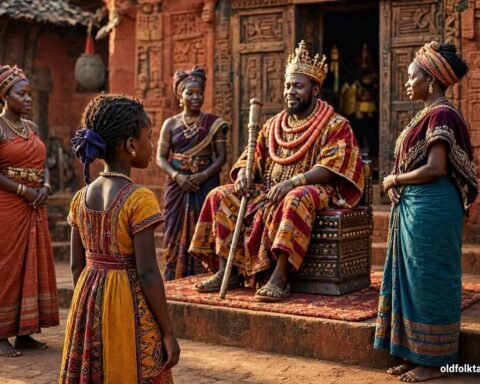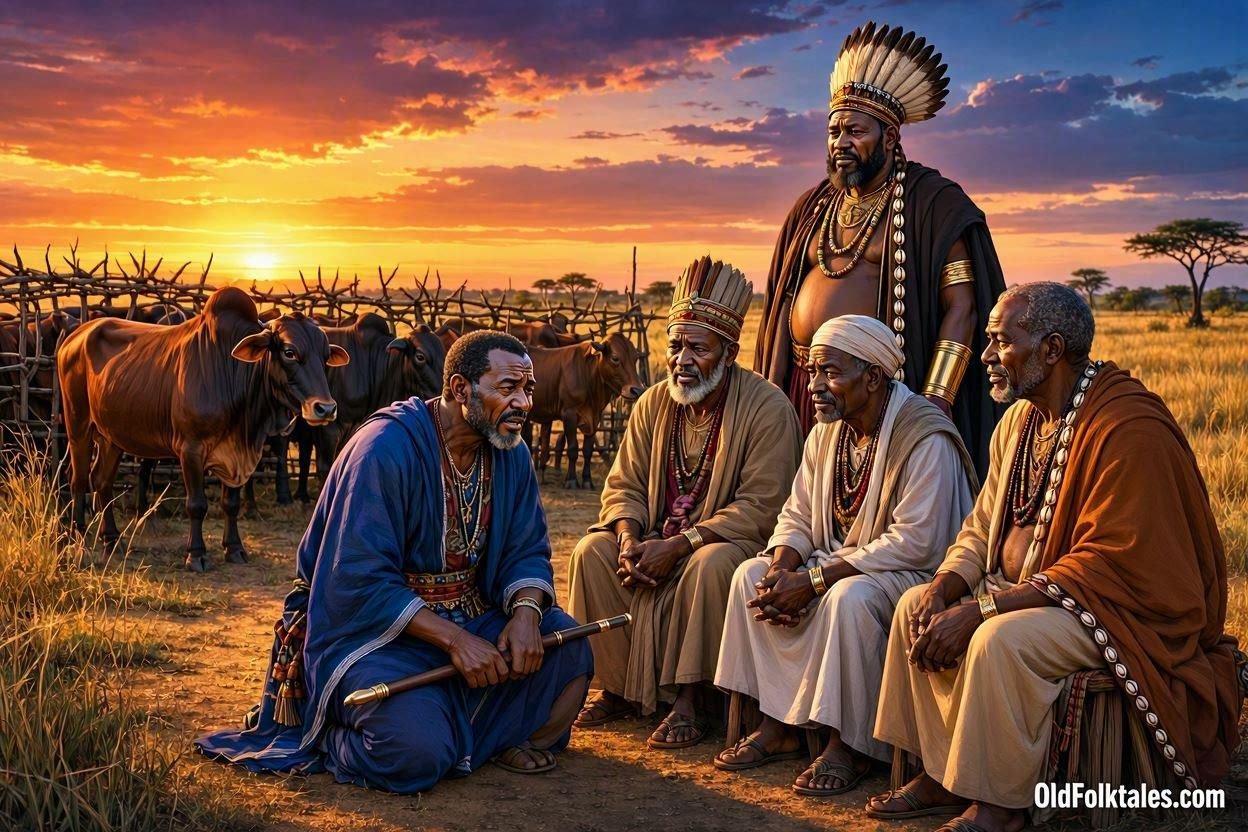
Long ago, in a peaceful South Sudanese village surrounded by open grasslands and grazing cattle, there lived a wealthy man named Majok. His compound was filled with healthy cattle, his granaries overflowed with grain, and many people admired his material success.
Yet despite all he possessed, Majok was not content.
Every gathering in the village reminded him of one thing he did not have.
Respect.
That honour belonged to Chief Ayiik, the village leader.
Whenever disputes arose, people sought Ayiik’s judgment. When celebrations were held, they invited him to speak first. Even visitors from distant communities greeted the chief before anyone else.
Majok watched these moments with growing bitterness.
“I have more cattle than the chief,” he often muttered to himself.
“My wealth is greater than his. Why do people honour him instead of me?”
His wife heard these complaints many times.
One evening she quietly replied,
“People respect the chief because he serves them faithfully. Wealth fills a man’s home, but good character fills people’s hearts.”
Majok dismissed her words.
“What is leadership without wealth?” he asked.
She answered calmly,
“What is wealth without honour?”
But Majok refused to listen.
Instead, he became determined to replace Chief Ayiik.
Day after day he searched for opportunities to make the chief appear foolish before the people. Whenever disagreements arose in the village, Majok spread rumours that the chief’s decisions were unfair.
If you enjoyed this story, explore our full West African folktales collection
Some villagers ignored him.
Others listened politely but remained loyal to Ayiik, whose years of wise leadership had earned their trust.
Majok grew even more frustrated.
His desire for recognition slowly turned into envy.
Then one day he devised a dangerous plan.
“If the people lose confidence in the chief,” he thought, “they will surely choose me instead.”
Without considering the consequences, he began setting events in motion that would cast suspicion upon Ayiik.
At first, everything seemed to go according to his plan.
Confusion spread through the village.
Questions were asked.
People argued among themselves.
Majok secretly celebrated what he believed would soon become his victory.
But evil plans rarely remain under human control.
Before long, the trouble he had created reached his own household.
His only son became caught in the confusion that Majok himself had started.
What had begun as a selfish ambition soon turned into a heartbreaking tragedy.
When the terrible news reached Majok, he rushed home in disbelief.
His son was dead.
The cries of mourning filled the compound.
Neighbours gathered to comfort the grieving family, while women sang sorrowful songs that echoed across the village.
Majok fell to the ground.
His wealth could not comfort him.
His cattle could not restore what had been lost.
For the first time, he realized that the road he had chosen had led not to honour, but to unbearable sorrow.
As the village elders gathered to reflect upon the tragedy, a blind poet who was well known for speaking difficult truths stood before the people.
Silence spread across the gathering.
The old man raised his voice and spoke words that no one present would ever forget.
“Your deeds killed your son.”
The words struck Majok like a spear.
The poet continued.
“A man who allows envy to rule his heart destroys not only himself but also those closest to him.”
He turned toward the villagers.
“Leadership is never bought with cattle.”
“It is never won through jealousy.”
“It cannot be stolen by destroying another person’s reputation.”
“It is earned through wisdom.”
“It grows through service.”
“It is strengthened by justice.”
Finally, he looked toward the grieving father.
“If you had spent your strength helping your people instead of competing against your chief, today your son would still be among us.”
No one spoke.
Every person understood the lesson.
Majok wept openly.
He no longer cared about becoming chief.
His ambition had cost him more than he could ever repay.
In the days that followed, he abandoned his campaign against Chief Ayiik.
Instead, he asked the chief and the elders to forgive him.
Although they could not erase his grief, they welcomed his repentance and encouraged him to spend the rest of his life serving the community with humility.
From that day forward, Majok changed.
He used his wealth to help widows, support struggling families, and care for travellers who passed through the village.
People eventually came to respect him.
Not because he was rich.
Not because he had sought power.
But because he had finally learned that true leadership begins with good character.
For generations afterward, parents retold Majok’s story to their children whenever pride and jealousy threatened to take root.
They would end with the blind poet’s unforgettable words:
“Leadership is earned through good deeds, but selfish ambition brings only regret.”
Looking for more? Explore the magic of East African folktales here
Moral Lesson
The story teaches that wealth alone cannot earn respect or true leadership. Majok believed that his riches made him more deserving of honour than Chief Ayiik, but his envy and selfish ambition led him to make reckless decisions that brought tragedy to his own family.
True leadership is built on integrity, wisdom, humility, and service to others. When people seek power through jealousy, deceit, or selfishness, they often hurt not only themselves but also those they love. The folktale reminds us that our actions have consequences, and every decision we make can shape the lives of those around us.
Above all, the story encourages us to value good character over material wealth, because genuine respect cannot be bought. it must be earned through righteous deeds.
Knowledge Check
1. Why was Majok jealous of Chief Ayiik?
Answer: Although Majok was wealthy, he envied the respect and honour the villagers gave to Chief Ayiik.
2. What did Majok believe would make him the next leader?
Answer: He believed that if he destroyed the chief’s reputation, the people would choose him as their new leader.
3. What tragic event changed Majok’s life?
Answer: His own son died as a consequence of the conflict and confusion caused by Majok’s selfish actions.
4. What lesson did the blind poet teach the villagers?
Answer: The poet reminded everyone that leadership comes through good deeds and service, not through wealth or jealousy.
5. How did Majok change after the tragedy?
Answer: He repented, sought forgiveness, and began using his wealth to help his community instead of seeking power.
6. What is the central message of the story?
Answer: Envy and selfish ambition lead to regret, while humility, service, and good character earn lasting respect.
Source
Adapted from: Your Deeds Killed Your Son in Folktales and Contemporary Stories from South Sudan, South Sudanese Folktales Archive (Na’eesh Mabadh – Living Together Project).