There was a time when death was not part of human life, when people believed that their days would stretch on without end. In that distant age, the world was still new, and the bond between the divine and humans was close and direct. Messages from the Creator traveled freely between the heavens and the earth, shaping the lives of all who lived below.
It was during this time that a great decision was made. The Creator looked upon humanity and chose to grant them a gift. Humans would not die forever. When their time came, they would rest for a while and then return to life again, just as the moon disappears and returns to the sky.
To deliver this message, the Creator chose a messenger and gave him a simple but important task. He was to go to the people and tell them that death would not be permanent, that life would continue in cycles without end.
The messenger accepted the task and began his journey to the human world.
Fascinated by this tale? Discover more North African folktales
At first, he traveled with purpose. The path stretched across forests, rivers, and open land, but he moved steadily, carrying the message that would shape the destiny of all people.
But along the way, something changed.
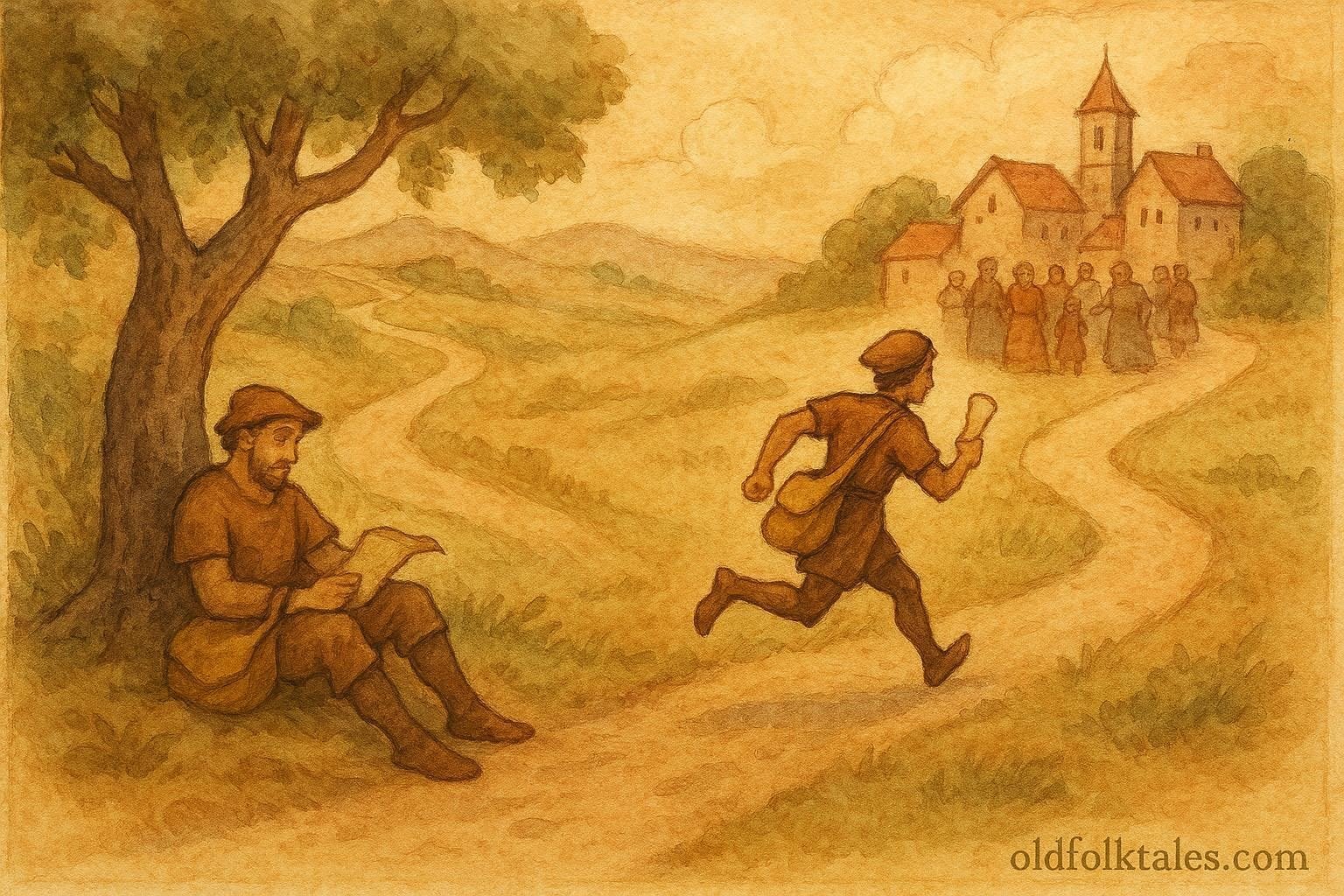
The journey was long, and the messenger began to grow distracted. He stopped to rest more often than he should have. He lingered in places where he should have passed quickly. At times, he delayed his journey without realizing the importance of what he carried.
The message was simple, yet its urgency was great. Still, the messenger did not hurry.
Meanwhile, the Creator waited. When the messenger did not return, and the message had not yet reached the people, a second decision was made. Another messenger was sent, this time with a different message.
This second message declared that death would be permanent. Once humans died, they would not return. Life would end, and it would not begin again.
Unlike the first messenger, the second one did not delay. He traveled quickly, moving with speed and determination. He did not stop along the way. He did not lose sight of his purpose.
And so, he arrived first.
The people gathered as the second messenger delivered his words. They listened carefully as he told them that death would come to all and that it would be final.
There would be no return. No second life. No endless cycle.
The message spread quickly among the people, and they accepted it as truth. They began to live with the understanding that life was limited and that death marked its end.
Not long after, the first messenger finally arrived.
He carried the original message, the promise that death would not last forever. He spoke to the people, telling them that they would return to life after death, that their existence would continue beyond what they could see.
But the people were confused.
“We have already received a message,” they said. “We were told that death is final.”
The first messenger tried to explain, but it was too late. The second message had already been accepted. The order of the messages had been reversed, and the truth had been changed.
The people did not know which message to believe, but they chose the one they had heard first. The idea of permanent death had already taken root in their minds. It shaped their understanding of life, their fears, and their expectations.
When the Creator saw what had happened, it was clear that the order of events could not be undone. The message that arrived first had become the truth that humans would live by.
And so, death remained.
From that time onward, human life was marked by an ending. People lived knowing that their time was limited. They mourned the loss of loved ones, understanding that death was not a temporary sleep, but a final departure.
Yet the story of the two messages was never forgotten. It was told again and again, passed from elders to children, as a reminder of how a single delay can change everything.
The people learned from this story that responsibility carries great weight. A task may seem small, but its importance can shape the fate of many. The first messenger had not intended harm, yet his delay altered the destiny of all humanity.
The second messenger, by acting quickly and with purpose, ensured that his message would be the one remembered.
And so, the story became more than an explanation for death. It became a lesson about duty, urgency, and the consequences of neglect. It taught that what is delayed may be lost, and what arrives first may become truth, whether it is meant to or not.
Even today, the tale is told to remind people that actions matter, timing matters, and responsibility must never be taken lightly.
Click here to discover more legendary tales from West Africa
Moral Lesson
Delays and neglect of responsibility can have lasting consequences. What is done first often shapes reality, and important duties must never be taken lightly.
Knowledge Check
- What was the Creator’s original message to humans?
That humans would not die forever and would return to life after death. - Why did the first messenger fail?
He delayed his journey and did not deliver the message on time. - What message did the second messenger deliver?
That death would be permanent and humans would not return to life. - Why did humans accept the wrong message?
Because it arrived first and was accepted as truth. - What does the story explain?
It explains the origin of death in Fon (Dahomey) tradition. - What lesson does the story teach?
That responsibility and timing are important, and delays can have lasting consequences.
Source
Dahomean folktale, Benin. Collected by Melville J. Herskovits in Dahomean Narrative: A Cross-Cultural Analysis (1958).