Long before paved roads crossed the lands of Guinea-Bissau, powerful trade caravans moved slowly across the savannah connecting kingdoms, villages, and distant markets throughout West Africa.
These caravans carried salt, cloth, kola nuts, ivory, copper, and gold across enormous distances. Merchants traveled for weeks beneath the harsh sun, depending on guides who understood hidden routes, water sources, and the dangers waiting across the open land.
Among the Mandinka people, caravan trade was not only business.
It was survival.
Entire towns depended on the success of traveling merchants who linked the interior savannah to river ports and coastal settlements.
But traders also respected certain spiritual laws tied to the land itself.
Across the savannah, there were places considered sacred long before the rise of kingdoms or trade routes. Some forests were avoided after sunset. Certain wells required ceremonial offerings before use. And some territories were believed to belong to ancestral forces who punished greed and arrogance.
Don’t stop yet! See our complete East African folktales collection
One of the most feared stories connected to these beliefs became known as the legend of the Lost Caravan of Gabú.
According to oral tradition, the events took place during the height of regional trade prosperity when wealthy merchants competed fiercely for influence and fortune.
At the center of the story stood a powerful trader named Mamadou Sissoko.
Mamadou was admired across the region for his wealth and ambition. His caravans transported enormous quantities of gold and luxury goods between inland markets and coastal territories, earning him influence among nobles and merchants alike.
But many also considered him dangerously prideful.
Unlike older caravan leaders who respected spiritual customs preserved by local communities, Mamadou believed wealth and intelligence mattered more than ancestral warnings.
He trusted profit above tradition.
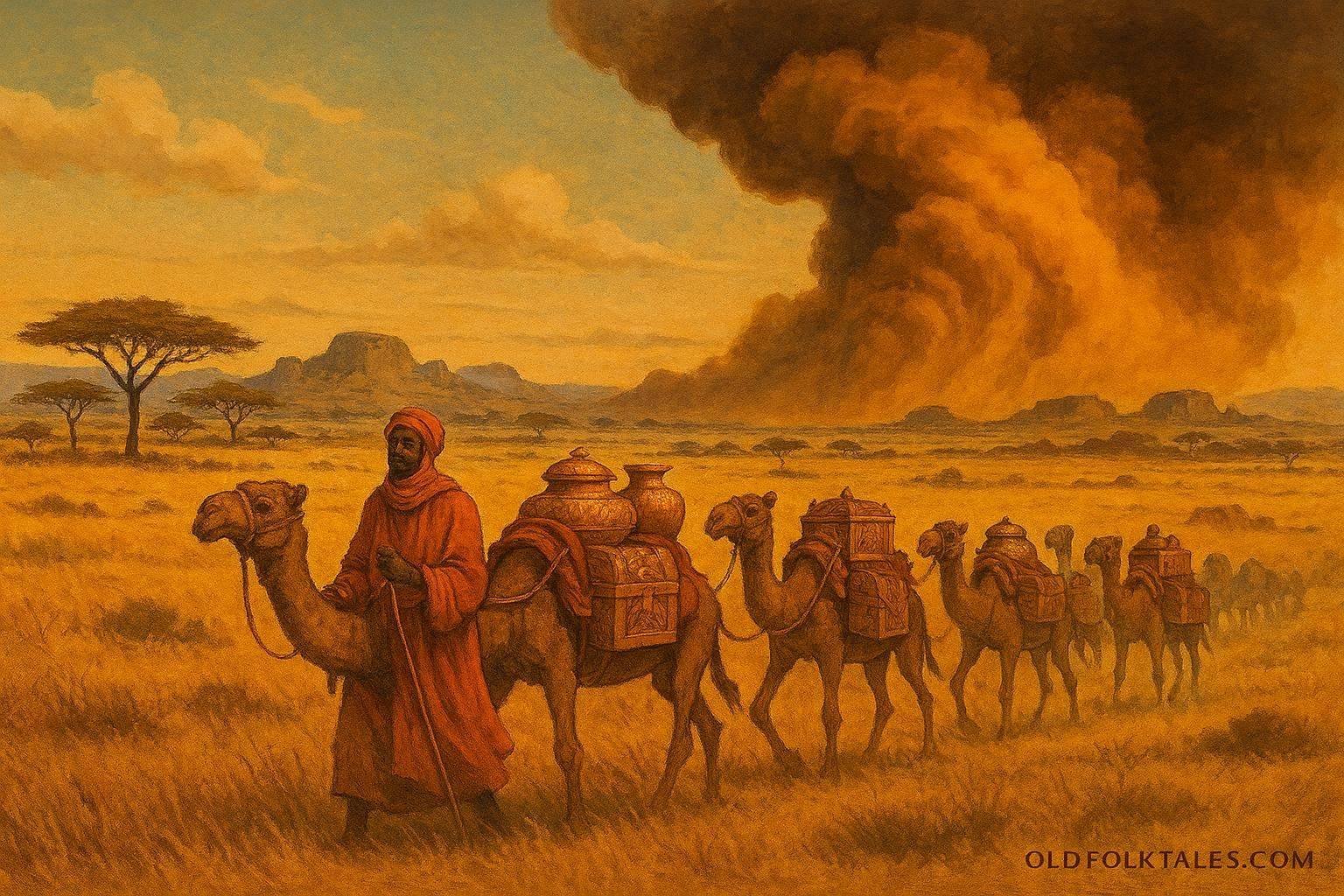
One dry season, Mamadou organized what would become the largest caravan ever to leave Gabú.
Dozens of camels and pack animals carried gold, fine cloth, carved ivory, and trade goods intended for powerful coastal buyers. Armed guards traveled alongside experienced merchants, servants, and guides.
The caravan attracted attention throughout the region.
Some praised Mamadou’s boldness.
Others worried his growing ambition blinded him to danger.
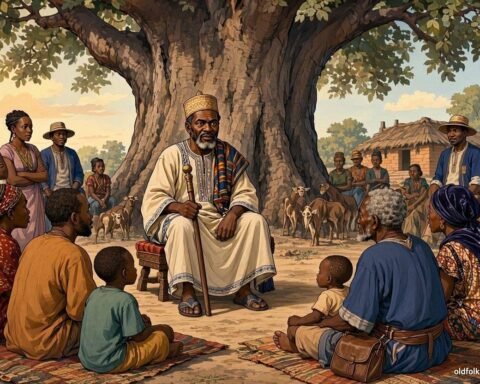
Before departure, several elderly griots visited Mamadou privately with warnings tied to the route he planned to follow.
According to the elders, portions of the western savannah had become spiritually unstable after earlier conflicts disturbed sacred ground connected to ancestral burial sites.
Travelers were advised to avoid the territory entirely until proper ceremonies restored balance.
Alternative routes existed.
But they would add many days to the journey.
Mamadou dismissed the warnings immediately.
“The land belongs to those strong enough to cross it,” he reportedly declared.
Many members of the caravan felt uneasy after hearing this response.
Some guides even refused to travel with him.
But the promise of wealth kept most people from abandoning the expedition.
The caravan departed Gabú beneath clear skies and high expectations.
For several days, the journey proceeded smoothly.
The animals remained strong.
Trade stops proved successful.
And Mamadou openly mocked earlier warnings around nightly campfires.
But as the caravan moved deeper into the western savannah, strange events slowly began unfolding.
At first, they seemed minor.
Birds stopped appearing along the route.
The wind carried unusual sounds at night.
And several animals became restless without explanation.
One evening, the caravan encountered an isolated settlement near the edge of a dry plain. The village elders immediately recognized the direction Mamadou intended to travel.
They begged him not to continue.
According to their traditions, the plains ahead were protected by forces connected to forgotten ancestral territories disturbed generations earlier during war and migration.
Travelers crossing the land respectfully could sometimes pass safely.
But caravans driven by greed often disappeared.
Again, Mamadou ignored the warnings.
Some merchants within the caravan became frightened and considered turning back. Yet leaving the expedition meant losing potential fortunes tied to the gold shipment.
Fear battled against ambition.
In the end, most continued onward.
The following morning, the caravan entered the forbidden territory.
At first, nothing unusual happened.
The land stretched endlessly beneath the sun with dry grass, scattered trees, and distant hills visible along the horizon.
But by midday, the atmosphere changed.
The heat intensified unnaturally.
The air became strangely silent.
Even the animals moved nervously.
Then the guides noticed something deeply troubling.
The landmarks no longer matched known routes.
Paths seemed to shift.
Rock formations appeared in places where none should exist.
And despite traveling for hours, the caravan somehow remained within the same stretch of land.
Confusion spread quickly.
Several men argued they were moving in circles.
Others accused the guides of becoming lost.
Mamadou ordered the caravan forward anyway, refusing to admit danger.
As evening approached, dark clouds gathered unexpectedly across the savannah despite the dry season.
A violent sandstorm erupted without warning.
Wind roared across the plains with terrifying force, swallowing visibility almost instantly.
Animals panicked.
Merchants screamed for one another through the storm.
Gold containers overturned into the sand.
Several camels broke free and disappeared into the darkness.
For hours, chaos consumed the caravan.
When morning finally arrived, silence covered the savannah.
But the caravan was gone.
Nearby villagers searching the region later found only scattered traces.
Broken trade goods buried beneath sand.
Abandoned sandals.
Fragments of wooden carts.
No bodies were discovered.
No surviving merchants returned.
And the enormous shipment of gold vanished completely.
News of the disappearance spread rapidly throughout surrounding kingdoms.
Many believed the storm itself destroyed the caravan.
Others insisted supernatural forces tied to the sacred territory erased the expedition entirely.
What frightened people most, however, were later reports from isolated travelers crossing distant parts of the savannah.
Several claimed they occasionally saw ghostly caravans moving silently at sunset across the horizon.
The figures appeared heavily loaded with gold and trade goods.
But whenever travelers approached closer, the caravan vanished into dust and heat.
Over time, the Lost Caravan of Gabú became one of the most respected cautionary legends in Mandinka oral tradition.
Griots used the story to teach younger generations about the dangers of greed, arrogance, and disrespect toward ancestral knowledge preserved by earlier communities.
Because according to tradition, wealth gained without wisdom eventually leads people toward destruction they cannot escape.
Even today, some elders across parts of Guinea-Bissau and Senegambia warn travelers never to mock sacred places tied to forgotten histories.
For the land remembers every step taken upon it.
And sometimes, it refuses to let the careless return.
Want more? Read more West African folktales now
Moral Lesson
Greed and arrogance can blind people to wisdom, leading them toward destruction and loss.
Knowledge Check
- Where is the story set?
It is set near Gabú in the savannah regions of Guinea-Bissau. - Who was Mamadou Sissoko?
He was a wealthy Mandinka caravan leader transporting gold across the savannah. - Why did elders warn the caravan?
The route crossed sacred territory believed to be spiritually dangerous. - What strange events happened during the journey?
Landmarks shifted, animals became restless, and a violent sandstorm appeared suddenly. - What happened to the caravan?
It disappeared completely, leaving behind only scattered traces. - What lesson does the story teach?
People should respect ancestral wisdom and avoid greed and arrogance.
Source
West African folklore. Adapted from Mandinka caravan traditions preserved in Senegambian trade folklore archives and regional oral history studies.