In the highland fields of Ethiopia, where the soil is turned by careful hands and the seasons guide the rhythm of life, there lived a farmer whose days were marked by struggle.
He was not lazy.
Click here to discover more legendary tales from West Africa
From the first light of dawn, he was in his field, breaking the earth, sowing seeds, and tending to what little land he had inherited. His hands were rough from labor, his back often bent, and his thoughts constantly weighed down by one concern:
“How will I harvest enough?”
The rains did not always come when expected. The soil did not always respond as he hoped. And though he worked as hard as any man, his harvests were often small, just enough to survive, but never enough to feel secure.
He watched other farmers whose fields seemed fuller, whose harvests came stronger, and though he said little, something grew quietly within him.
Impatience.
“If only the crops would grow faster,” he would mutter as he walked among the green shoots. “If only I could harvest sooner, before anything goes wrong.”
His eyes lingered on the grain as it rose slowly from the soil, tall, but not yet ready. To him, it always seemed as though it took too long.
Too long to grow.
Too long to ripen.
Too long to reward his effort.
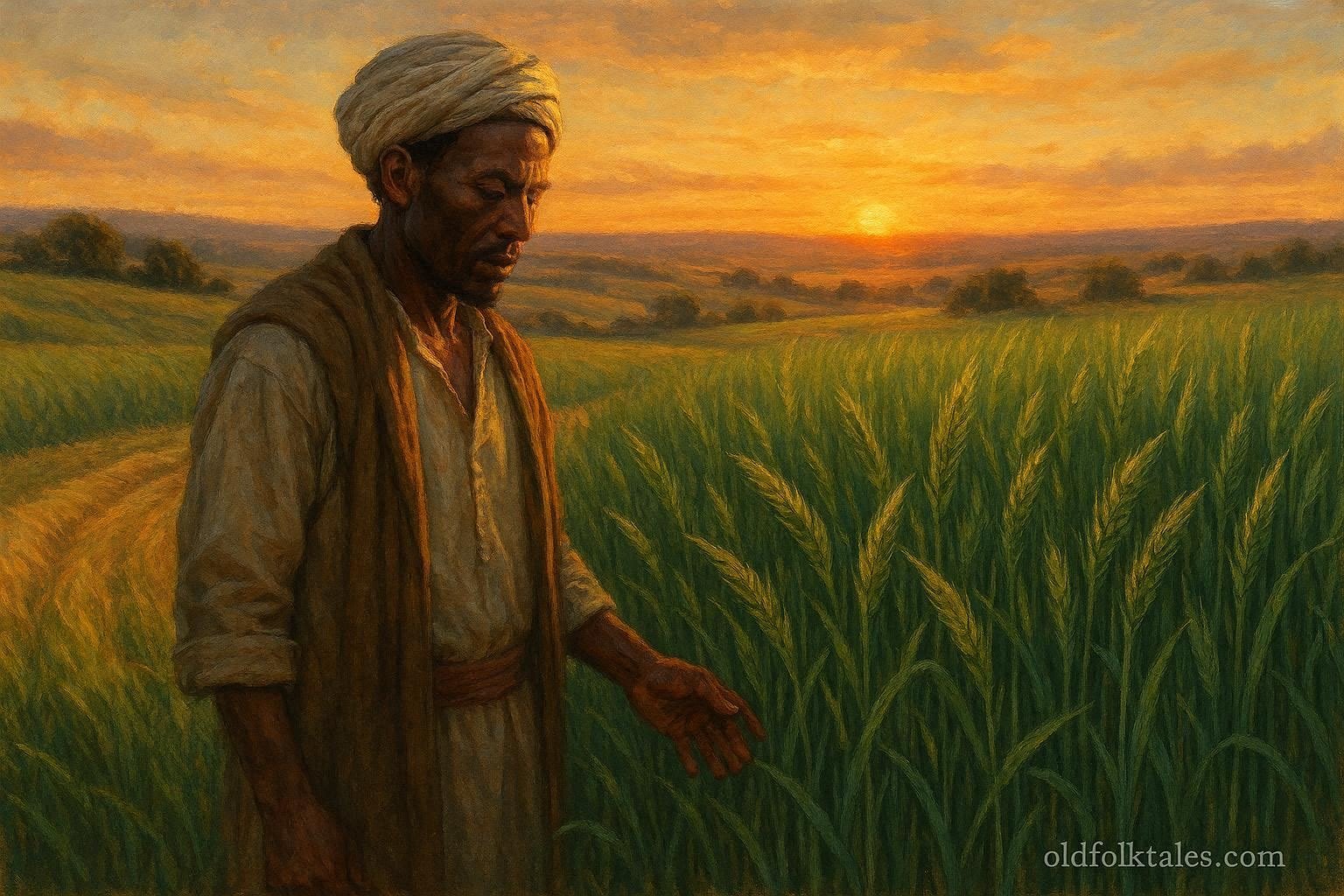
One evening, as the sky softened into the fading light of dusk, the farmer walked through his field, inspecting the grain. The stalks swayed gently in the breeze, their tips still pale, not yet golden.
He sighed.
“At this rate, I will lose everything before the harvest comes,” he said aloud.
The wind moved through the field, brushing against the grain.
And then, something unexpected happened.
A voice.
Soft. Low. Almost indistinguishable from the rustling of the leaves.
“Wait.”
The farmer froze.
He turned slowly, looking around him. There was no one in sight. The field stretched wide and empty, just as it always had.
“Who speaks?” he asked.
The grain swayed again.
“We do.”
The farmer’s eyes widened slightly as he looked down at the stalks around him.
“This is not possible,” he murmured.
Yet the voice came again, steady and calm.
“We are not yet ready.”
The farmer stepped closer, his heart uncertain.
“You speak?” he said.
“We have always spoken,” the grain replied. “You have not always listened.”
The words settled in the air.
The farmer did not know whether to trust what he heard. But something about the voice felt clear, not strange, not threatening, but certain.
“What do you mean, not ready?” he asked.
“Our time has not come,” the grain said. “We are still growing. The strength you seek has not yet formed.”
The farmer frowned.
“I cannot wait forever,” he said. “If I delay too long, I risk losing everything.”
“You risk losing more by taking too soon,” the grain replied.
The farmer shook his head.
“You do not understand,” he said. “I have little. I cannot afford to fail.”
“And yet,” the grain answered, “you stand ready to fail by your own choice.”
The farmer fell silent.
The field moved gently around him, the sound of the grain rising and falling like breath.
“Patience is part of the harvest,” the voice continued. “Without it, what you gather will not sustain you.”
The farmer turned away.
He did not want to hear this.
Patience had never filled his storage. Waiting had never eased his worry.
“I will decide what is best,” he said firmly.
The grain did not argue.
“We have spoken,” it replied.
The days that followed were filled with restless thought. The farmer returned to his field again and again, studying the grain, measuring its growth, watching for any sign that it was ready.
But each time, it appeared the same, still green, still unfinished.
And each day, his impatience grew.
“What if something happens?” he thought. “What if the rains come too hard? What if pests arrive? What if I lose it all before I harvest?”
The fear, once quiet, became louder than the memory of the grain’s words.
Finally, he made his decision.
One morning, before the sun had fully risen, he entered his field with his tools.
“This is the right time,” he told himself. “Better early than too late.”
As he began to harvest, the grain moved again, the sound of its voice returning.
“It is too soon.”
The farmer did not stop.
“I cannot wait,” he said.
“You will regret this,” the grain replied.
But the farmer continued, cutting the stalks, gathering them, working quickly and with urgency. By the time the sun climbed higher into the sky, much of his field had been harvested.
He stood back, breathing heavily, looking at what he had done.
For a moment, he felt relief.
“It is finished,” he said.
But as he began to process the harvest, that feeling began to change.
The grain was light.
Too light.
When he examined it more closely, he saw what he had not allowed himself to see before.
It was not fully formed.
The seeds within were small, weak, and incomplete. They lacked the weight, the richness, the fullness that comes only with time.
The farmer’s heart sank.
“No…” he whispered.
He tried to salvage what he could, but there was little to save. The harvest he had rushed had given him almost nothing.
What he had feared losing through waiting, he had lost through haste.
Days passed.
The field, once full, now stood empty. The effort of months had been reduced to loss in a single morning.
The farmer returned to the land and sat among the remaining stalks he had not yet cut.
“I did not listen,” he said quietly.
The wind moved through the field once more.
“You heard,” the grain replied softly. “But you did not trust.”
The farmer lowered his head.
“I thought I knew better,” he said.
“Experience teaches what words cannot,” the grain answered.
The farmer remained there for a long time, reflecting, not only on his loss, but on the choice that had led to it.
In the seasons that followed, he worked his land again.
But this time, he did so differently.
He still rose early. He still labored as before. But when the time came for the grain to grow, he did not rush it. He watched, he waited, and he listened, not only with his ears, but with understanding.
When the grain spoke, he did not turn away.
And when the harvest came, it was full.
The weight of it in his hands was different, strong, complete, and sustaining.
The farmer smiled, not because the work had been easier, but because he had learned what the land had always tried to teach him.
That growth cannot be forced.
That time cannot be shortened.
And that the quiet voices of the earth often carry the wisdom we need most.
Don’t stop yet! See our complete East African folktales collection
Moral Lesson
Patience and respect for natural timing bring lasting reward. Greed and haste disrupt balance and lead to loss.
Knowledge Check
- Why was the farmer struggling in the Ethiopian folktale?
He faced difficult farming conditions and small harvests, which made him impatient and worried. - What did the talking grain warn the farmer about?
The grain warned him not to harvest too early and to wait until it was fully ready. - Why did the farmer ignore the grain’s advice?
He was driven by fear and impatience, believing early harvesting would prevent loss. - What happened when the farmer harvested too early?
The grain was not fully developed, resulting in a poor and unusable harvest. - What lesson did the farmer learn?
He learned that patience and trust in natural processes are essential for success. - What is the main theme of “The Farmer and the Talking Grain”?
The story emphasizes patience, respect for nature, and the consequences of greed.
Source: Drawn from agrarian Ethiopian oral traditions referenced in “Wax and Gold: Tradition and Innovation in Ethiopian Culture” by Donald N. Levine (1965).
Cultural Origin: Rural Ethiopian farming communities, especially within Amhara and Tigray regions