Across the vast landscapes of eastern Zambia stretched the Luangwa Valley, a region of thick forests, winding rivers, open grasslands, and powerful wildlife feared and respected by generations of local communities. Villages scattered across the valley depended heavily upon farming, hunting, fishing, and strong cooperation to survive the dangers of both nature and conflict.
Among the Chewa people living near the valley, drums carried enormous importance.
They were not used only for music or celebration.
Drums communicated messages across long distances, announced ceremonies, warned communities during emergencies, and preserved ancestral traditions passed carefully from one generation to another. Certain ceremonial rhythms were considered sacred because elders believed they carried spiritual connection to the ancestors themselves.
Some rhythms called people together during harvest festivals.
Others honored births, marriages, funerals, or royal gatherings.
But according to old oral traditions, one particular drum pattern served a far more mysterious purpose.
It was known as the Rhythm of Warning.
Very few drummers were permitted to learn it.
Want more? Read more West African folktales now
The story began generations ago during a period when several villages across the Luangwa Valley faced repeated attacks from dangerous raiders and wild predators moving through the region during severe drought conditions. Fear spread constantly among isolated communities because danger often arrived without warning.
At the center of the legend lived an elderly ceremonial drummer named Chisomo.
Throughout the valley, Chisomo was respected not only for musical skill but for his deep understanding of sacred Chewa traditions connected to ancestral drumming societies. He guarded old rhythms passed down through generations of ceremonial performers.
People believed Chisomo could hear meanings within sound that ordinary people could not.
As he grew older, however, concern spread about who would inherit the sacred knowledge after his death. Many younger drummers focused mainly upon entertainment and festivals rather than the discipline required for ceremonial responsibility.
Among the apprentices studying under Chisomo was a quiet young man named Tambala.
Unlike others seeking praise or recognition, Tambala listened carefully during every lesson. He memorized rhythms patiently and treated the sacred drums with deep respect.
Still, Chisomo remained uncertain whether the young apprentice fully understood the burden carried by ceremonial drummers.
“One careless rhythm can spread panic,” the old master warned him often. “But silence during danger can destroy lives.”
One dry season, strange events began troubling the valley.
Hunters reported unusual movement among animals fleeing deeper forests near the riverbanks. Several travelers disappeared while crossing isolated routes through the wilderness. At night, distant smoke appeared beyond the hills though no villages existed there.
Fear quietly returned to the communities.
Village elders suspected armed raiders were moving slowly toward the Luangwa settlements again after many peaceful years.
One evening, while practicing alone beside the ceremonial drum shelter, Tambala noticed something unusual.
As wind moved through the valley, distant echoes seemed to blend naturally with the drum rhythms he practiced. Certain patterns created strange vibrations that carried far across the open landscape.
Curious, Tambala experimented carefully.
To his surprise, specific drum sequences caused birds to scatter suddenly from nearby trees while dogs across the village reacted nervously even before distant sounds became audible to ordinary people.
When Chisomo heard the rhythms, his expression changed immediately.
“You must never play those patterns carelessly,” the old drummer warned sternly.
Then for the first time, Chisomo revealed the existence of the Rhythm of Warning.
According to ancestral tradition, master drummers long ago discovered special rhythms capable of traveling unusually far across the valley under certain wind and weather conditions. Villages learned to recognize the patterns as signals warning of approaching danger before enemies or disasters arrived.
Over generations, the rhythms became sacred responsibility.
Only trusted ceremonial drummers learned them because false warnings could create chaos throughout the valley.
Chisomo believed the ancestors themselves guided the rhythms.
Now he feared danger had returned once again.
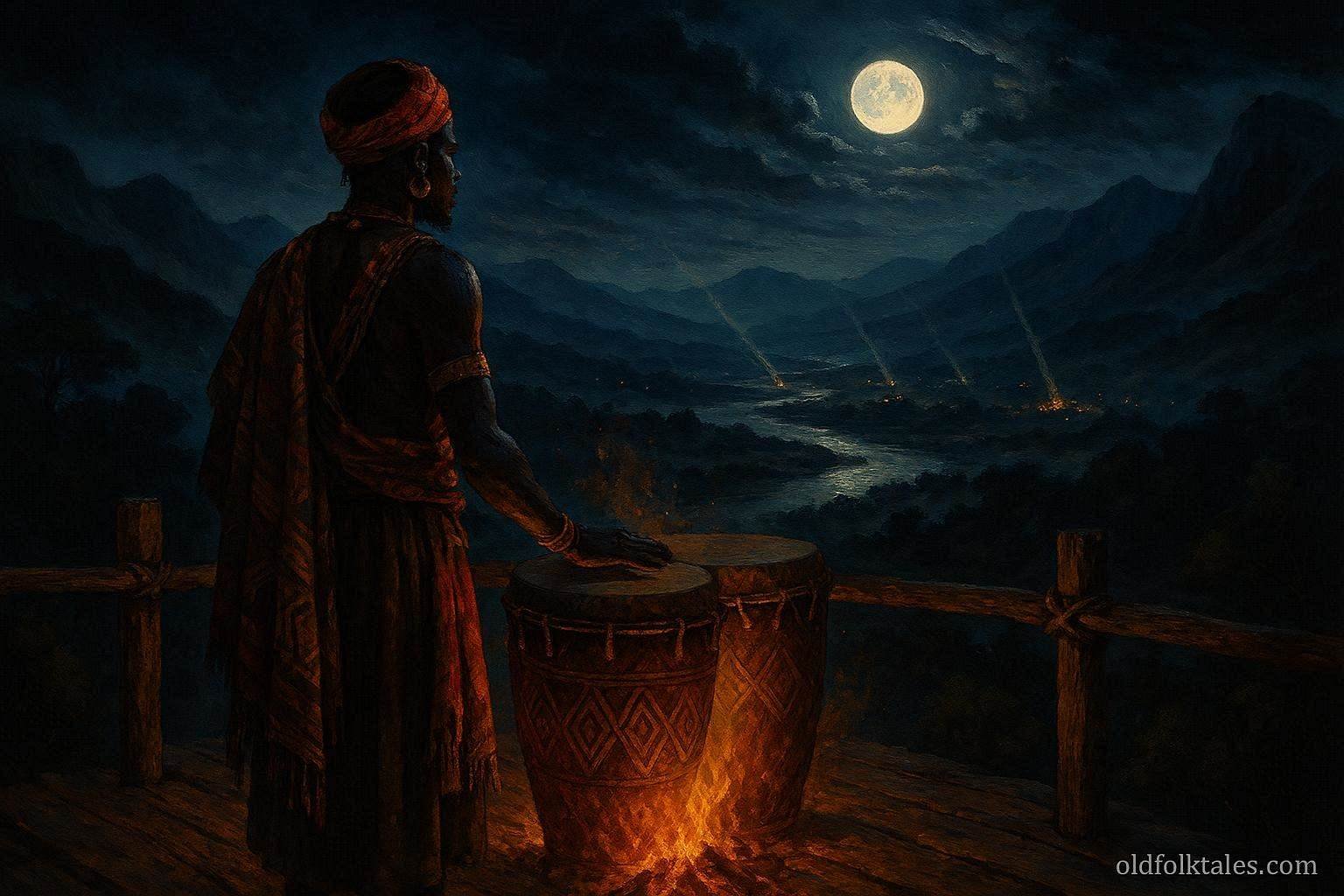
Several nights later, Tambala awoke suddenly after hearing distant animal cries from beyond the river. Remembering the strange movements hunters described earlier, he climbed the drum platform overlooking the village.
Far beyond the trees, faint firelight flickered across the hills.
Raiders were approaching.
Without hesitation, Tambala began playing the Rhythm of Warning exactly as Chisomo taught him. The powerful beats echoed across the valley beneath the night sky while nearby villages responded quickly after recognizing the ancient signal.
Drums answered from distant settlements one after another.
Within minutes, warning rhythms spread rapidly throughout the Luangwa Valley.
Villagers gathered children and elders to safety while hunters and guards prepared defenses before the raiders could arrive unexpectedly.
When the attackers finally reached the outer settlements before dawn, they discovered the communities already organized and alert rather than vulnerable and sleeping.
The raids failed completely.
News about Tambala’s actions spread quickly across the valley.
Many elders praised the young drummer for preserving lives through courage and discipline. Yet Chisomo reminded everyone that the true power belonged not to one individual but to the generations of memory preserved through sacred tradition itself.
“The drum remembers what people forget,” the old master told the gathered villages.
Years later, after Chisomo’s death, Tambala became known throughout the Luangwa Valley as the new Drum Keeper.
He trained younger drummers carefully, teaching them that ceremonial music carried responsibility greater than performance alone. Through him, the sacred warning rhythms survived for future generations.
Even today, stories from parts of eastern Zambia still describe drums as voices capable of protecting communities long before danger arrives.
And according to old Chewa belief, whenever ceremonial rhythms echo across the Luangwa Valley at night, the ancestors may still be warning the living through the language of the drum.
Love this story? Discover our full Southern African folktales collection
Moral Lesson
Traditional knowledge and cultural responsibility can protect entire communities when preserved with wisdom and discipline.
Knowledge Check
- Why were drums important in the Luangwa Valley?
Drums communicated warnings, ceremonies, and ancestral traditions across villages. - Who was Chisomo?
Chisomo was an elderly ceremonial drummer guarding sacred rhythms. - What was the Rhythm of Warning?
It was a sacred drum pattern used to warn villages about approaching danger. - How did Tambala discover danger?
He noticed distant firelight and remembered unusual signs in the valley. - What happened after Tambala played the warning rhythm?
Villages prepared defenses before raiders could attack unexpectedly. - What lesson does the story teach?
Traditional knowledge and responsibility help communities survive danger.
Source
Zambian ceremonial folklore. Adapted from Chewa drumming traditions documented in Central African ethnomusicology and folklore studies.