Across parts of eastern Zambia, the Chewa people preserved powerful ceremonial traditions connected to the Nyau society, a respected spiritual and cultural institution known for masked performances, ancestral teachings, and community rituals passed through generations.
To outsiders, Nyau ceremonies often appeared mysterious.
Masked dancers emerged suddenly from forests wearing elaborate costumes representing animals, spirits, ancestors, and moral figures connected to Chewa beliefs. Drums echoed through villages while dancers performed dramatic movements carrying symbolic lessons about life, responsibility, death, and human behavior.
But among the Chewa, the masks represented far more than entertainment.
They carried authority.
Nyau performances were believed to expose dishonesty, correct immoral behavior, and remind communities that hidden wrongdoing could never remain secret forever.
The most feared figure within certain oral traditions was the Lion Mask.
Known for appearing only during times of serious imbalance within village leadership, the masked spirit symbolized judgment, courage, and ancestral justice. Villagers believed the Lion Mask emerged whenever greed or corruption threatened the harmony of the people.
Looking for more? Explore the magic of East African folktales here
The story began in a prosperous farming village surrounded by forests and fertile land near eastern Zambia.
For many years, the community thrived peacefully under the guidance of respected elders who managed harvests, ceremonies, and trade fairly among families.
But over time, problems slowly began spreading through the village leadership.
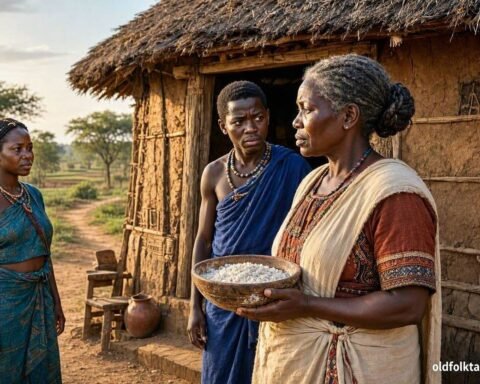
Several influential leaders secretly started taking larger shares of grain collected during community harvests. Families struggling during difficult seasons received less support while certain officials became wealthier than everyone else.
At first, people remained silent.
Fear prevented ordinary villagers from accusing powerful men openly.
Anyone questioning the leadership risked punishment or exclusion from important community decisions.
Soon distrust spread quietly through the village.
Arguments increased during market gatherings. Farming families accused leaders of hiding food reserves while widows and poorer households suffered most during shortages.
Yet publicly, the village leaders continued presenting themselves as protectors of tradition and morality.
Among the villagers lived a young drummer named Kondwani who assisted during Nyau ceremonies. Because of his responsibilities, he often overheard private conversations between elders and ceremonial leaders.
Gradually, Kondwani realized the rumors were true.
Grain intended for struggling families was disappearing from storage houses controlled by senior officials.
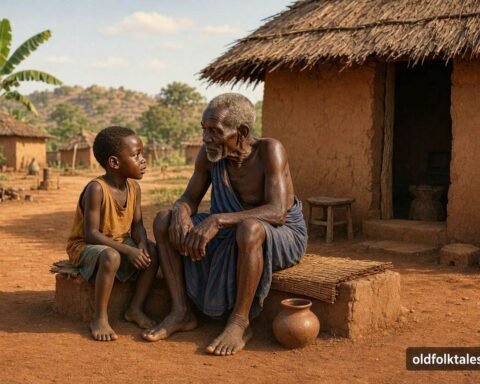
Disturbed by what he learned, Kondwani approached an elderly Nyau instructor named Mphande seeking advice.
Mphande listened carefully before speaking quietly.
“When leaders hide corruption,” the old instructor said, “the ancestors eventually answer through the masks.”
Several weeks later, preparations began for an important seasonal Nyau ceremony celebrating harvest and community renewal. Villagers gathered from surrounding settlements while drummers prepared sacred rhythms deep within the forest initiation grounds.
Yet tension filled the atmosphere.
Many people whispered privately about missing grain and unfair leadership, though no one dared accuse the elders publicly during the celebrations.
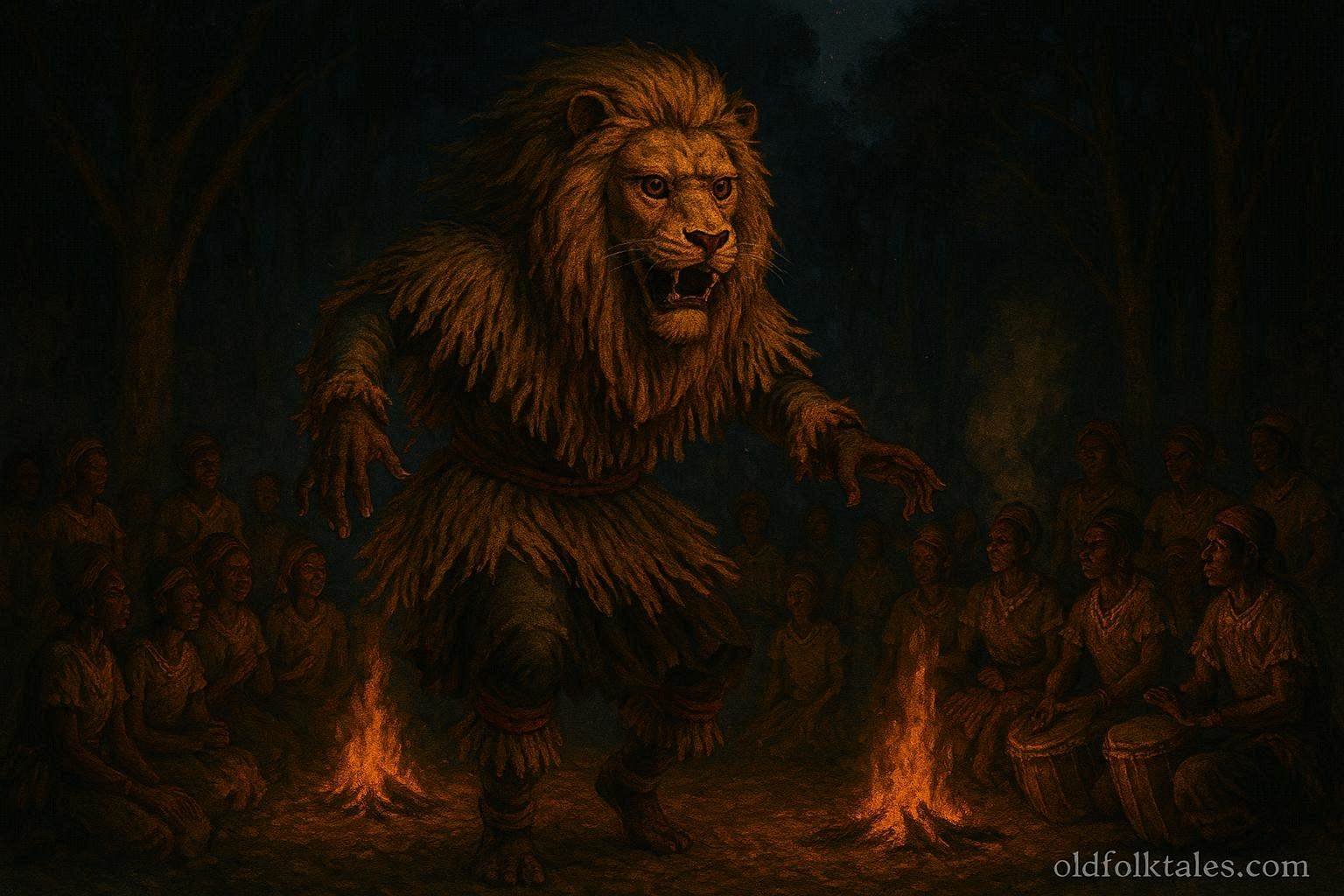
On the evening of the ceremony, masked dancers emerged one after another from the forest performing traditional roles familiar to the community. Animal spirits danced beside ancestral figures while drumming echoed across the village beneath firelight.
Then suddenly, the drums stopped.
Silence spread across the gathering.
From the darkness beyond the trees came a low growling sound.
Slowly, a towering masked figure stepped into the firelight wearing an enormous lion mask decorated with heavy fur, carved teeth, and dark painted markings.
The Lion Mask had appeared.
Fear swept through the crowd instantly.
Even the village elders lowered their eyes nervously because according to Nyau belief, the Lion Mask never arrived without purpose.
The figure moved silently through the gathering before stopping directly before the community leaders seated near the ceremonial fire.
Then the masked dancer spoke in a deep voice.
“The village grows hungry while the storehouses grow full.”
The crowd became completely silent.
No one moved.
The Lion Mask continued speaking.
“The hands trusted to protect the people now steal from them in darkness.”
Several elders exchanged frightened glances.
The masked figure began naming specific acts of corruption hidden within the village leadership. Missing grain supplies, secret trade agreements, and unfair distribution of harvest resources were all exposed publicly before the entire community.
Panic spread among the accused leaders.
Some denied the accusations immediately while others attempted leaving the gathering quietly. But villagers blocked their path demanding answers.
Then something unexpected happened.
One frightened official collapsed before the crowd and confessed openly.
Others soon followed.
The truth shocked the village deeply.
For months, several leaders had secretly taken community grain reserves for personal trade while poorer families suffered increasing hardship.
Anger erupted across the gathering.
But before violence could begin, the Lion Mask raised its hand for silence.
“A village destroyed by revenge cannot heal,” the figure declared.
The masked dancer ordered the stolen grain returned immediately and demanded new leadership councils chosen fairly from respected families throughout the community.
Then, just as suddenly as it appeared, the Lion Mask disappeared back into the darkness beyond the forest.
No one ever confirmed who wore the mask that night.
Some believed Mphande organized the performance to expose corruption through Nyau authority. Others insisted the spirit represented genuine ancestral intervention working through sacred ceremony.
What mattered most was what followed.
The village restored fairness within its leadership, redistributed grain supplies honestly, and renewed community trust through open cooperation. The story of the Lion Mask spread across neighboring settlements as a warning against corruption hidden behind public respectability.
Years later, elders still repeated the legend during Nyau teachings.
According to Chewa tradition, masks do not merely hide faces.
Sometimes they reveal truths ordinary people fear speaking aloud.
And whenever leaders forget responsibility to their people, the Lion Mask may return once again from the forest to restore balance through judgment and truth.
Don’t miss out: Read more Southern African folktales
Moral Lesson
Power must be used honestly because hidden corruption eventually becomes exposed.
Knowledge Check
- What was the Nyau society?
It was a sacred Chewa cultural and spiritual tradition involving masked ceremonies. - Why did the Lion Mask appear?
The village leaders were secretly stealing grain from the community. - Who was Kondwani?
He was a young drummer involved in Nyau ceremonies. - What did the Lion Mask reveal publicly?
It exposed corruption and dishonesty among village officials. - What happened after the truth was revealed?
The stolen grain was returned and leadership was reorganized fairly. - What lesson does the story teach?
Corruption and abuse of power are eventually exposed.
Source
Zambian ceremonial folklore. Adapted from Chewa Nyau traditions documented in UNESCO linked ethnographic and ritual performance studies.