Across the rolling hills and mineral rich lands of northern Zambia lived the Lamba people, communities known for farming, trade, metalworking, and strong spiritual traditions tied closely to the land. Villages spread across fertile valleys surrounded by rocky hills rich in copper deposits that gave the region both wealth and importance for generations.
For the Lamba, survival depended heavily upon rain.
Seasonal rainfall sustained crops, rivers, grazing lands, and village life itself. Elders believed the balance between humans, nature, and the ancestral world determined whether the skies remained generous or silent.
When harmony existed, rain arrived in proper seasons.
But when greed, dishonesty, or conflict spread across the land, drought often followed.
The story began during one of the harshest dry seasons remembered in generations.
At first, villagers expected the rains only slightly late.
Click here to discover more legendary tales from West Africa
But weeks passed beneath relentless heat without clouds appearing over the Copper Hills. Rivers slowly shrank into muddy streams while crops dried beneath cracked earth. Dust storms spread across farms and grazing lands once covered with green vegetation.
Fear grew quickly.
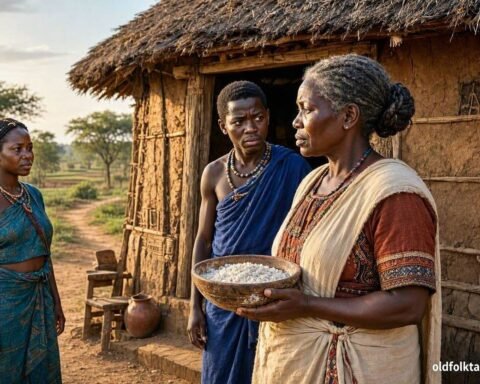
Families rationed food carefully while livestock weakened from thirst. Tension spread between farming communities competing for access to the few remaining water sources.
Even the mining settlements suffered.
Copper workers struggled as wells dried near the hills, forcing long journeys for water under dangerous conditions. Traders traveling between villages carried stories of hunger spreading farther across the region each week.
The elders realized the drought threatened more than crops.
It threatened the unity of the people themselves.
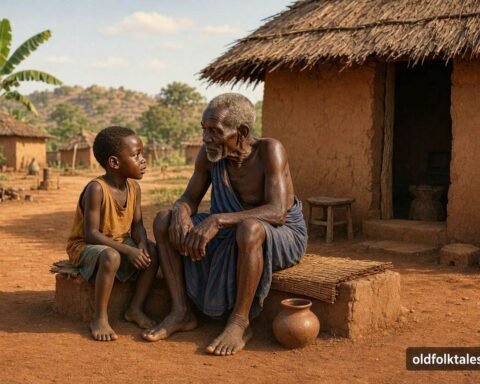
At the center of the story lived an elderly spiritual healer named Mupashi.
For many years, Mupashi served quietly as guardian of old Lamba rainmaking traditions passed down through generations of ritual healers. He understood sacred ceremonies honoring ancestral spirits believed to guide seasonal balance across the land.
Yet Mupashi rarely involved himself in village politics or public affairs.
Some younger villagers even questioned whether the old traditions still carried meaning during changing times.
But as the drought worsened, desperate community leaders traveled to Mupashi’s isolated home near the Copper Hills seeking help.
“The land is dying,” one village elder pleaded. “If the rains do not return soon, the people will begin turning against one another.”
Mupashi listened silently before answering.
“The sky reflects the condition of the people,” he said quietly. “Rain cannot return where division controls the land.”
His words confused many villagers.
They expected magical solutions or immediate rituals. Instead, the old healer insisted the drought involved more than weather alone.
According to Mupashi, the ancestors were warning the communities that balance had been broken.
Over recent years, disputes over land, trade, and mining wealth created growing hostility between neighboring villages. Several leaders became known for corruption and selfishness while sacred agreements protecting shared water and farmland were increasingly ignored.
Traditional ceremonies honoring unity and gratitude toward nature had also become neglected.
“The earth hears human behavior,” Mupashi warned. “When greed spreads, even the clouds grow distant.”
Some leaders dismissed his explanation angrily.
But others feared he spoke the truth.
Finally, after several days of discussion, the villages agreed to follow Mupashi’s instructions completely.
First, he ordered conflicts between neighboring communities settled peacefully before any rain ceremony could begin. Elders gathered publicly to resolve disputes involving farmland, water access, and trade disagreements dividing the region.
Next, Mupashi instructed wealthy leaders to distribute grain reserves fairly among struggling families rather than hoarding supplies for profit during the crisis.
Reluctantly, many obeyed.
For the first time in months, cooperation slowly replaced hostility between the villages.
Only afterward did Mupashi begin preparing the sacred rain ceremony.
Messengers traveled across the Copper Hills inviting communities from distant settlements to gather near an ancient clearing surrounded by large stone formations believed sacred within old Lamba tradition.
People arrived carrying offerings of grain, carved staffs, drums, and ceremonial cloth.
The atmosphere mixed hope with fear.
Some still doubted the old healer.
Others believed the future of the entire region depended upon the ceremony succeeding.
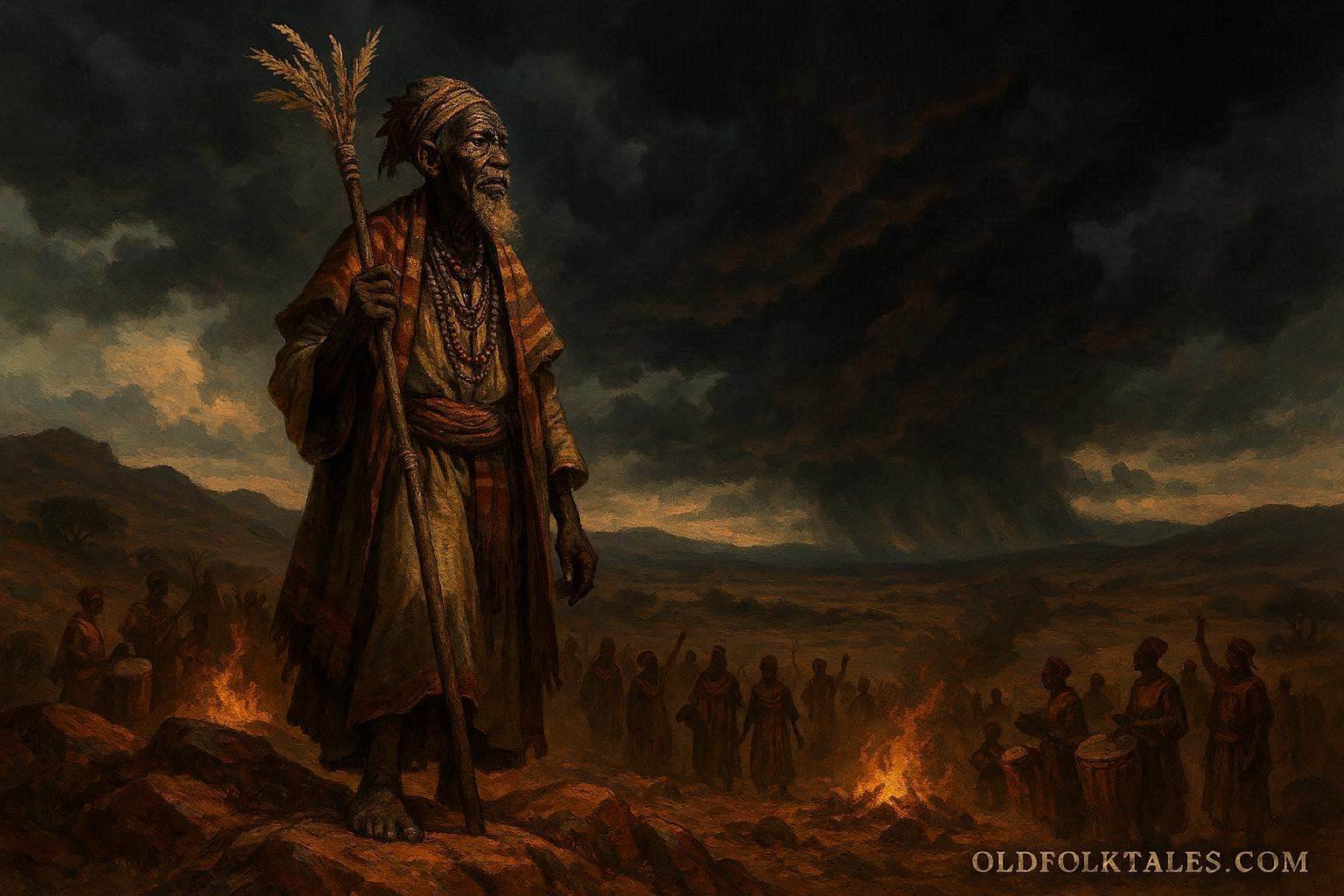
As sunset approached, Mupashi stood before the gathered communities holding a long wooden staff decorated with copper rings and ancestral symbols.
Then the drums began.
Slow rhythms echoed across the dry hills while elders sang ancient songs honoring the ancestors, rivers, forests, and skies. Villagers moved together in ceremonial circles around sacred fires while Mupashi recited prayers preserved through generations of rainmaking tradition.
Throughout the night, the ceremony continued.
The people confessed wrongs openly before one another. Rival leaders exchanged symbolic gifts representing restored peace. Families shared food freely despite scarcity.
For the first time since the drought began, the communities stood united.
Then shortly before dawn, the wind changed.
Cool air moved suddenly across the hills.
Clouds gathered slowly above the mountains where the sky had remained empty for months.
At first, only light rain fell across the dry earth.
Then heavier rainfall followed.
Cheers spread throughout the gathered villages as water finally soaked the land once again. Children danced through the rain while exhausted farmers wept openly with relief.
Whether the ceremony caused the storm or not, the people believed the ancestors accepted their restoration of harmony.
The drought gradually ended afterward.
Rivers recovered, crops returned, and tensions between the villages eased significantly. Mupashi himself refused praise, reminding the communities that the true power belonged not to one healer but to unity, respect, and balance with the natural world.
Years later, stories of the Rain Caller of the Copper Hills continued spreading across Zambia.
The legend survived as a reminder that survival depends not only upon resources or power but also upon cooperation, responsibility, and respect for both people and nature.
According to old Lamba belief, rain comes most freely to communities living in harmony with one another and the land beneath their feet.
Love this story? Discover our full Southern African folktales collection
Moral Lesson
Unity, fairness, and respect for nature help communities survive even the hardest times.
Knowledge Check
- Why was the drought dangerous for the Copper Hills?
The drought threatened farming, mining, water supplies, and community survival. - Who was Mupashi?
Mupashi was an elderly spiritual healer guarding traditional rainmaking knowledge. - What caused the drought according to Mupashi?
He believed greed, conflict, and broken harmony angered the ancestors. - What did the villages do before the ceremony?
They resolved conflicts and shared resources fairly among communities. - What happened during the rain ceremony?
Clouds gathered and rain finally returned to the Copper Hills. - What lesson does the story teach?
Communities survive through unity, cooperation, and respect for nature.
Source
Zambian ceremonial folklore. Adapted from Lamba rainmaking traditions documented in Southern African anthropological and ritual studies.