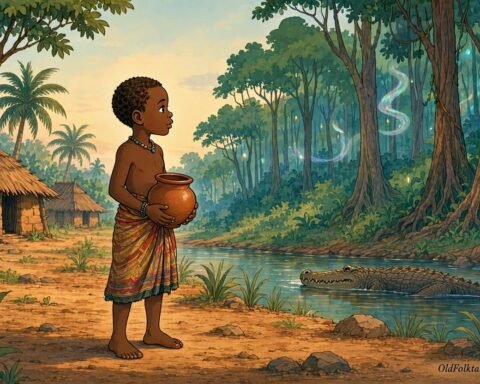
For countless generations, the Zambezi River shaped life across large parts of southern Africa. Flowing through forests, valleys, rocky cliffs, and fertile plains, the great river provided fish, water, transportation, and spiritual meaning to the communities living along its banks.
Among the Tonga people of Zambia, the Zambezi was not viewed as ordinary water.
It was considered alive.
Elders taught that powerful spirits moved beneath its currents, protecting sacred places hidden along the riverbanks and punishing those who treated the waters with disrespect. Fishermen performed rituals before entering dangerous sections of the river, while village leaders preserved old laws designed to maintain balance between people and nature.
The most feared stories involved the Crocodile Spirit.
According to oral tradition, the spirit appeared as an enormous crocodile living deep within isolated parts of the Zambezi where the river became dark and unusually silent. Some believed it was an ancestral guardian. Others claimed it represented the river itself watching human behavior.
No one agreed fully about its true nature.
But everyone respected the warnings connected to it.
Fascinated by this tale? Discover more North African folktales
The legend began during a difficult season of hunger when fishing catches across several Tonga villages became dangerously small. Long drought conditions lowered water levels, and families struggled increasingly to survive.
At the center of the story lived three fishermen named Chola, Mwewa, and Tembo.
All were experienced river men known for bravery and skill upon the Zambezi. Yet unlike older fishermen who followed ancestral customs carefully, the younger men often mocked traditional river laws they considered outdated.
“They fear stories more than crocodiles,” Tembo laughed one evening beside the fishing fires.
The most important law forbidden by the elders concerned a sacred stretch of river near steep black cliffs several hours downstream from the villages. According to tradition, fishing was forbidden there during certain seasons because the area belonged to river spirits guarding the balance of the Zambezi.
No one entered the waters lightly.
Especially at night.
But as hunger spread, Chola and his companions grew desperate.
Rumors claimed enormous fish gathered regularly within the forbidden waters where no one dared fish anymore. The men believed the elders exaggerated old legends only to control access to the best fishing territory.
“If spirits truly lived there,” Mwewa argued, “why would the river hide food while people starve?”
Ignoring repeated warnings, the three fishermen prepared secretly to travel downstream during the next full moon.
Several older villagers begged them not to go.
One elderly woman named Namalenga warned them directly.
“The Zambezi feeds those who respect it,” she said quietly. “But it remembers those who take without permission.”
The men ignored her.
Before dawn, they pushed their canoe into the river and traveled silently downstream toward the forbidden cliffs. As they moved farther from the villages, the atmosphere along the Zambezi changed noticeably.
Bird sounds became strangely quiet.
The river itself appeared darker beneath the morning mist.
Even the wind seemed still.
By midday, they reached the sacred waters.
To their amazement, enormous fish swam visibly beneath the canoe in numbers far greater than anywhere else along the river. Excited by the discovery, the fishermen cast their nets repeatedly while laughing at the old village warnings.
Within hours, their canoe overflowed with fish.
“We should have come years ago,” Tembo declared proudly.
But as sunset approached, strange things began happening.
The river current slowed unnaturally despite strong winds elsewhere along the valley. Their canoe drifted heavily as if something beneath the water resisted their movement.
Then they noticed the silence.
No insects.
No birds.
No sound except water touching the canoe.
Fear slowly replaced excitement.
Suddenly, a massive shape surfaced briefly beside the boat.
The men froze instantly.
An enormous crocodile larger than any creature they had ever seen moved silently through the water before disappearing beneath the river again.
Moments later, another surfaced behind them.
Then another.
The fishermen panicked and attempted rowing quickly toward open water, but the river current now seemed to pull against them unnaturally.
Dark ripples surrounded the canoe.
Then the first attack came.
A violent force struck the side of the boat, nearly throwing Tembo into the river. Nets, fish, and paddles scattered across the water while massive crocodile shapes circled beneath them.
Chola shouted desperately for the men to throw the forbidden catch back into the river.
Terrified, they obeyed immediately.
One by one, the fish disappeared beneath the dark water.
Slowly, the attacks stopped.
For several moments, silence returned once more.
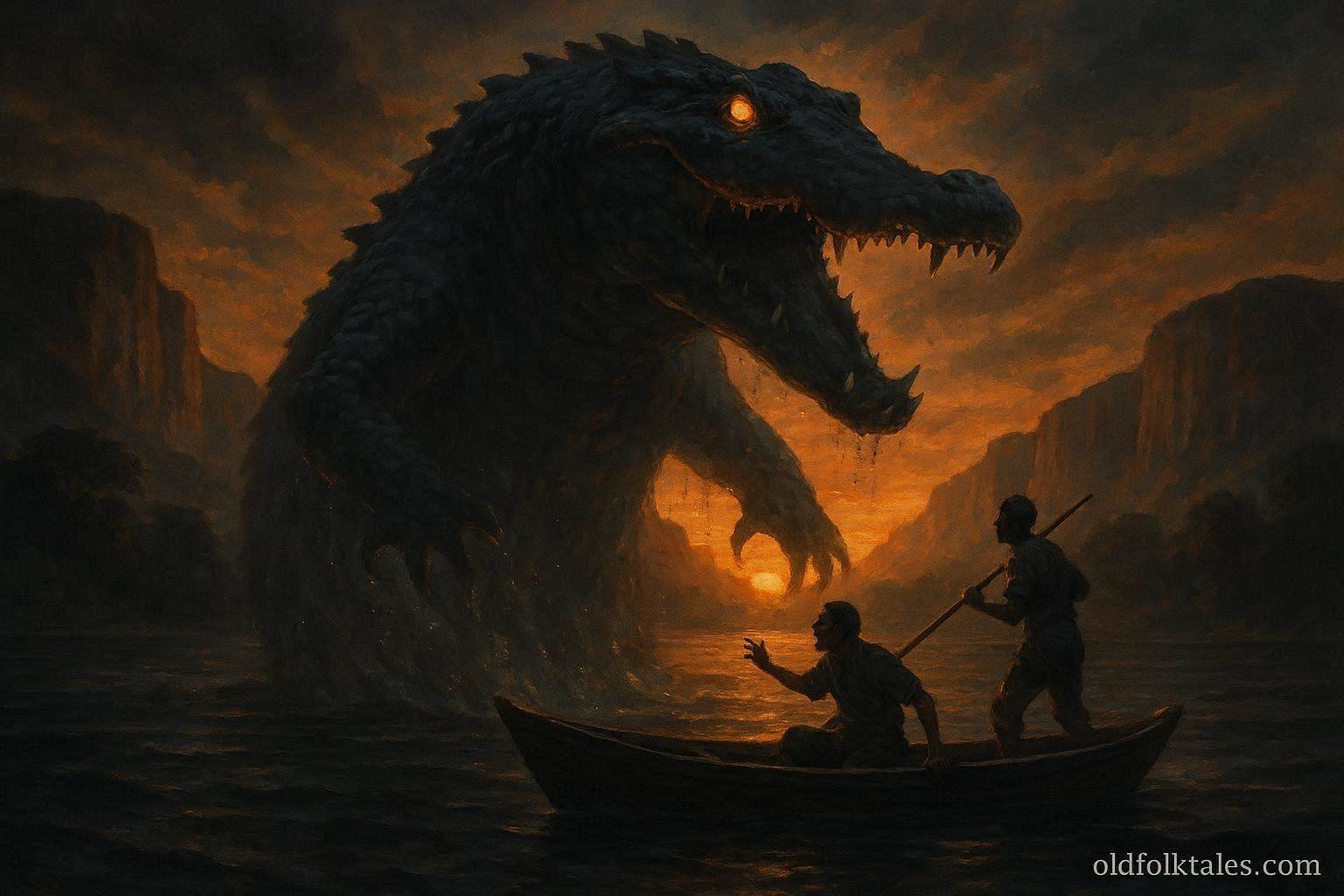
Then directly ahead of the canoe, the giant crocodile surfaced fully from the river.
Its enormous body reflected the fading light while scars marked its ancient skin. The creature stared silently at the fishermen with unmoving eyes before sinking slowly beneath the water again.
Immediately, the current released the canoe.
Without speaking, the men paddled frantically back toward the villages through the night.
When they finally returned by dawn, the entire community recognized something had changed within them.
The fishermen confessed publicly before the elders, admitting they violated the sacred river laws and nearly lost their lives because of greed and disrespect.
Afterward, the forbidden section of the Zambezi received even greater protection from the villages. Ceremonies honoring river spirits were restored fully, and younger generations once again learned the importance of respecting ancestral environmental laws.
As for Chola, Mwewa, and Tembo, none ever returned to the sacred cliffs again.
Years later, they still warned younger fishermen never to mock traditions connected to the river.
Because according to Tonga belief, the Zambezi may provide life generously —
but it punishes those who forget respect.
And somewhere beneath the deep waters near the black cliffs, the Crocodile Spirit still watches silently from below.
Love this story? Discover our full Southern African folktales collection
Moral Lesson
Nature must be treated with respect because greed and arrogance often lead to dangerous consequences.
Knowledge Check
- Why was part of the Zambezi River forbidden?
The area was believed to belong to sacred river spirits. - Why did the fishermen enter the forbidden waters?
They wanted to catch more fish during a time of hunger. - What strange signs appeared near the sacred cliffs?
The river became silent, dark, and unnaturally still. - What attacked the fishermen?
Massive crocodiles connected to the river spirit surrounded their canoe. - How did the fishermen survive?
They returned the stolen fish to the river and escaped. - What lesson does the story teach?
Respect for nature and sacred traditions helps prevent disaster.
Source
Zambian river folklore. Adapted from Tonga river traditions preserved in Zambezi ethnographic and oral history research.