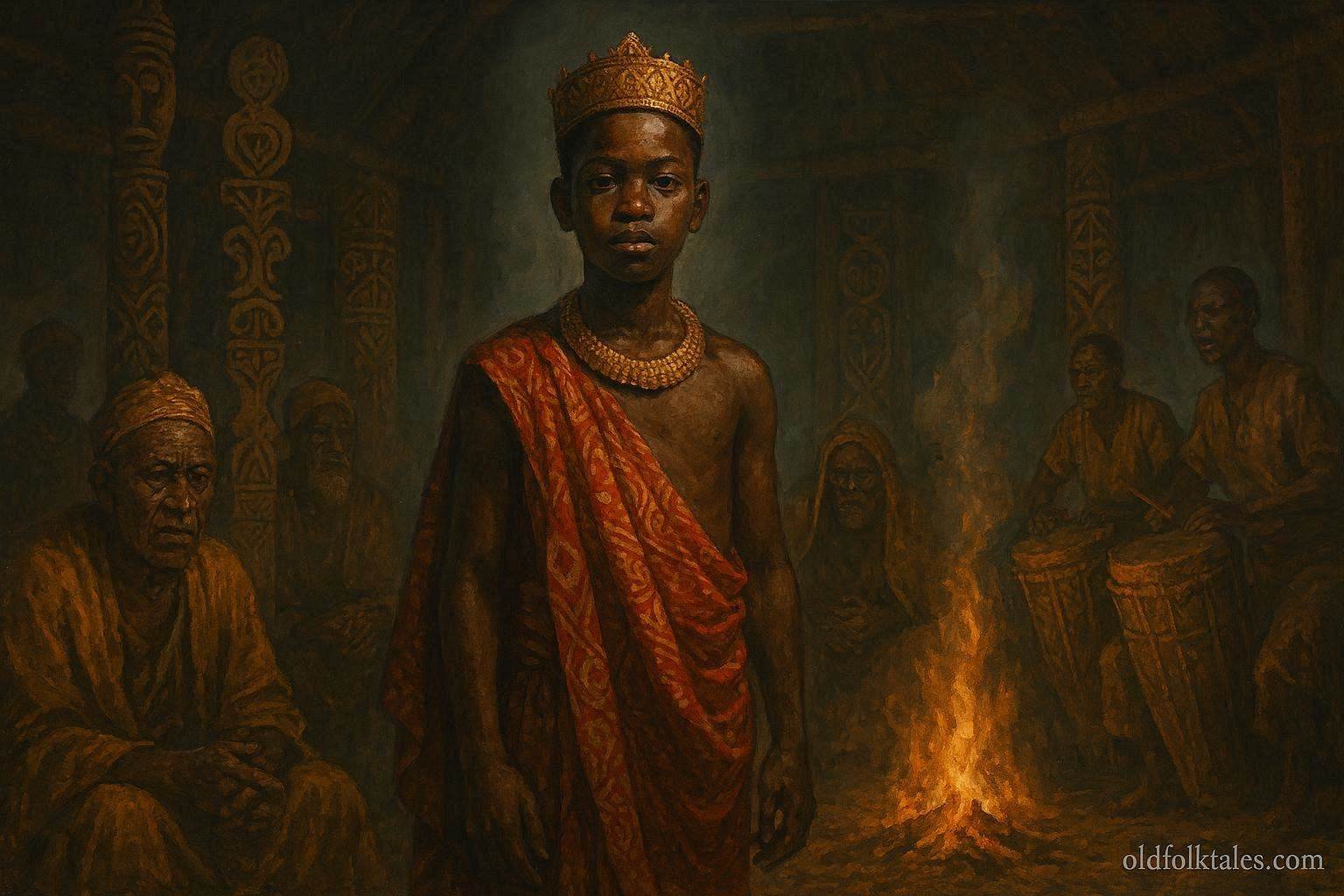
Across the grasslands, rivers, and forests of the central Democratic Republic of Congo, the Luba kingdoms became known for their rich political traditions, sacred kingship systems, and powerful oral histories preserved through generations of storytellers and royal advisors. Leadership among the Luba people was never viewed as simple inheritance based only on bloodline. A ruler was expected to possess wisdom, discipline, fairness, and spiritual balance because the wellbeing of the kingdom depended on the moral character of its king.
Among the most respected stories preserved in Luba oral tradition was the tale of the royal heir whose right to rule was tested not through warfare or wealth, but through character and ancestral judgment.
Long ago, during a period of prosperity within one of the great Luba kingdoms, there ruled a king named Ilunga Kalema. He was remembered as a wise ruler who maintained peace between distant communities, strengthened trade routes, and protected sacred customs handed down through earlier generations. Under his leadership, villages prospered, harvests remained stable, and conflicts between rival clans were settled through careful diplomacy rather than violence.
But as the years passed, King Ilunga Kalema grew old and weak. The responsibilities of leadership became heavier, and the kingdom slowly turned its attention toward the future. The greatest concern among the royal court was not whether the king would eventually die, but who would succeed him.
Don’t stop yet! See our complete East African folktales collection
The king had three possible heirs.
The first was his eldest son, Mukanda, a proud and confident warrior admired for his strength and skill in battle. Many soldiers favored him because they believed strong leadership required visible power and fearlessness.
The second was his nephew, Kitala, a clever speaker known for his intelligence and political understanding. He spent much of his time among advisors and traders, learning how alliances shaped the kingdom’s influence across neighboring territories.
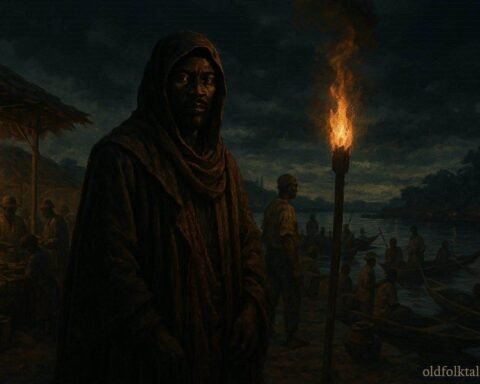
The third was the youngest son, Sefu, who attracted the least attention within the royal court. Unlike the others, he rarely sought recognition. He often traveled quietly among villages, listening to farmers, fishermen, elders, and craftsmen. Many considered him too calm and ordinary to compete for the throne.
As the king’s health worsened, tension slowly spread across the kingdom.
Different factions within the court began supporting different heirs. Warriors favored Mukanda. Influential advisors supported Kitala. Ordinary villagers quietly respected Sefu, though few believed he had enough influence to become king.
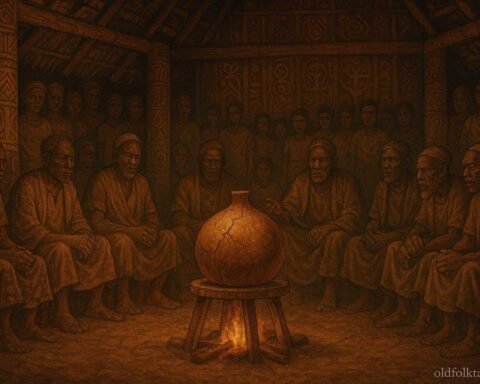
Sensing the growing division, King Ilunga Kalema summoned the royal council before the sacred fire chamber where important ancestral ceremonies were held. There, surrounded by elders, spiritual guardians, and court historians, the king reminded everyone that among the Luba people, kingship was sacred. The throne did not belong to the strongest man alone, nor the wealthiest or most politically skilled. It belonged to the individual who could preserve balance between the kingdom, the people, and the ancestors.
The king announced that no heir would inherit the throne immediately.
Instead, each candidate would face a series of trials designed to reveal his true character.
The first trial tested leadership.
Each heir was sent to a different village facing hardship. Mukanda was sent to a community threatened by raids from neighboring groups. Kitala traveled to a trading settlement suffering disputes between merchants. Sefu was sent to a farming village experiencing severe food shortages after flooding destroyed crops.
The heirs were ordered to remain among the people for several moons and resolve the problems without relying on royal soldiers or wealth from the palace.
Mukanda approached his task with force and authority. He organized armed patrols and demanded strict obedience from the villagers. Though the raids temporarily stopped, many people feared his harsh punishments and aggressive methods.
Kitala relied on negotiation and political strategy. He successfully restored trade agreements between rival merchants, but he also accepted gifts and favors from wealthy families seeking influence within the settlement.
Sefu approached his challenge differently. Rather than giving commands immediately, he spent days listening to the villagers and understanding their struggles. He worked alongside farmers rebuilding damaged fields and organized fair sharing of remaining food supplies. He encouraged cooperation between families and helped restore irrigation channels damaged by floods.
When the heirs returned to the royal court, the elders carefully studied reports from each village.
The second trial tested honesty and self discipline.
Each heir was secretly observed while traveling through remote areas of the kingdom carrying valuable royal objects meant for ceremonial use. Along the journey, opportunities were deliberately placed before them to test greed, patience, and integrity.
Mukanda became angry when local travelers failed to recognize his status and demanded special treatment wherever he passed. Kitala quietly traded some ceremonial goods in exchange for favors he believed would strengthen future alliances.
Sefu, however, completed the journey without using the royal objects for personal advantage. When offered gifts and privileges, he declined them respectfully, explaining that sacred objects belonged to the kingdom rather than to individuals.
Still, despite these results, the final decision remained uncertain.
Mukanda’s supporters insisted strength was necessary to defend the kingdom.
Kitala’s followers argued political intelligence was essential for survival.
Some feared Sefu lacked the commanding presence expected of a ruler.
As debate spread throughout the court, King Ilunga Kalema ordered one final ceremony before the ancestors.
At the center of the royal compound stood a sacred enclosure used only during moments of great importance. According to tradition, ancestral spirits guided the legitimacy of kingship through signs understood by spiritual elders.
On the night of the ceremony, drums echoed across the royal capital as nobles, warriors, and villagers gathered around the sacred grounds. Fires illuminated carved wooden symbols representing generations of past rulers.
The three heirs entered the enclosure separately.
Each was required to sit alone before the ancestral shrine while spiritual guardians observed in silence.
Mukanda entered first. He spoke proudly of his strength and military achievements, promising to expand the kingdom’s power through fearlessness. But when he emerged, the elders remained silent.
Kitala entered next. He described his political plans and alliances that could increase prosperity and influence. Again, the elders listened carefully but gave no immediate response.
Finally, Sefu entered the sacred enclosure.
Unlike the others, he did not speak about power or personal ambition. Instead, he spoke about responsibility. He promised to protect the weak, respect ancestral laws, and maintain fairness between the people of the kingdom.
According to oral tradition, as Sefu finished speaking, a sudden wind passed through the sacred enclosure even though the night air had been completely still moments earlier. Flames surrounding the shrine rose higher without spreading, and the elders interpreted this as ancestral approval.
At dawn, King Ilunga Kalema announced the decision before the entire kingdom.
Sefu would become the next ruler of the Luba people.
Some nobles were shocked. Warriors loyal to Mukanda questioned the decision, while political advisors supporting Kitala remained bitter. But the elders defended the choice firmly, explaining that true kingship required moral balance above all else.
In time, Sefu proved worthy of the throne.
He ruled with patience and fairness, strengthening unity within the kingdom and restoring trust among rival groups that had nearly divided the royal court. Under his leadership, the kingdom remained stable for many years, and his reign became remembered as an example of leadership guided by wisdom rather than pride.
Generations later, storytellers across Luba communities continued sharing the tale of the royal heir chosen through character rather than ambition. The story reminded listeners that leadership was not measured only through power or intelligence, but through integrity, humility, and responsibility toward others.
And among the Luba people, elders still say that ancestors do not choose rulers based on who desires power the most, but on who understands the burden of carrying it.
If you liked this story, see our Central African folktales collection
Moral Lesson
True leadership is earned through wisdom, humility, fairness, and moral responsibility.
Knowledge Check
- Where is the story set?
It is set in the Luba kingdoms of the Democratic Republic of Congo. - Who was King Ilunga Kalema?
He was the aging ruler seeking a worthy heir for the throne. - How many heirs competed for succession?
Three royal heirs competed to become the next ruler. - What qualities were tested during the trials?
Leadership, honesty, discipline, and moral character were tested. - Why was Sefu chosen as the next king?
He showed humility, fairness, and respect for the people and ancestors. - What is the lesson of the story?
Good leadership depends on integrity and responsibility rather than power alone.
Source
Central African folklore. Adapted from Luba sacred kingship and succession traditions documented in political oral historical studies of the Democratic Republic of Congo.