In the eastern forests of the Democratic Republic of Congo, where rivers flowed through the hills of Maniema and village life depended on cooperation between families, the Bembe people preserved many traditions centered on justice, honesty, and communal balance. Elders believed that words carried spiritual weight and that dishonesty could damage not only relationships between people but also the harmony between the living and the ancestral world.
Among the many oral traditions shared across generations, one of the most respected was the story of the Broken Calabash of Maniema, a tale remembered for its warning against lies, corruption, and hidden conflict within leadership.
Long ago, there stood a prosperous village near the edge of a dense forest where hunters, farmers, and traders lived together peacefully. The settlement was known throughout the region for its strong leadership and fair system of resolving disputes. At the center of the village stood a large meeting house built from wood and woven grass where elders gathered to settle disagreements, organize trade, and guide community decisions.
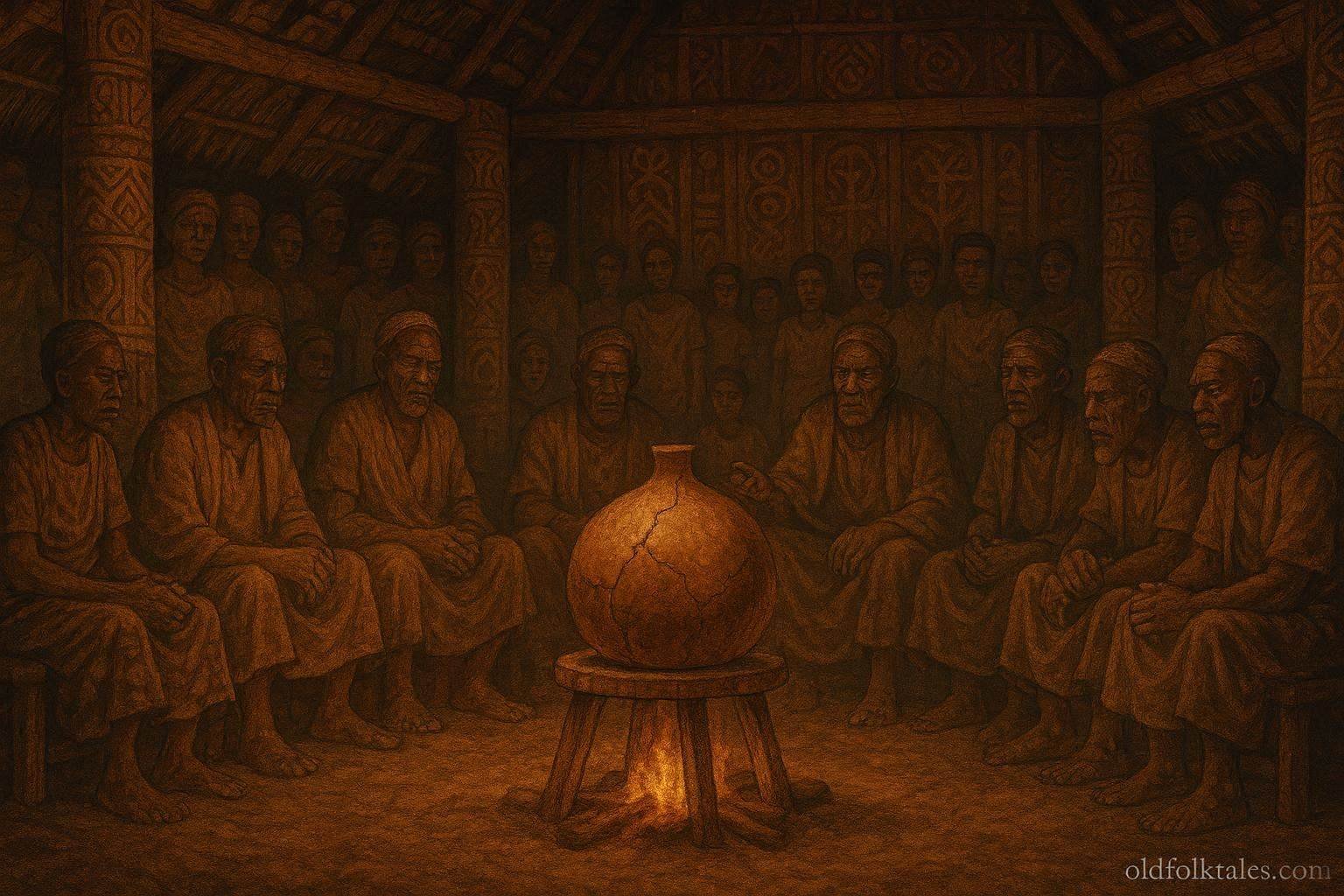
Inside this meeting house rested a large ceremonial calabash unlike any ordinary vessel used for water or food storage. It was carefully decorated with carved patterns representing ancestral symbols and was placed on a raised platform during important public gatherings.
According to village tradition, the calabash had belonged to an ancient elder known for his wisdom and honesty. Before his death, he instructed that the vessel should remain in the meeting house as a symbol of truth and accountability. Elders taught that as long as justice guided the village, the calabash would remain whole. But if lies began to dominate public decisions, the vessel would reveal the corruption hidden beneath spoken words.
If you enjoyed this story, explore our full West African folktales collection
For many years, the calabash remained untouched and unbroken.
Generations passed, and most villagers viewed it simply as a respected ceremonial object connected to ancestral tradition. During village meetings, elders placed it before speakers as a reminder that truth was expected in all matters involving the community.
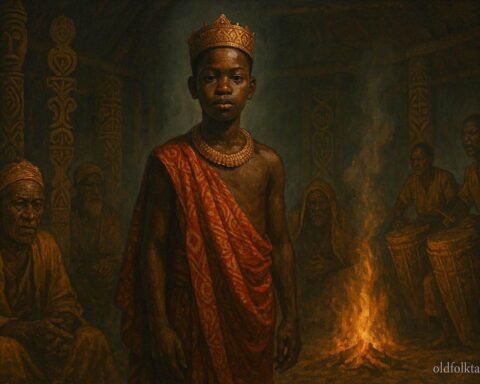
At that time, the village was led by a respected council headed by an elder named Bwalu. He was known for his calm judgment and fairness in resolving disputes between families. Under his guidance, the settlement prospered through trade and successful harvests.
But after many peaceful years, Bwalu grew old and eventually passed leadership responsibilities to a younger council that lacked his discipline and wisdom.
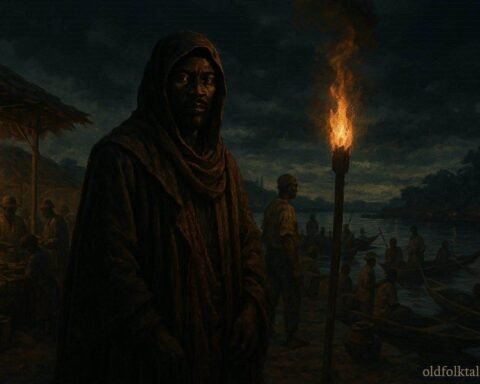
Among the new leaders was a man named Kaseke, a skilled speaker admired for his confidence and ambition. He understood how to influence crowds during public gatherings and quickly gained popularity within the village council. At first, many believed he would become a strong leader for the future.
However, as time passed, Kaseke became increasingly concerned with power and personal influence. He began favoring certain families during disputes and secretly accepted gifts in exchange for favorable decisions. Minor disagreements that should have been resolved peacefully started creating long-term resentment between households.
Still, few villagers openly challenged him.
Many feared losing influence or creating division within the settlement. Others believed the problems were temporary and would eventually disappear on their own.
One evening, during a gathering involving a dispute over farmland boundaries, the elders assembled inside the meeting house with the ceremonial calabash placed at the center of the floor. Two families accused each other of moving boundary markers to claim additional land after a successful harvest season.
Kaseke stood before the gathering and confidently declared that he had personally investigated the matter. He blamed one family entirely and ordered them to surrender part of their farmland as punishment.
At first, the meeting remained silent.
Then suddenly, a sharp cracking sound echoed through the house.
Everyone turned toward the ceremonial calabash.
A thin fracture had appeared across its surface.
The room became completely still.
No one had touched the vessel.
Some villagers stepped backward in fear while others stared at the crack in disbelief. The oldest elders exchanged uneasy glances but said nothing immediately.
Kaseke dismissed the event as coincidence and ordered the meeting to continue.
But over the following weeks, the calabash cracked again during several public gatherings.
It cracked when a trader falsely accused a rival of stealing goods.
It cracked when community supplies were secretly withheld during a food shortage.
It cracked when leaders denied taking gifts in exchange for favorable judgments.
Each new fracture spread further across the surface of the vessel, and fear slowly spread through the village.
People began whispering that the ancestors were exposing dishonesty within the council.
The meeting house, once a place of confidence and unity, became filled with tension. Villagers no longer trusted public decisions completely. Families accused one another in private conversations, and some elders worried the growing dishonesty would divide the settlement permanently.
One of the oldest women in the village, Mama Sungi, spoke openly during a gathering and reminded the people of the calabash’s meaning.
She explained that the vessel was not cursed.
It was reflecting the moral condition of the community itself.
The ancestors, she said, had left the calabash as a warning that lies weaken the foundation of leadership and eventually destroy peace among the people.
Some leaders mocked her words.
But others became deeply unsettled, especially after another incident occurred that no one could ignore.
During an important council meeting concerning distribution of communal harvest reserves, Kaseke publicly claimed that the food supplies had become dangerously low because neighboring villages failed to contribute fairly.
As he spoke, the ceremonial calabash suddenly split with a loud crack that echoed through the meeting house.
Part of its outer surface broke away completely and fell onto the floor.
Panic spread through the gathering.
Several elders immediately stood and demanded a full investigation into the management of communal resources. Under pressure from both villagers and senior elders, hidden records were finally examined.
The truth slowly emerged.
Kaseke and several council members had secretly diverted portions of communal food supplies for personal trade and private storage while blaming shortages on neighboring settlements.
The revelation shocked the entire village.
Families who had suffered hunger during recent shortages realized the hardship had been caused not by natural disaster but by corruption within leadership.
Kaseke initially denied the accusations, but as evidence continued to appear, even his supporters abandoned him. The elders declared that leadership without honesty endangered the survival of the entire community.
A large public gathering was held beneath the central trees outside the meeting house. There, the council admitted its failures before the people. Kaseke was removed from leadership responsibilities and ordered to return all goods taken from communal storage. Other officials involved in the deception faced public accountability and were required to assist affected families directly.
After these events, the atmosphere within the village slowly changed.
The elders reformed the council system, requiring that all major decisions be discussed openly before the community. Younger leaders were taught that authority was not a privilege for personal gain but a responsibility tied to truth and fairness.
As for the ceremonial calabash, it was never fully repaired.
The cracks remained visible across its surface for generations.
Yet the elders deliberately preserved it in its broken form.
They explained that the fractures served as a permanent reminder that once trust is damaged through dishonesty, rebuilding unity requires time, humility, and accountability.
Children who entered the meeting house would often stare at the cracked vessel while listening to elders recount the story of the Broken Calabash of Maniema.
The tale became more than a story about a magical object.
It became a lesson about governance itself.
Among the Bembe people, the story reminded leaders that truth protects communities while lies slowly destroy them from within.
And even generations later, elders in Maniema still say that when dishonesty enters public leadership, the first thing to break is not an object, but the trust holding the people together.
Keep reading: Discover more Central African folktales
Moral Lesson
Honesty and accountability are necessary for justice, unity, and good leadership.
Knowledge Check
- Where is the story set?
It is set in Maniema in the Democratic Republic of Congo. - What was the ceremonial calabash believed to do?
It cracked whenever lies or injustice were spoken during meetings. - Who was Kaseke?
He was a council leader who became corrupted by power and dishonesty. - Why did the villagers fear the cracking calabash?
They believed it was exposing hidden corruption within the community. - What happened after the truth was discovered?
Corrupt leaders were removed and the council system was reformed. - What lesson does the story teach?
Truth and honesty are essential for strong leadership and community trust.
Source
Central African folklore. Adapted from eastern Congo dispute-resolution and governance traditions documented in Maniema oral historical studies.