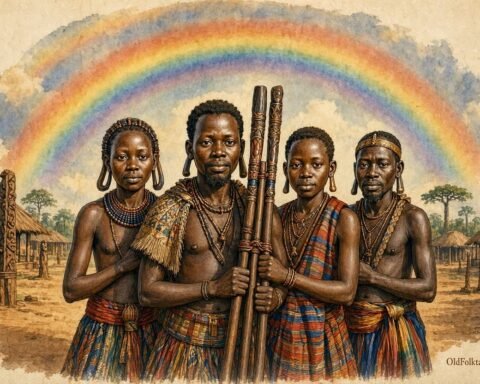
Long before modern borders divided the lands of West Africa, the powerful Kingdom of Kaabu stood across regions that now form parts of Guinea-Bissau, Senegal, and The Gambia. Known for its skilled warriors, wealthy trade routes, and royal traditions, Kaabu became one of the most respected Mandinka kingdoms in the region.
Its rulers governed through both military strength and ancestral legitimacy.
Among the Mandinka people, leadership was never based on power alone. A ruler was expected to honor sacred customs, protect the people, and maintain harmony between the living world and the spirits of earlier kings.
Because of this belief, royal objects connected to ancestral authority were treated with enormous respect.
None was more feared or admired than the Copper Bracelet of Kaabu.
According to oral tradition, the bracelet was forged generations earlier during the reign of one of Kaabu’s greatest rulers. Skilled blacksmiths shaped it from sacred copper gathered near ancient river territories believed to hold spiritual significance.
Fascinated by this tale? Discover more North African folktales
But the bracelet was not simply jewelry.
It symbolized rightful authority.
Only rulers recognized by both the elders and ancestral traditions could wear it publicly during royal ceremonies.
The people believed the bracelet revealed the true intentions of those who sought power. A wise ruler wearing it would strengthen the kingdom, while an unjust ruler would bring division and disaster upon the land.
For generations, the bracelet passed peacefully from one ruler to another.
Then came a period of political instability that nearly destroyed the kingdom itself.
It began after the sudden death of Mansa Joré, an aging ruler respected across Kaabu for maintaining peace between rival noble families. His death shocked the kingdom because he left behind no officially declared heir.
Almost immediately, powerful families began competing for the throne.
Two noble houses quickly emerged as the strongest rivals.
The first was led by Fodé Suma, an experienced military commander admired for his victories in border conflicts. Many warriors supported him because they believed Kaabu needed strong leadership to survive growing external threats.
The second family supported a younger nobleman named Bakary Demba, known for his intelligence, diplomacy, and deep knowledge of royal traditions.
While Fodé promised strength, Bakary promised stability.
Soon the kingdom divided politically.
Villages argued openly.
Warriors gathered loyalties.
And trade between territories slowed as uncertainty spread across Kaabu.
At the center of the conflict stood one major problem.
The Copper Bracelet had disappeared.
Without the bracelet, neither claimant could fully prove ancestral approval for their leadership.
Some believed it had been hidden deliberately after Mansa Joré’s death to prevent civil war.
Others whispered that the ancestors themselves had removed it until a worthy ruler emerged.
Weeks turned into months without resolution.
Then strange rumors began spreading across the kingdom.
Travelers claimed a mysterious old griot had been seen carrying a wrapped object through several villages near the old royal capital. According to witnesses, the man spoke rarely but warned that Kaabu would collapse if greed overcame ancestral law.
Many dismissed the stories as political rumors.
But Bakary became deeply interested.
Unlike many nobles focused only on military power, Bakary respected the role griots played within Mandinka society. Griots preserved oral history, genealogies, royal traditions, and spiritual knowledge passed carefully across generations.
If a griot truly carried the bracelet, it could change everything.
Determined to uncover the truth, Bakary traveled quietly with a small group of trusted companions toward the old trade routes where the rumors began.
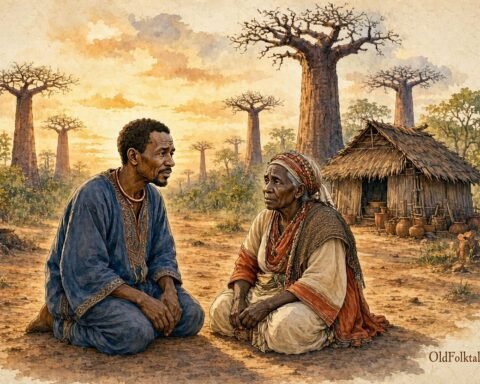
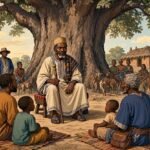
After days of searching, they finally encountered the elderly griot resting beneath a large baobab tree near an abandoned village.
The old man introduced himself as Kemo.
His face showed the weight of many years, but his voice remained sharp and commanding.
Bakary immediately noticed the wrapped bundle resting beside him.
“You seek the bracelet,” Kemo said calmly before Bakary could speak.
Bakary admitted the truth.
The old griot studied him carefully for several moments.
Then he asked a simple question.
“Why do you wish to rule Kaabu?”
Bakary expected discussions about military strategy or noble bloodlines.
Instead, Kemo asked about responsibility.
About justice.
About the suffering spreading through the kingdom while nobles fought for power.
Bakary answered honestly.
He admitted he feared civil war more than defeat itself.
He believed Kaabu could survive only if the kingdom remained united beneath traditions respected by all families.
The griot listened silently.
Finally, he unwrapped the bundle.
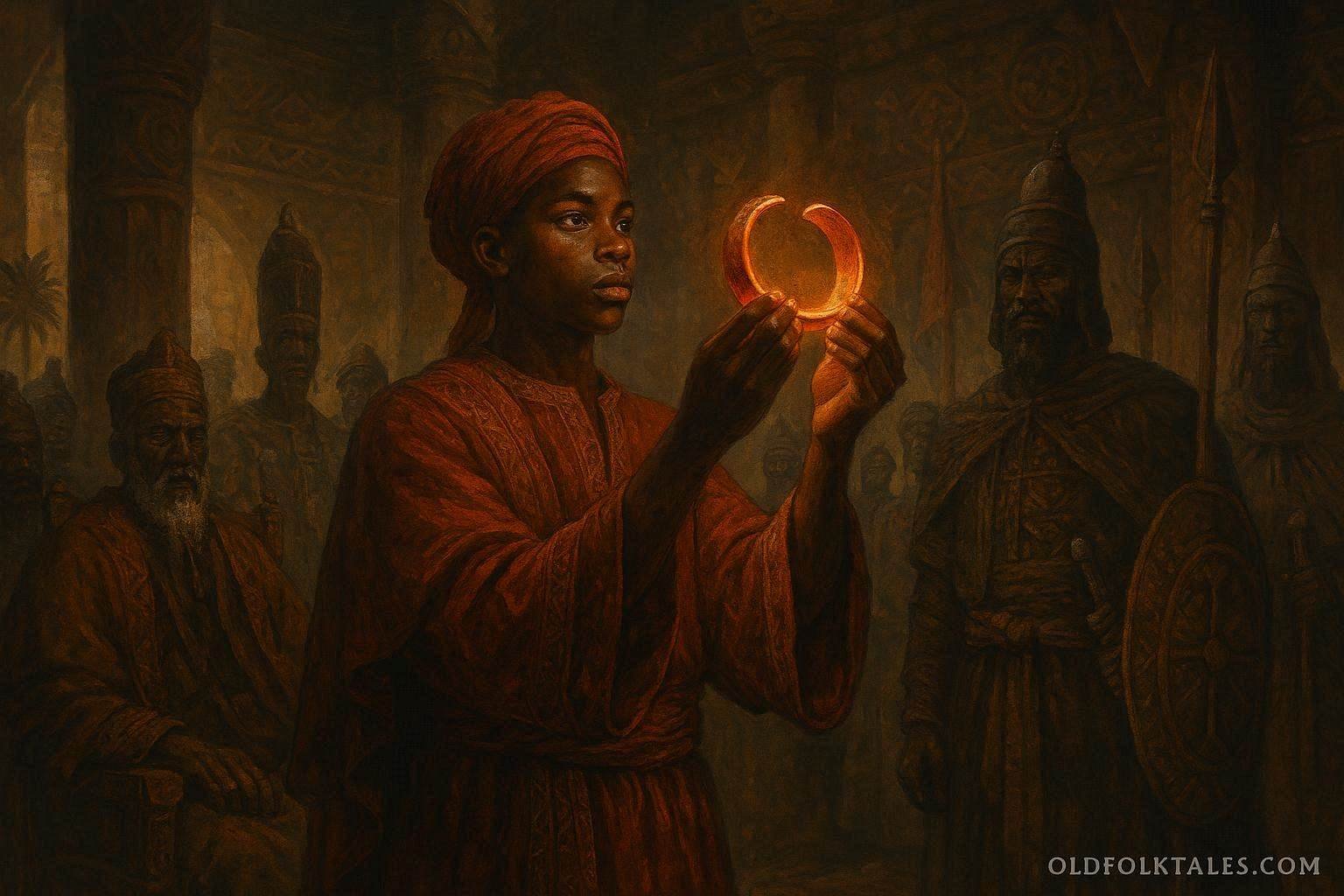
Inside rested the famous Copper Bracelet of Kaabu.
Even after generations, the copper surface still reflected sunlight with unusual brightness. Ancient symbols circled its edges, representing earlier rulers and sacred lineages connected to the kingdom’s foundation.
Bakary stared in awe.
Kemo explained that the bracelet had been hidden deliberately by royal guardians after Mansa Joré’s death.
The elders feared ambitious nobles would misuse it to force legitimacy through violence rather than wisdom.
“The bracelet does not create kings,” Kemo warned.
“It reveals them.”
Bakary asked how the rightful ruler could be determined.
The griot explained the ancient tradition tied to the artifact.
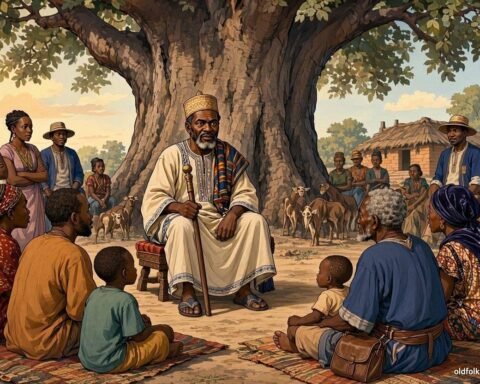
Both claimants must appear publicly before elders, griots, and representatives from across the kingdom. Each would state their vision for Kaabu while wearing the bracelet briefly during the ceremony.
According to tradition, the people would judge not only their words, but also the reaction of the gathering itself.
A ruler accepted by ancestral authority would unite the people naturally.
One rejected by the ancestors would deepen division.
The ceremony was arranged carefully near the royal capital.
Crowds gathered from distant regions to witness the decision.
Fodé arrived surrounded by heavily armed warriors, projecting strength and authority.
Bakary arrived quietly beside elders and griots.
When Fodé wore the bracelet first, he spoke proudly about military expansion and punishing rivals threatening Kaabu’s power.
Some warriors cheered loudly.
But many elders remained silent.
The atmosphere felt tense and divided.
Then Bakary stepped forward.
Wearing the Copper Bracelet, he spoke not of conquest, but of restoring trust between villages, protecting trade, preserving tradition, and preventing the kingdom from destroying itself through internal conflict.
As he spoke, the crowd gradually quieted.
Even rival nobles listened carefully.
For the first time in months, the gathering felt united rather than divided.
When the ceremony ended, many elders publicly declared Bakary the rightful successor.
Though disappointed, even several supporters of Fodé admitted the kingdom needed stability more than continued rivalry.
Fearing civil war, Fodé eventually accepted the decision and pledged loyalty to the new ruler.
Under Bakary’s leadership, Kaabu experienced a temporary return to peace and economic recovery. Trade routes reopened, disputes between noble families decreased, and the authority of traditional institutions strengthened once again.
The Copper Bracelet remained protected afterward within sacred royal custody, brought out only during major ceremonies involving succession and national unity.
Among Mandinka storytellers, the legend survived for generations as a reminder that true authority cannot be secured through fear alone.
Leadership requires wisdom, humility, and the trust of the people.
And even today, griots across parts of West Africa still say that power gained without legitimacy eventually destroys itself from within.
Want more? Read more West African folktales now
Moral Lesson
True leadership depends on wisdom, unity, and legitimacy rather than force or ambition alone.
Knowledge Check
- Where is the story set?
It is set in the Kingdom of Kaabu in West Africa. - What was the Copper Bracelet of Kaabu?
It was a sacred royal artifact symbolizing rightful authority. - Why did conflict begin after Mansa Joré’s death?
He died without officially naming an heir to the throne. - Who were the two main rivals for leadership?
Fodé Suma and Bakary Demba competed for the throne. - How was the rightful ruler chosen?
Both claimants spoke before the kingdom while wearing the bracelet. - What lesson does the story teach?
Real leadership requires wisdom, legitimacy, and unity.
Source
West African folklore. Adapted from Mandinka royal traditions preserved in Kaabu kingdom oral histories and historical anthropology studies.