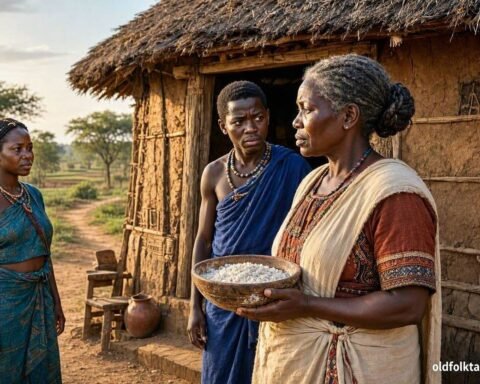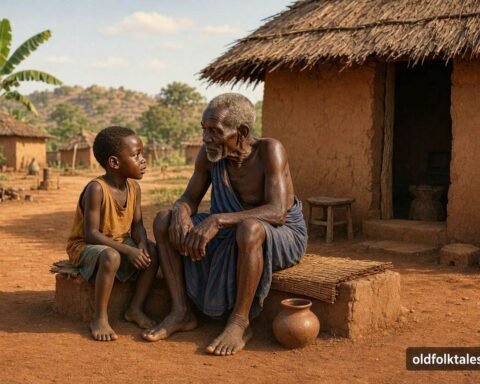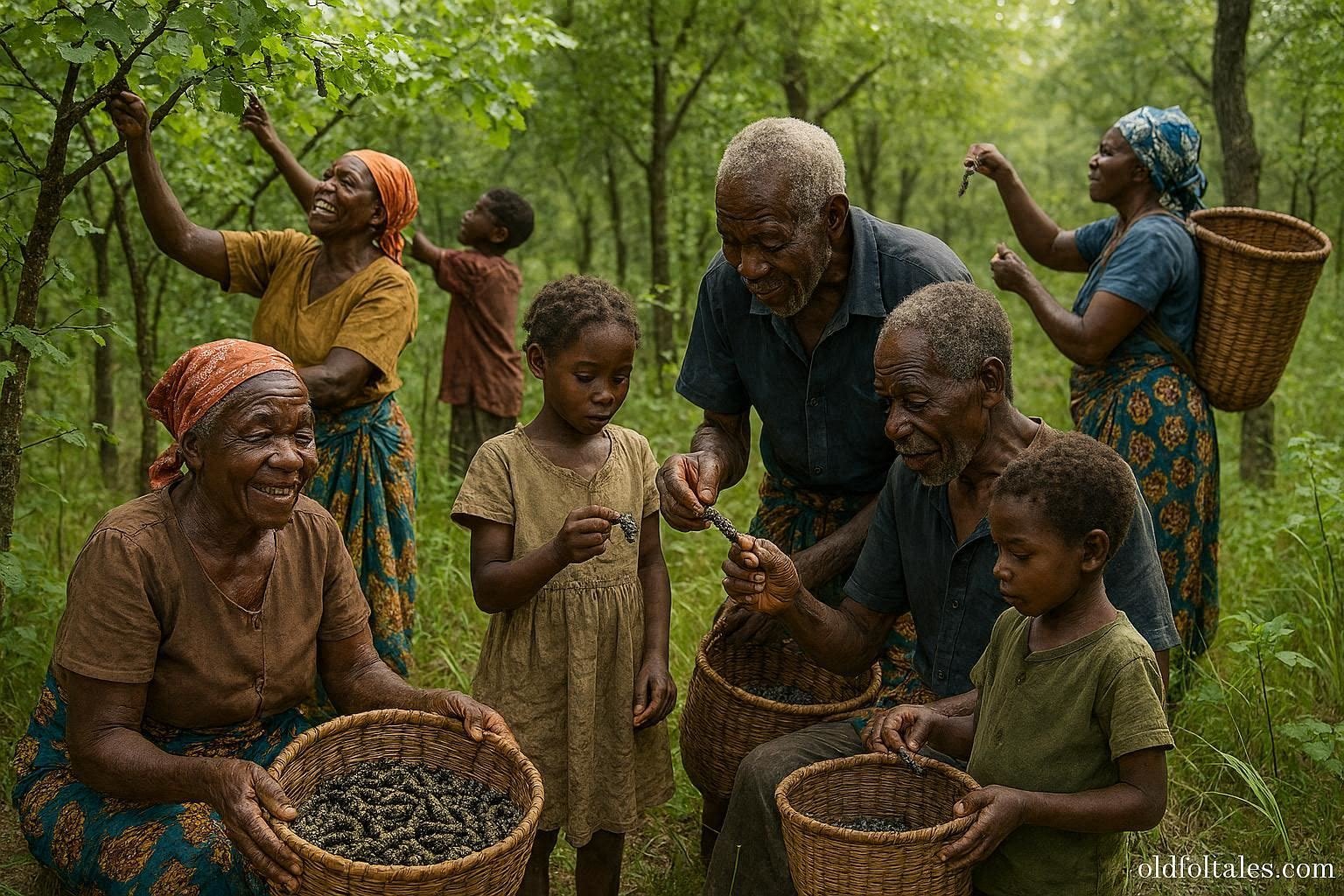
When the first rains refreshed the woodlands of Northwestern Zambia, families knew that an important season had arrived. It was the time when mopane caterpillars appeared among the leaves of the mopane trees. For generations, Luvale and Kaonde communities carefully harvested these nutritious caterpillars, not only as food but also as a lesson in responsibility. Elders taught that the woodland should never be emptied for today’s gain because future generations would also depend upon its gifts. Every harvest became an opportunity to pass on wisdom about patience, sharing, and caring for the environment.
In the village of Chiwala, everyone looked forward to the arrival of the rainy season. The fields turned green once again, streams began flowing, and the woodland filled with fresh life. Children watched eagerly as birds returned to their nests and butterflies fluttered among the flowers. Yet there was another sign that brought smiles to every household.
The mopane trees had begun to welcome their tiny visitors.
For many years, the people of the village had depended upon the annual appearance of mopane caterpillars. They provided nutritious food that could be eaten fresh or carefully dried for future months when other food became scarce. Every family respected the season because they understood that it came only once each year.
Don’t stop yet! See our complete East African folktales collection
Among the children was a curious girl named Kalenga.
She had heard many stories about the harvest but had never been old enough to join the adults in the woodland.
One evening she sat beside her grandmother as they prepared the evening meal.
“Grandmother,” she asked, “why does everyone become so happy when the caterpillars arrive?”
Her grandmother smiled.
“Because they remind us that nature always rewards those who are patient.”
“Will you take me with you this year?”
“If you are ready to learn.”
Kalenga nodded eagerly.
“I am ready.”
Before sunrise the following morning, several families gathered at the edge of the village carrying woven baskets.
Nobody hurried.
The elders first offered words of gratitude for the woodland that had provided food for generations.
Only then did they begin the walk.
The journey took them through tall trees where morning sunlight filtered gently through the branches.
As they reached the mopane woodland, Kalenga immediately noticed hundreds of green leaves covering the trees.
She searched carefully but could not see what everyone else seemed to notice so easily.
Her grandmother pointed toward one branch.
“There.”
Kalenga looked closely.
At first she saw nothing.
Then she smiled.
Small caterpillars rested quietly among the leaves.
“They are everywhere.”
Her grandmother laughed softly.
“The woodland reveals its treasures only to careful eyes.”
Before anyone collected a single caterpillar, the oldest elder gathered everyone together.
He spoke slowly so every child could understand.
“We harvest only what we need.”
“We leave the smallest caterpillars to grow.”
“We leave enough behind so the woodland will remain healthy.”
“We never damage the trees.”
The children repeated his words together.
Kalenga carefully picked her first caterpillar and placed it inside her basket.
Soon she wanted to gather as many as possible.
Her basket slowly became heavier.
She reached toward another branch already filled with caterpillars.
Her grandmother gently stopped her.
“Look again.”
Kalenga noticed several very small caterpillars.
“They are still growing.”
Her grandmother nodded.
“They belong to tomorrow.”
Kalenga quietly withdrew her hand.
As the morning continued, everyone worked peacefully.
Nobody competed.
If one family found a tree with many caterpillars, they invited nearby families to share the harvest.
Children helped one another reach higher branches without breaking them.
Laughter echoed through the woodland.
The harvest felt less like work and more like a celebration.
By midday the baskets were full.
Before leaving, every family carefully looked around.
Broken branches were removed from the walking paths.
No rubbish remained beneath the trees.
The woodland looked almost untouched.
Kalenga asked,
“How can we leave when there are still so many caterpillars?”
Her grandmother replied,
“Because we want them to return next season.”
Back in the village, another important lesson began.
The caterpillars were carefully cleaned using fresh water.
Some were prepared for cooking that very evening.
Others were placed in large containers for drying beneath the warm sunshine.
The drying process required several days.
Every morning the caterpillars were turned carefully so they would dry evenly.
If unexpected rain clouds appeared, everyone quickly carried them under shelter.
Nothing was wasted.
Nothing was rushed.
As they worked, the elders shared stories.
One elder remembered a season many years earlier when careless visitors had harvested nearly every caterpillar from one section of woodland.
The following year almost none returned.
Only after several seasons of careful protection did the woodland recover.
Kalenga listened closely.
She understood that even nature needed time to heal.
Several days later the dried caterpillars were ready for storage.
Some families kept enough for their own homes.
The rest were shared with elderly neighbors who could no longer travel into the woodland.
Widows also received generous portions.
No household was forgotten.
Kalenga noticed her grandmother filling a large basket.
“Are we giving away so much?”
Her grandmother smiled.
“A full storehouse means little if your neighbor goes hungry.”
Those words remained with Kalenga long after the harvest ended.
Months later, when food became less plentiful, the dried caterpillars once again appeared during family meals.
Each time they were served, someone remembered the woodland.
Someone remembered the careful harvest.
Someone remembered the importance of leaving enough behind.
The food carried memories as well as nourishment.
As the years passed, Kalenga grew into a skilled harvester.
She no longer rushed through the woodland.
She observed carefully before collecting anything.
She taught younger children how to recognize mature caterpillars.
She reminded them never to strip an entire tree.
She explained why broken branches harmed future harvests.
One season a group of visitors arrived from another district.
They had heard that the woodland produced many caterpillars.
Without asking the elders for guidance, they hurried into the trees.
Some broke branches while trying to reach higher leaves.
Others gathered every caterpillar they could find.
When Kalenga saw what was happening, she politely approached them.
“Our elders taught us to harvest carefully.”
One visitor replied,
“We have traveled far.”
“We must collect as much as possible.”
Kalenga calmly answered,
“If everyone thinks only about today, there will be nothing left for tomorrow.”
Her respectful words caused several visitors to pause.
One elderly man stepped forward.
“She speaks wisely.”
He encouraged his companions to gather only mature caterpillars and leave the rest behind.
The woodland became peaceful once again.
That evening the village chief thanked Kalenga.
“You protected more than today’s harvest.”
“You protected the future.”
Years later, Kalenga herself became one of the respected elders who welcomed children into the woodland each rainy season.
She always began with the same lesson her grandmother had once taught her.
“The woodland feeds those who respect it.”
She watched as children carefully filled their baskets.
She smiled whenever someone left the smallest caterpillars untouched.
She knew the tradition would continue.
Today, the harvesting of mopane caterpillars remains an important seasonal practice in parts of Zambia, particularly among Luvale and Kaonde communities. Ethnobiological research documents the nutritional importance of mopane caterpillars as well as the traditional knowledge that guides sustainable harvesting. Communities continue to teach younger generations to collect only mature caterpillars, avoid damaging mopane trees, and leave enough behind to maintain healthy populations for future seasons. These practices demonstrate how indigenous knowledge contributes to environmental conservation while strengthening family and community life.
Explore more Southern African folktales here
Moral Lesson
Nature provides generously when people harvest with wisdom and gratitude. By taking only what is needed, sharing with others, and protecting the environment, every generation helps ensure that the blessings of today remain available for the future.
Knowledge Check
1. Why did the Luvale and Kaonde families wait for the rainy season before harvesting mopane caterpillars?
The caterpillars appear naturally during the rainy season, making it the proper time to harvest them.
2. Why did the elders tell the children to leave the smallest caterpillars on the trees?
The smaller caterpillars needed time to grow and complete their life cycle so there would be future harvests.
3. What did Kalenga learn when her grandmother stopped her from collecting every caterpillar she saw?
She learned that responsible harvesting protects nature and allows the woodland to continue providing food.
4. How did the villagers prepare the caterpillars after returning from the woodland?
They carefully cleaned them, cooked some for immediate meals, and dried the rest for future use.
5. Why did Kalenga encourage the visitors to harvest responsibly?
She wanted to protect the woodland and ensure that future generations would also benefit from the annual harvest.
6. What is the main lesson of the story?
Respecting nature, harvesting responsibly, and sharing with others help preserve both the environment and community traditions.
Source
Adapted from the traditional harvesting practices of Luvale and Kaonde communities in Northwestern Zambia, with reference to Zambia forest products research, ethnobiology studies, and publications on non timber forest products documenting the sustainable harvesting of mopane caterpillars.