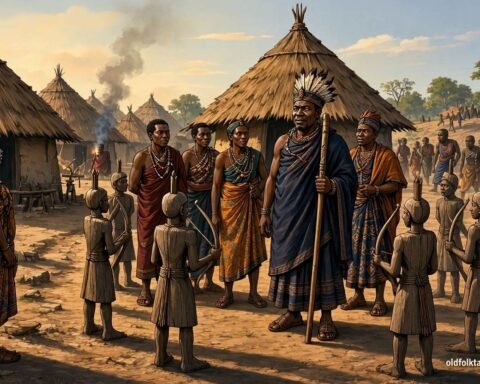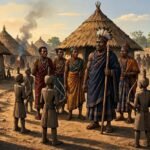
In the lush forests of northwestern Zambia, near the region of Mwinilunga, the Lunda people shared an extraordinary legend about a tree unlike any other. Hidden far from villages and rarely seen by outsiders, the tree was known as the Singing Tree. Elders said it was older than the oldest settlements and had stood through countless seasons, silently witnessing the history of the land.
According to tradition, the Singing Tree possessed a remarkable gift. Whenever the wind moved through its massive branches, melodies drifted through the forest. To most people, the sounds resembled ordinary music carried by the breeze. However, those who listened carefully claimed the songs contained stories about people, places, and events from long ago.
For generations, the legend was passed from one storyteller to another. Some believed the songs were the voices of ancestors. Others thought the tree simply held memories gathered over centuries. Whatever the explanation, the Singing Tree was respected as a keeper of history.
Many years ago, a young traveler named Chanda arrived in the region. He enjoyed exploring distant places and learning about the customs of different communities. During his journeys, he often collected stories from elders and shared them wherever he went.
Fascinated by this tale? Discover more North African folktales
One evening, while resting in a village near the forest, Chanda heard an elder mention the Singing Tree.
“The tree remembers what people forget,” the old man said.
The statement captured Chanda’s attention.
He asked many questions, but the elder only smiled.
“If you truly wish to understand the tree,” he replied, “you must listen to its songs yourself.”
Determined to discover the truth, Chanda set out the following morning. Guided by directions from local hunters, he traveled deep into the forest. The journey was difficult. Thick vegetation covered the paths, and towering trees blocked much of the sunlight.
After hours of walking, he entered a clearing.
At its center stood the largest tree he had ever seen.
Its trunk was enormous.
Its branches stretched high above the surrounding forest.
The tree seemed ancient beyond imagination.
As Chanda approached, a gentle wind passed through the leaves.
A soft melody filled the air.
The sound was beautiful yet unlike any music he had ever heard.
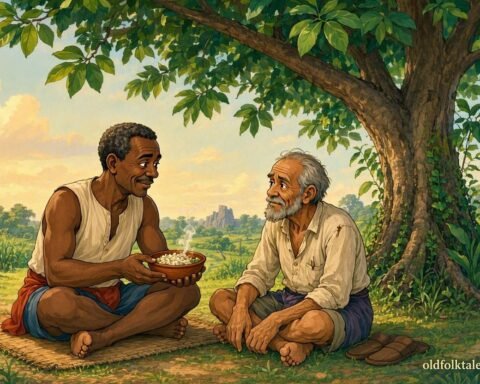
He sat beneath the tree and listened.
Gradually, the melody began to change.
Within the music, he could distinguish voices.
The voices spoke of hunters who once explored the forest.
They described families who established settlements near rivers.
They told of journeys, celebrations, hardships, and triumphs.
Each song revealed another chapter of the region’s history.
Amazed, Chanda remained beneath the tree until sunset.
The following day, he returned.
New songs emerged.
One told of a time when neighboring communities worked together during a season of scarcity.
Another described the courage of individuals who protected their people during difficult years.
The songs preserved details that few living people still remembered.
Over the following weeks, Chanda listened carefully and recorded what he learned. He soon realized that the Singing Tree served an important purpose.
It protected memories from being lost.
The stories contained lessons about cooperation, resilience, wisdom, and respect for tradition.
When Chanda finally returned to the village, he shared his experiences with the elders.
They were pleased but not surprised.
“Our ancestors understood that memories are fragile,” one elder explained. “If stories are not remembered, they disappear. The Singing Tree reminds us to preserve them.”
Inspired by the discovery, villagers began organizing gatherings where elders shared historical accounts with younger generations. Songs, stories, and traditions that had nearly faded were taught once again.
As years passed, knowledge of local history grew stronger.
Children learned about their heritage.
Families preserved important traditions.
Communities developed a renewed appreciation for the experiences of those who came before them.
The legend of the Singing Tree spread throughout the region.
Travelers journeyed to the forest hoping to hear its melodies for themselves. Some claimed they heard songs about ancient migrations. Others reported stories of forgotten leaders and long-ago settlements.
Although each visitor experienced something different, all agreed that the tree inspired reflection and respect for the past.
Generations later, the Singing Tree remained a cherished symbol among the Lunda people.
Some believed ancestral spirits truly sang through its branches.
Others viewed the tree as a powerful reminder of the importance of oral tradition.
Regardless of interpretation, its message endured.
History is more than a collection of dates and events.
It is the memory of a people.
When communities preserve their stories, they preserve their identity.
And somewhere within the forests of Mwinilunga, the Singing Tree is said to continue singing, carrying the voices of the past into the future for those willing to listen.
Don’t miss out: Read more Southern African folktales
Moral Lesson
Preserving history and sharing knowledge helps communities remember their identity and learn from previous generations.
Knowledge Check
1. What was the Singing Tree of Mwinilunga?
It was a giant tree believed to preserve forgotten histories through its songs.
2. Who was Chanda?
Chanda was a traveler who journeyed into the forest to learn the truth about the Singing Tree.
3. What did the tree’s songs contain?
They contained stories about past generations, important events, and community traditions.
4. Why was the Singing Tree important?
It helped preserve memories and historical knowledge that might otherwise be forgotten.
5. How did the village respond to Chanda’s discovery?
The villagers renewed efforts to preserve and share their traditions and history.
6. What is the main lesson of the story?
Communities should preserve their heritage and pass knowledge to future generations.
Source
Adapted from Lunda oral traditions and sacred forest legends preserved in Northwestern Zambia folklore archives.