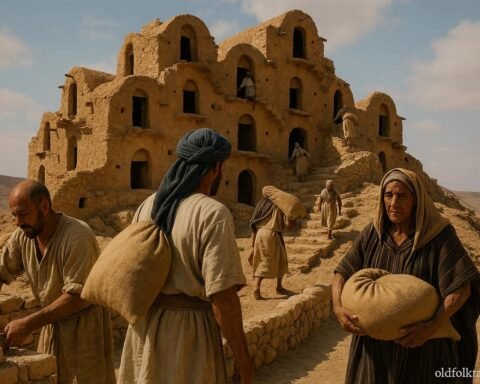
In the fertile lands surrounding the city of Sfax, olive trees stretched across the landscape as far as the eye could see. For centuries, these trees had shaped the lives of local families, providing food, oil, work, and prosperity. Many groves had been cared for by the same families for generations, and some trees were so old that no one could remember when they had first been planted.
Among these countless olive trees stood one unlike all the others.
It grew on a gentle rise overlooking the countryside, its trunk twisted by time and its branches spreading wide across the sky. The tree was enormous, far older than any living person. Elders claimed that it had witnessed the rise and fall of generations, the passing of droughts and harvests, and the changing fortunes of entire communities.
People called it the Whispering Olive Tree.
According to local tradition, the tree shared wisdom with those who approached it sincerely during moments of uncertainty. Some said its leaves carried voices on the wind. Others believed the whispers came from the ancestors whose memories lived within the land itself. Whether the stories were true or not, the tree was respected throughout the region.
Love this story? Discover our full Southern African folktales collection
Many years ago, during a period of growing tension between neighboring communities, the legend of the tree became more important than ever.
A disagreement had emerged over the use of several olive groves located between two villages. For generations, the land had been shared peacefully, but changing circumstances led to confusion about ownership and responsibility. What began as a simple disagreement gradually became a serious conflict.
Families stopped cooperating.
Friends became suspicious of one another.
Old partnerships began to break apart.
As tensions increased, village elders struggled to find a solution that everyone would accept.
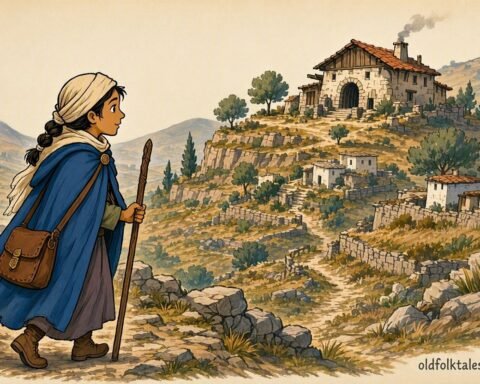
In one of the villages lived a young woman named Leila. She was known for her thoughtful nature and her willingness to listen before speaking. Although she was younger than most community leaders, many people respected her judgment.
Leila was troubled by the growing division around her.
She had friends and relatives in both villages and hated seeing relationships damaged by arguments over land. The more she listened to the disagreements, the more she realized that both sides believed they were protecting something valuable.
One evening, after another unsuccessful meeting between village representatives, Leila decided to visit the Whispering Olive Tree.
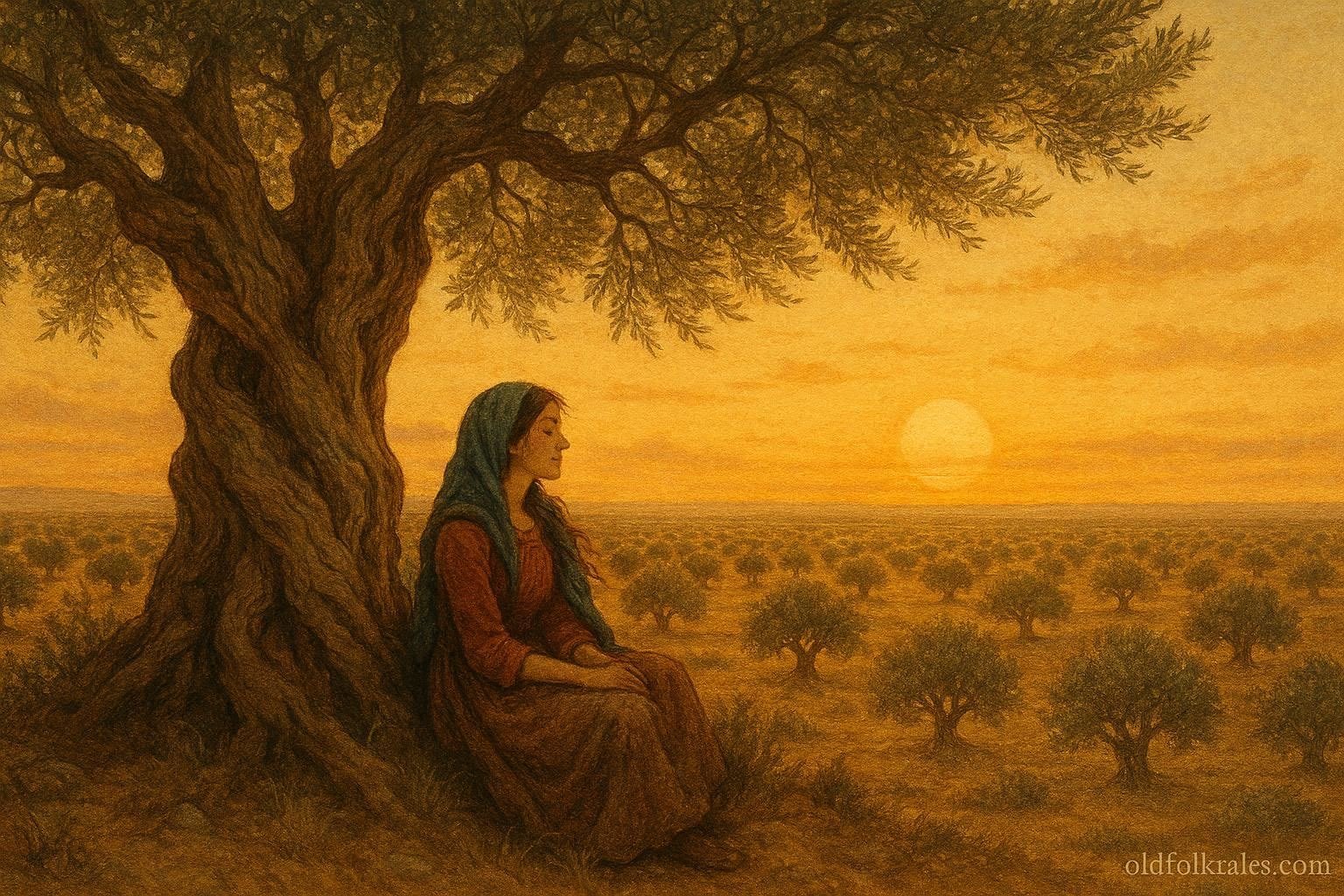
The sun was setting as she walked through the groves. A gentle breeze moved through the branches, carrying the familiar scent of olives and earth. When she reached the ancient tree, she sat quietly beneath its vast canopy.
At first, she heard nothing but the wind.
Then the leaves began to rustle softly.
The sound seemed different from ordinary wind.
It rose and fell like distant voices engaged in conversation.
Leila closed her eyes and listened carefully.
Although she could not make out clear words, she felt a growing sense of calm. Memories surfaced in her mind. She remembered stories told by her grandparents about times when neighboring communities had worked together during droughts, shared harvests during difficult years, and celebrated festivals as one people.
The longer she sat beneath the tree, the more she realized something important.
The conflict was causing people to focus on what separated them rather than what connected them.
When Leila opened her eyes, the evening sky was filled with stars.
She returned home carrying a new perspective.
Over the following days, she began speaking with elders from both villages. Instead of discussing ownership alone, she encouraged people to remember their shared history. She collected stories from older residents who recalled decades of cooperation and mutual support.
At first, many dismissed her efforts.
Some argued that memories could not solve practical problems.
Others insisted that compromise would weaken their position.
Yet Leila persisted.
Patiently, she continued listening to concerns from both sides.
Gradually, her approach began to influence others.
People who had once refused to meet agreed to sit together and share their experiences. Elders spoke about the traditions that connected the villages. Farmers discussed how cooperation had benefited everyone in the past.
As these conversations continued, the atmosphere slowly changed.
The conflict did not disappear overnight.
There were still disagreements and difficult discussions.
However, people began approaching the problem with greater understanding and respect.
Eventually, a solution emerged.
The disputed groves would continue to be shared, with responsibilities and benefits distributed fairly between both communities. More importantly, new agreements were established to ensure future cooperation.
The resolution was welcomed throughout the region.
Families renewed friendships.
Trade resumed.
Community celebrations once again included people from both villages.
When news of the successful agreement spread, many credited Leila’s patience and determination.
Others quietly mentioned the Whispering Olive Tree.
Some believed the tree had guided her.
Others felt the wisdom had come from the ancestors whose lessons were preserved in memory and tradition.
Leila herself never claimed to know the answer.
Whenever people asked what she had heard beneath the tree, she simply smiled.
“The tree reminded me to listen,” she would say.
Years later, Leila became one of the most respected leaders in the region. Even then, she continued visiting the ancient olive tree whenever important decisions needed careful thought.
The tree remained a place of reflection for generations.
People traveled from distant villages to sit beneath its branches. Some sought answers. Others sought peace of mind. Many left feeling wiser than when they arrived.
As time passed, stories about the Whispering Olive Tree spread throughout Tunisia. The legend became a symbol of patience, ancestral wisdom, and the importance of listening before acting.
Even today, the ancient olive groves around Sfax continue to inspire respect and admiration. Though no one can say for certain whether the tree truly whispered, the lessons associated with it remain powerful.
Wisdom often comes not from speaking first but from listening carefully.
Patience can reveal solutions that anger cannot.
And the experiences of previous generations can guide communities through even the most difficult challenges.
For those who remember these lessons, the whispers of the olive tree are never far away.
Want to dive deeper? Read more North African folktales today
Moral Lesson
Patience, listening, and respect for ancestral wisdom can help resolve conflicts and strengthen communities.
Knowledge Check
1. Where is the story set?
The story is set among the olive groves near Sfax, Tunisia.
2. What was special about the Whispering Olive Tree?
It was believed to share ancestral wisdom with those seeking guidance.
3. Who was Leila?
Leila was a thoughtful young woman who helped resolve a conflict between neighboring villages.
4. What caused the dispute between the villages?
The conflict centered on the use and management of shared olive groves.
5. How was the disagreement resolved?
Through patience, dialogue, and a renewed appreciation of shared history and cooperation.
6. What is the main lesson of the story?
Listening, patience, and respect for tradition can help people overcome division and find common ground.
Source
Adapted from Sfax regional folklore traditions preserved in Mediterranean oral heritage archives and North African agricultural folklore studies.