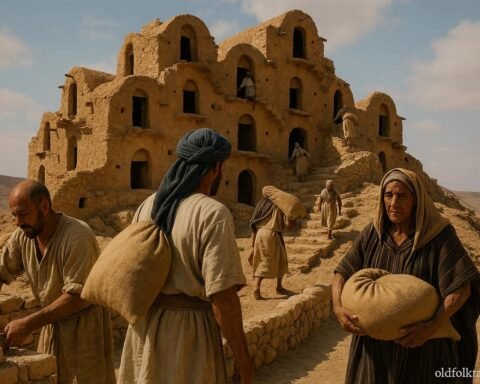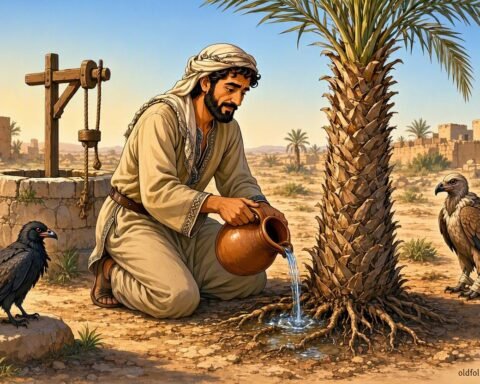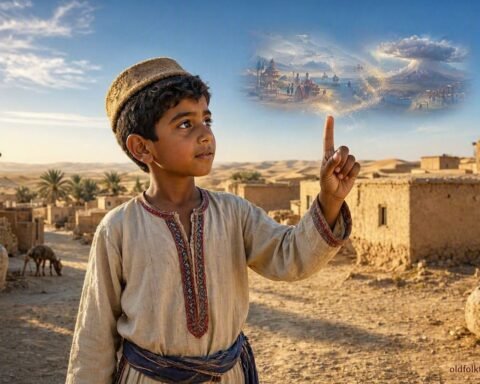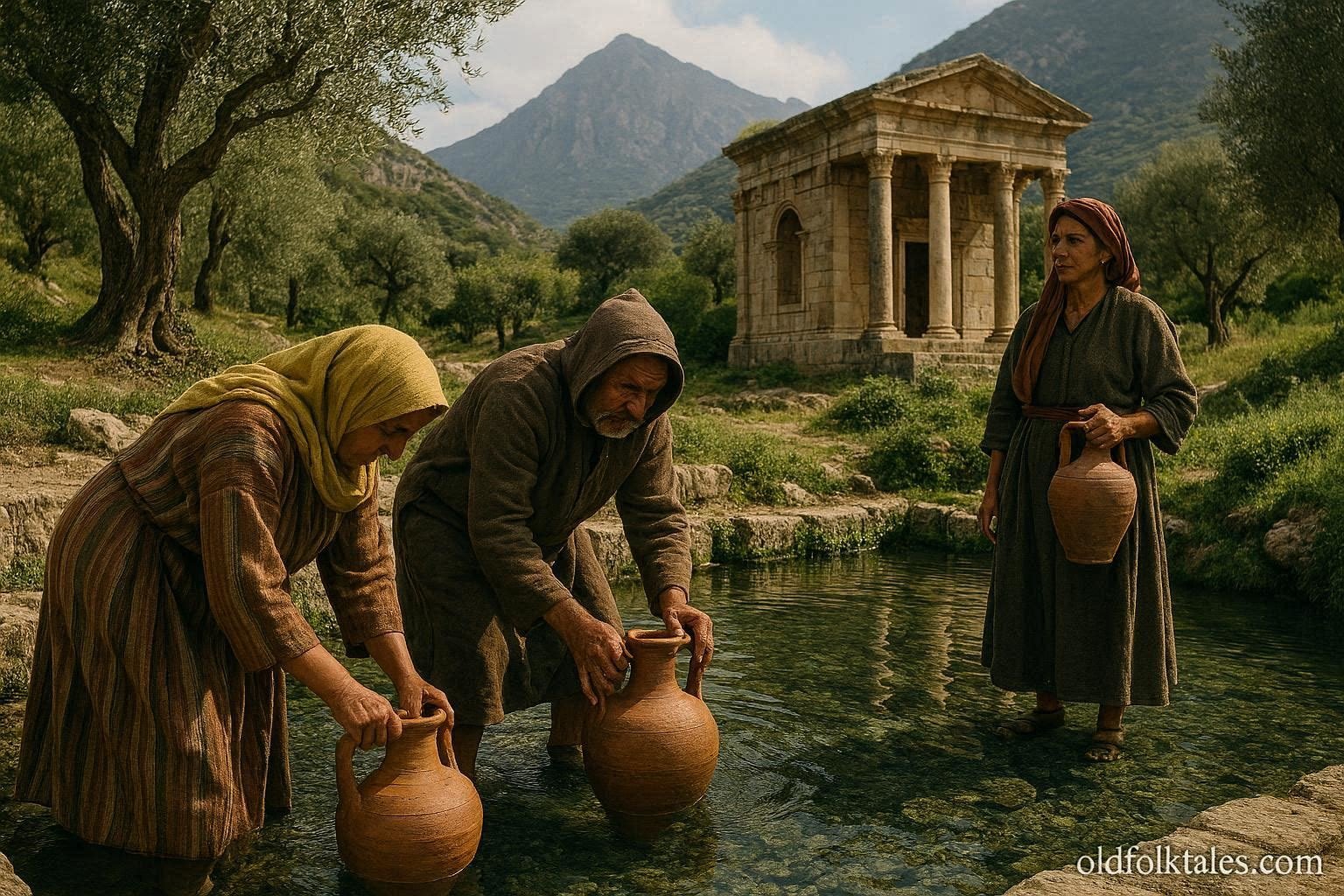
Before rivers were redirected through modern canals and water flowed from household taps, the people of Zaghouan looked toward the foot of their mountain with deep gratitude. There, crystal-clear water emerged from a natural spring that had sustained life for countless generations. Shepherds brought their flocks to drink, farmers irrigated their orchards, travelers refreshed themselves after long journeys, and entire communities depended upon its steady flow.
The Spring of Zaghouan was more than a source of fresh water.
It was the heart of the community.
Its waters nourished olive groves, vineyards, fruit trees, and fertile fields that spread across the surrounding countryside. Families understood that without the spring, life in the region would be far more difficult. Because of this, elders taught children that every drop carried a responsibility as well as a blessing.
Long before written records described the spring or Roman engineers constructed the famous aqueduct that carried its waters across great distances, local traditions had already encouraged respect for the source itself. Water was never taken for granted. It was collected carefully, shared fairly, and protected from waste so that everyone from the youngest child to the oldest elder could benefit from its generosity.
Among the villagers lived a cheerful girl named Salma.
Love this story? Discover our full Southern African folktales collection
Every morning before sunrise, she accompanied her grandmother, Amina, to the spring with two clay jars balanced carefully on a wooden yoke. Although the walk required patience, Salma enjoyed listening to her grandmother’s stories along the winding path.
“Why do we always greet the spring before filling our jars?” Salma asked one morning.
Amina smiled.
“Because gratitude should come before receiving a gift.”
Salma looked at the clear water flowing gently over smooth stones.
“It never seems to stop.”
“That is why we must never stop respecting it,” her grandmother replied.
As the seasons changed, Salma began noticing how every part of village life depended upon the spring.
Farmers watered young olive trees during dry months.
Women washed vegetables beside small irrigation channels.
Children filled pitchers for elderly neighbors who could no longer make the journey themselves.
Travelers paused beneath nearby trees to drink and rest before continuing their journeys across northern Tunisia.
The spring welcomed everyone.
Yet the elders constantly reminded the community that abundance could disappear if people became careless.
One summer, rainfall was much lower than usual.
The streams feeding the countryside grew smaller, and many wells began to dry.
Although the Spring of Zaghouan continued flowing, its reduced volume reminded everyone that nature required careful stewardship.
The village council gathered beneath a large cypress tree to discuss how the community should respond.
After listening to every family, the elders agreed upon simple but important measures.
Water would first be reserved for drinking.
Farmers would irrigate only during the cooler hours of morning and evening to reduce evaporation.
Children were encouraged to report leaking channels, while neighbors worked together to repair damaged stone troughs carrying water into nearby fields.
No one complained.
Everyone understood that protecting the spring protected the future.
Salma admired how cooperation replaced fear.
Instead of arguing over water, families shared ideas and helped one another.
One afternoon, she noticed a young traveler attempting to wash clothes directly at the spring’s source.
Before anyone could scold him, Amina approached with kindness.
She explained that the community traditionally washed clothing farther downstream, keeping the water at its source clean for everyone who came after.
The traveler apologized immediately.
He had not known the custom.
Afterward, he thanked the villagers for teaching him respectfully rather than with anger.
That evening, Salma asked her grandmother why she had spoken so gently.
“Wisdom,” Amina replied, “is strongest when shared with patience.”
As autumn arrived, the first rains returned to the mountains.
Streams gradually filled once more.
The spring flowed more strongly each passing week.
Villagers gathered to celebrate not only the return of plentiful water but also the unity they had shown during the difficult months.
Children sang traditional songs of gratitude while elders prepared a communal meal beneath ancient olive trees.
No one celebrated the spring as something they owned.
Instead, they honored it as a gift entrusted to their care.
Years later, Salma became a teacher in the village.
Every year, she led her students to the Spring of Zaghouan.
Rather than beginning with history books, she encouraged them to observe.
They listened to the flowing water.
They watched birds drinking along the banks.
They noticed wildflowers growing where moisture nourished the soil.
Only then did Salma explain the remarkable history of the spring.
She described how Roman engineers had once constructed an extraordinary aqueduct that carried its waters across many kilometers to supply the ancient city of Carthage. She explained that such an achievement would never have been possible without the dependable source flowing from the mountain.
But she reminded her students that the greatest lesson was not the aqueduct itself.
It was the understanding that every civilization depends upon protecting its natural resources.
One curious student asked,
“Will the spring always be here?”
Salma paused before answering.
“It will continue flowing only if every generation values it as much as those before us.”
The children looked quietly at the water.
For the first time, they realized they were not simply visitors.
They were future caretakers.
Today, the Spring of Zaghouan remains one of Tunisia’s most significant natural and historical landmarks. Celebrated for its role in supplying the ancient Roman aqueduct to Carthage, it also represents centuries of local traditions centered on gratitude, responsible water use, and community stewardship. The spring continues to remind visitors that the most valuable natural resources endure only when people protect them with wisdom and care.
The story of The Spring of Zaghouan teaches that gratitude is expressed not only through words but through the careful protection of the blessings that sustain life.
Want to dive deeper? Read more North African folktales today
Moral Lesson
When people value and protect nature’s gifts, they ensure that future generations will continue to share in those blessings.
Knowledge Check
1. Why was the Spring of Zaghouan important to the community?
It supplied fresh water for drinking, farming, and everyday life.
2. What did Amina teach Salma before collecting water?
To show gratitude before receiving nature’s gifts.
3. How did the villagers respond during the dry season?
They conserved water, repaired irrigation channels, and shared resources responsibly.
4. Why did Amina ask the traveler to wash downstream?
To keep the spring’s source clean for everyone.
5. What historical structure carried the spring’s water to Carthage?
The Roman aqueduct of Zaghouan.
6. What is the main lesson of the story?
Natural resources should be protected with gratitude, wisdom, and shared responsibility.
Source
Adapted from traditions associated with the Spring of Zaghouan, the Institut National du Patrimoine (Tunisia), Zaghouan heritage archives, and studies of the Roman aqueduct supplying ancient Carthage.