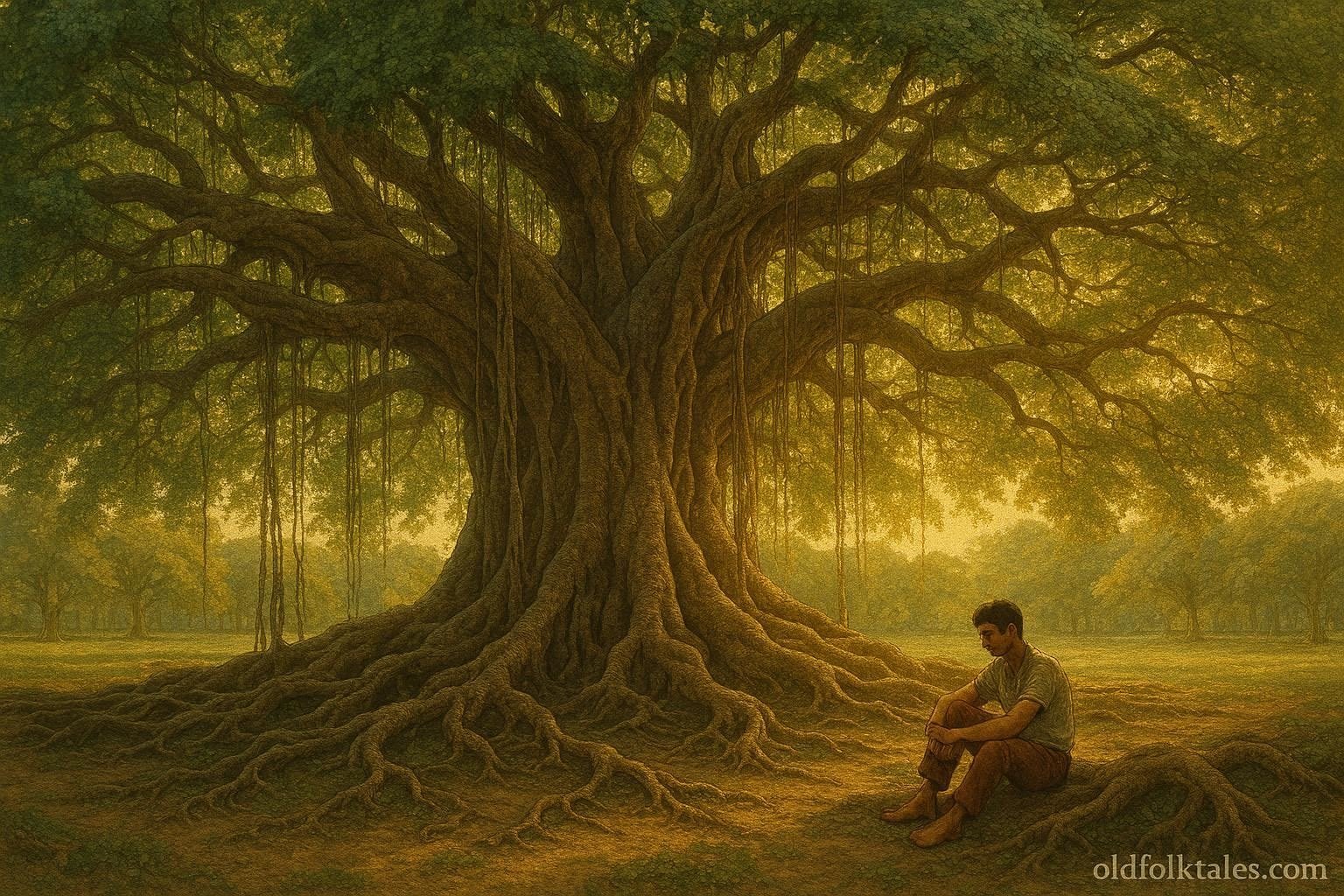
In the northern region of Mauritius, near the lush gardens and fertile lands of Pamplemousses, stood an enormous banyan tree unlike any other on the island. Its roots spread across the earth like winding rivers, while its branches stretched outward to form a vast canopy that sheltered birds, animals, and travelers from the tropical sun.
The tree was so old that no one could remember when it had first taken root.
Grandparents spoke of it.
Their grandparents had spoken of it before them.
Generation after generation, the banyan tree remained a silent witness to the lives of the people who lived nearby.
Among the Indo-Mauritian communities of the region, stories circulated about the remarkable tree.
According to local legend, the banyan possessed a special gift.
Those who approached it respectfully and sincerely could discover forgotten parts of their family history.
Many dismissed the stories as folklore.
Others believed them completely.
Yet nearly everyone treated the tree with respect.
One such person was a young schoolteacher named Ravi.
He was curious, thoughtful, and deeply interested in history.
Although he loved learning about the past, there was one mystery that troubled him.
Very little was known about his ancestors who had first arrived on the island generations earlier.
Explore more Southern African folktales here
Old photographs had disappeared.
Documents had been lost.
Family stories had gradually faded over time.
Whenever Ravi asked older relatives for details, they could provide only fragments of information.
The missing pieces left him feeling disconnected from an important part of his identity.
One evening, while speaking with his grandmother, he mentioned his frustration.
The elderly woman listened quietly before smiling.
“Perhaps the banyan tree can help you,” she said.
Ravi laughed gently.
He respected tradition, but he did not expect a tree to provide answers.
Still, the conversation stayed in his thoughts.
Several days later, curiosity led him to visit the famous banyan.
The tree stood as magnificently as the stories described.
Its enormous roots twisted across the ground.
Sunlight filtered through thousands of leaves overhead.
The atmosphere beneath the canopy felt peaceful and timeless.
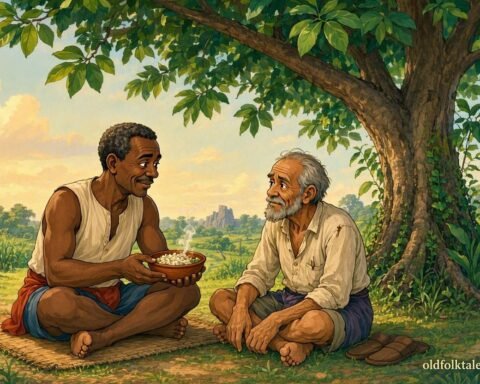
Ravi sat quietly beneath the branches.
At first, nothing happened.
The only sounds came from rustling leaves and distant birds.
He reflected on his family, thinking about the questions he wished he could answer.
Who were his ancestors?
What challenges had they faced?
What dreams had brought them to Mauritius?
As the afternoon passed, he became increasingly absorbed in his thoughts.
Gradually, memories shared by relatives began resurfacing in his mind.
Small details he had nearly forgotten returned with surprising clarity.
A story about a great-grandfather who had worked as a craftsman.
A tale involving a grandmother known for helping neighbors during difficult times.
Fragments of family history seemed to connect in ways he had never noticed before.
Encouraged by the experience, Ravi returned to the banyan several times over the following months.
Each visit inspired further reflection.
He began speaking with elderly relatives more often.
He searched through old letters and family possessions.
He recorded stories before they could be forgotten.
As he gathered information, a richer picture of his family’s history emerged.
He learned about ancestors who had crossed oceans seeking opportunity.
He discovered stories of perseverance during hardship.
He uncovered traditions that had been quietly preserved through generations.
The process transformed his understanding of himself.
What began as a search for names and dates became a deeper appreciation for the sacrifices and achievements of those who came before him.
Word of Ravi’s efforts spread throughout the community.
Other families became inspired to preserve their own histories.
Elders organized storytelling gatherings.
Old photographs were carefully collected.
Family records were shared and documented.
Young people who had previously shown little interest in the past became eager to learn about their roots.
The banyan tree soon became a gathering place for these activities.
People met beneath its branches to exchange stories, preserve traditions, and strengthen connections between generations.
Although no one could prove that the tree possessed magical powers, many believed it played an important role.
It encouraged people to pause, reflect, and remember.
Years later, a severe storm swept across the region.
Powerful winds damaged buildings and uprooted many trees.
When the storm finally passed, residents anxiously rushed to check the banyan.
To their relief, it remained standing.
A few branches had fallen, but the great tree endured.
The community viewed its survival as symbolic.
Just as the banyan had withstood countless storms, the memories and traditions of their ancestors had survived despite the passage of time.
The tree became an even stronger symbol of resilience and continuity.
As Ravi grew older, he often brought students to visit the banyan.
He encouraged them to learn about their families and record their histories.
He explained that understanding the past helps people better understand themselves.
Whenever students asked whether the banyan truly revealed forgotten histories, Ravi always offered the same answer.
“The tree does not give us the answers,” he would say.
“It reminds us where to look.”
Generations continued to gather beneath its branches.
Stories continued to be shared.
Memories continued to be preserved.
And the legend of the Banyan Tree of Pamplemousses endured as a reminder that family history is one of the greatest treasures a community can protect.
For as long as the great tree stood, its roots seemed to whisper the same message.
The past is never truly lost when people choose to remember.
Continue your journey: Read more East African folktales
Moral Lesson
Understanding and preserving family history helps strengthen identity, wisdom, and connections between generations.
Knowledge Check
1. Where was the banyan tree located?
The banyan tree stood in the Pamplemousses region of Mauritius.
2. Who was Ravi?
Ravi was a young schoolteacher searching for information about his ancestors.
3. What was special about the banyan tree?
According to legend, it helped people reconnect with forgotten family histories.
4. How did Ravi learn more about his ancestors?
He reflected beneath the tree, spoke with elders, and collected family stories and records.
5. How did the community respond to Ravi’s efforts?
Many families began preserving their own histories and traditions.
6. What is the main lesson of the story?
Family history and cultural heritage should be preserved and shared with future generations.
Source
Adapted from Indo-Mauritian oral traditions, sacred tree folklore, and heritage narratives preserved in Mauritian ecological folklore archives and community storytelling traditions.