Long before modern borders and mapped territories existed in Central Africa, the ancestors of the Fang people lived in vast stretches of forest and riverland that extended across what is now known as Río Muni in Equatorial Guinea and beyond into neighboring regions. Life in those ancient times was deeply connected to nature. The forest provided food, shelter, and medicine, while rivers served as pathways for travel and communication between distant groups. Among these rivers, the great Wele River stood out as both a source of life and a boundary that shaped the movement of communities.
In those early generations, the Fang ancestors lived in scattered clans that were linked by language, ancestry, and shared traditions. However, over time, environmental changes, population growth, and occasional conflicts over hunting grounds began to place pressure on their settlements. Some regions became less fruitful, while others experienced increasing competition for resources. Elders began to speak of the need to search for new land where their people could live in balance with nature and maintain harmony among themselves.
According to oral tradition preserved in migration narratives, it was during a season of hardship that a council of elders gathered to make a difficult decision. The forest had begun to show signs of strain. Game animals were becoming harder to find, and certain crops failed more frequently than in previous years. While some groups wished to remain in their ancestral land regardless of difficulty, others believed that survival required movement and adaptation. After long discussions, it was decided that part of the community would undertake a migration journey in search of a new homeland.
Looking for more? Explore the magic of East African folktales here
This decision marked the beginning of a great journey that would later be remembered as the Crossing of the Wele Ancestors.
The journey was not undertaken lightly. Leaving ancestral land meant leaving behind sacred groves, burial grounds, and places where generations had lived and died. It meant carrying not only physical belongings but also the weight of memory and identity. Before departure, rituals were performed to honor ancestors and seek guidance for the journey ahead. Elders reminded the people that they were not abandoning their past, but carrying it with them into the future.
The migrating group included families, hunters, gatherers, elders, and children. They traveled through dense forests, following natural landmarks and ancestral knowledge passed down through oral tradition. Along the way, they faced numerous challenges. At times, food became scarce, forcing them to rely on unfamiliar plants and careful hunting. At other times, heavy rains made movement difficult, turning paths into deep mud and swelling smaller rivers into dangerous barriers.
Despite these difficulties, the community continued forward, guided by determination and shared purpose. Stories were told at night around fires to maintain hope. Elders reminded the younger generation that endurance was part of their identity, and that every hardship carried meaning in the larger journey of survival.
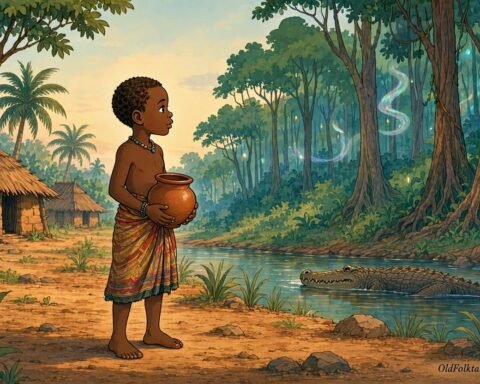
Eventually, after many days of travel, the community reached the great Wele River. Unlike smaller rivers they had crossed before, the Wele was wide, strong, and powerful. Its waters moved with force, stretching far beyond what the eye could easily see. For many in the group, this moment represented the greatest challenge of their migration.
The river was not only a physical obstacle but also a symbolic one. It marked the boundary between what was known and what was unknown. Some feared that crossing such a vast river would bring danger or misfortune. Others believed that it was a necessary step toward renewal and survival.
A council was held at the riverbank. Elders studied the currents, the banks, and the natural flow of the water. Hunters observed the movement of animals along the shore, while scouts searched for possible crossing points. After careful observation, it was decided that the crossing would be attempted at a point where the river widened but slowed slightly, making it less dangerous than other sections.
Before the crossing began, rituals were performed once more. Offerings were made to honor the river spirit, and prayers were spoken to ensure safe passage. The people believed that rivers were not empty forces, but living presences that required respect and understanding.
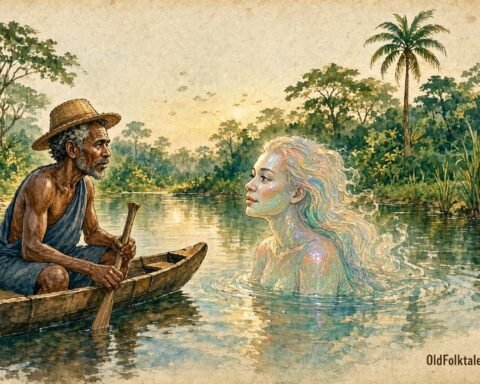
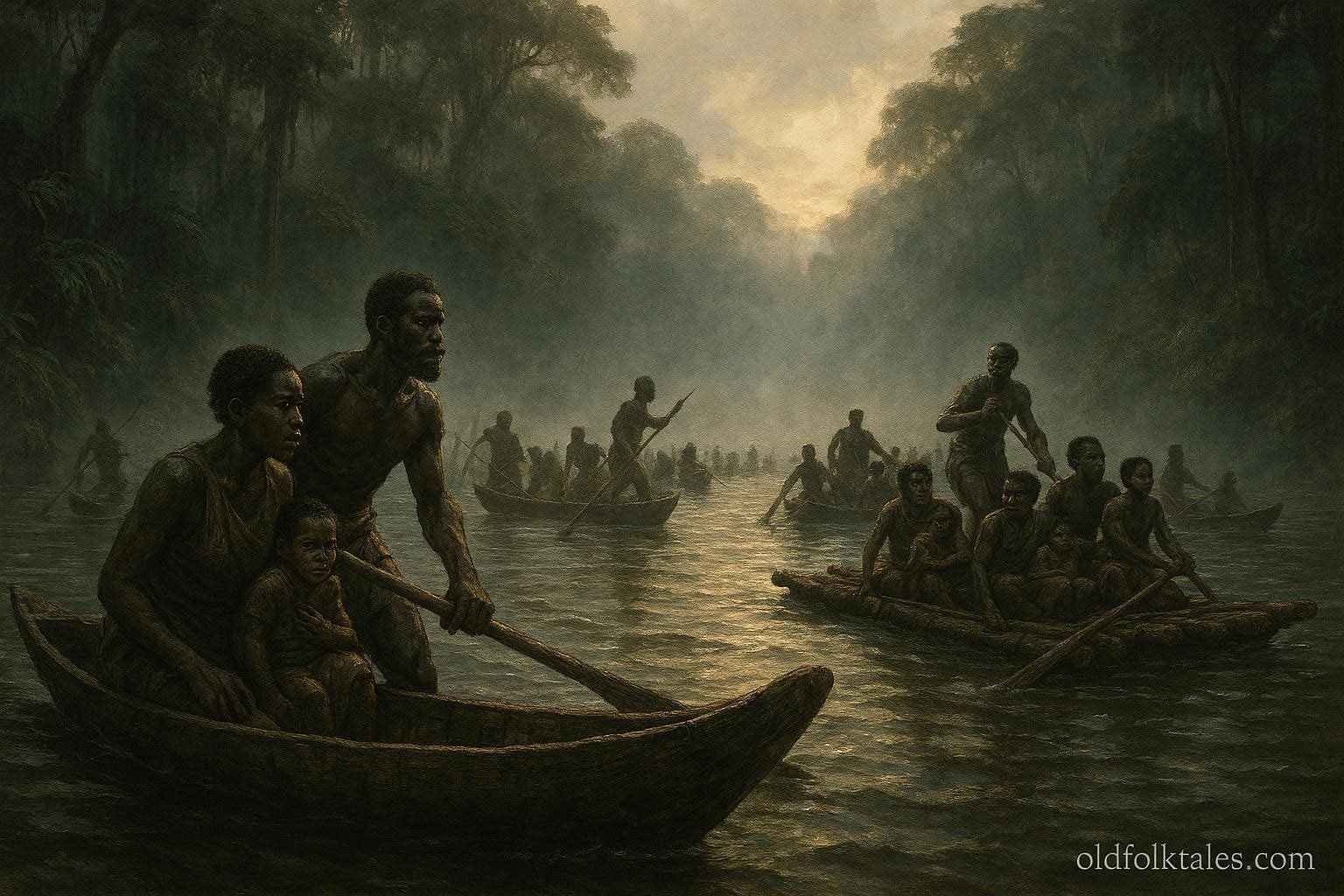
The crossing itself was one of the most difficult moments in the journey. Canoes were used where available, while others relied on carefully constructed rafts made from logs bound together with vines. Strong swimmers assisted in guiding younger children and helping stabilize the makeshift vessels. The river tested their endurance as currents pushed against them, and water splashed heavily against their fragile crafts.
During the crossing, fear and determination existed side by side. Some moments brought panic as the river surged unexpectedly, while other moments brought quiet focus as the travelers worked together to maintain balance. Cooperation became essential. No individual could cross alone; survival depended entirely on unity.
After great effort and time, the migrating ancestors successfully reached the opposite shore. Exhaustion and relief spread through the group as they stepped onto new land. Though the journey was not yet fully complete, crossing the Wele River marked a turning point. It symbolized both survival and transformation.
In the days that followed, the community explored the new land cautiously. They studied its soil, water sources, vegetation, and wildlife. Gradually, they began to settle, building temporary shelters and establishing new routines. Over time, this new region became part of their expanded homeland.
However, the memory of the crossing remained deeply embedded in their identity. It was not simply remembered as a physical journey, but as a defining moment of resilience and unity. Elders passed down stories of how their ancestors overcame fear, hardship, and uncertainty through cooperation and determination.
In later generations, the Crossing of the Wele Ancestors became more than a historical memory. It became a symbol of identity for the Fang people of Río Muni. It reminded them that movement, adaptation, and endurance were part of their heritage. It also reinforced the belief that survival is not achieved alone, but through collective effort and shared purpose.
Even today, variations of this oral tradition continue to be preserved in Fang migration narratives and ethnographic studies of Central African history. The story remains a reminder that every people carries a journey within their history, and that the strength of a community is revealed most clearly in moments of difficulty.
Explore more Southern African folktales here
Moral Lesson
True survival depends on unity, perseverance, and the courage to move forward even when the path is uncertain.
Knowledge Check
1. Who were the Wele ancestors?
They were an early Fang community that migrated in search of a new homeland.
2. Why did they migrate?
Due to environmental pressure, resource scarcity, and the need for survival.
3. What major obstacle did they face?
They had to cross the powerful Wele River during their journey.
4. How did they manage the crossing?
They used canoes, rafts, and teamwork to cross safely.
5. What role did unity play in the story?
Unity ensured survival during both the journey and river crossing.
6. What is the main lesson of the story?
Survival and success depend on cooperation, resilience, and shared identity.
Source
Adapted from Fang migration oral traditions and Central African ethnographic records referencing Wele River movement narratives, preserved in Equatorial Guinea oral history archives.