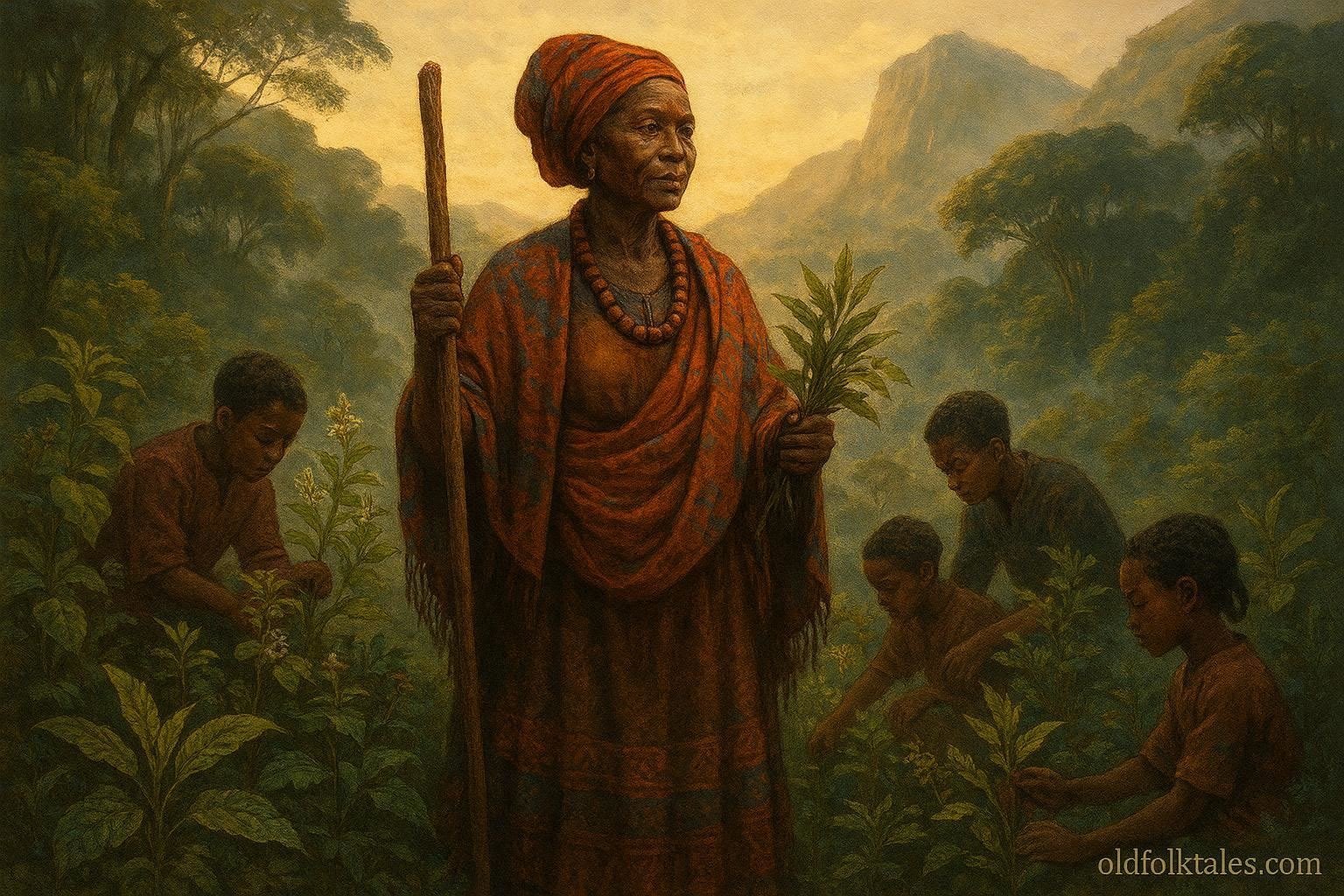
Long ago, in the mist-covered highlands of Bioko Island, the Bubi people lived among fertile valleys, rushing streams, and forested mountains. The highlands were known not only for their beauty but also for their abundance of medicinal plants. For generations, healers studied the land carefully, learning which roots, leaves, and flowers could relieve suffering and restore health.
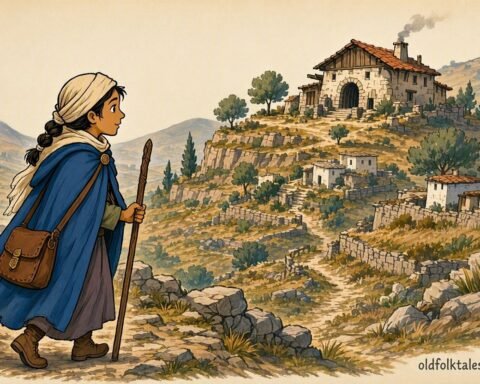
Among these healers was a young woman named Isabela. From an early age, she displayed an unusual ability to recognize healing plants. While other children played in the villages, she often wandered through the forests with her grandmother, a respected healer who taught her the secrets of traditional medicine.
As the years passed, Isabela mastered skills that many believed took a lifetime to learn. She could identify rare herbs hidden beneath dense vegetation. She knew which plants eased fevers, soothed pain, or helped injuries heal. People traveled from distant settlements seeking her assistance, and her reputation spread throughout the island.
Soon, Isabela became known as one of the most talented healers in the region.
Yet with growing recognition came an unexpected problem.
Continue your journey: Read more East African folktales
Many people asked her to teach them.
Young apprentices requested guidance.
Village leaders encouraged her to train future healers.
Even her grandmother reminded her that knowledge survived only when it was passed from one generation to the next.
However, Isabela hesitated.
She feared that others might misuse the knowledge.
She worried that careless students would damage the forests while gathering plants.
Most of all, she believed no one could care for the healing traditions as seriously as she did.
As a result, she kept most of her knowledge to herself.
Years passed.
Although Isabela continued helping many people, fewer young healers were being trained. Elder healers gradually grew old, and some passed away without fully sharing what they knew. Slowly, valuable knowledge began disappearing from the community.
One year, a severe illness spread through several villages in the highlands. More people required treatment than Isabela could manage alone. Day after day, she traveled long distances, gathering medicines and caring for the sick. Despite her efforts, she struggled to reach everyone who needed help.
Exhausted and worried, she climbed a mountain trail one evening seeking solitude and guidance.
As she rested beside an ancient tree overlooking the valley, she reflected on the situation.
The illness was not beyond her ability to treat.
The real problem was that she was the only healer available in many areas.
For the first time, she realized the consequences of keeping knowledge to herself.
No matter how skilled she was, one person could not serve every community forever.
The next morning, Isabela made a decision.
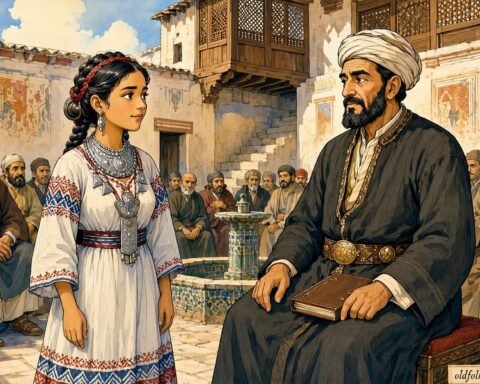
She returned to her village and invited young people interested in learning traditional medicine to join her.
At first, only a few apprentices arrived.
She taught them how to identify plants responsibly.
She explained the importance of respecting nature.
She showed them how to prepare remedies carefully and ethically.
Most importantly, she emphasized that healing was not about personal recognition but about service to others.
The apprentices learned eagerly.
As months passed, more students joined.
Some specialized in treating fevers.
Others focused on injuries or herbal cultivation.
Together, they created gardens where medicinal plants could be grown sustainably rather than collected exclusively from the wild.
Gradually, healing knowledge spread throughout the highlands once again.
When future illnesses appeared, trained healers were available in multiple villages.
Communities became healthier and more resilient.
The traditions that had once seemed at risk of disappearing were now being preserved by a new generation.
Years later, Isabela became one of the most respected healers in Bubi history.
Yet she was remembered not simply for her medical skills.
People honored her because she recognized that wisdom grows stronger when shared.
Through her efforts, knowledge that might have been lost continued to benefit countless people long after her own lifetime.
Even today, elders tell the story of the Healer of the Sacred Highlands to remind young people that true knowledge carries responsibility. Learning is important, but teaching others is equally valuable.
For wisdom kept hidden serves only a few.
Wisdom shared with care can serve generations.
Keep reading: Discover more Central African folktales
Moral Lesson
Knowledge becomes most valuable when it is shared responsibly to help others and preserve it for future generations.
Knowledge Check
1. Who was Isabela?
Isabela was a gifted healer from the highlands of Bioko Island.
2. Why did Isabela avoid teaching others at first?
She feared people might misuse the healing knowledge or fail to respect the traditions.
3. What problem arose in the community?
A widespread illness affected many villages, and there were too few trained healers to help everyone.
4. What lesson did Isabela learn?
She learned that knowledge should be shared so it can continue helping others.
5. How did the apprentices help the community?
They learned healing skills and provided care to people throughout the region.
6. What is the main message of the story?
Wisdom should be preserved and shared responsibly for the benefit of future generations.
Source
Adapted from Bubi traditional healer traditions and oral heritage narratives preserved in Equatorial Guinea ethnographic folklore archives.