For generations, the people of a quiet Wolof village in The Gambia had dreamed of making the sacred pilgrimage to Mecca. Every year, when traders returned from distant lands, they shared stories of the Holy City, of pilgrims dressed in white, and of prayers offered beside the Kaaba.
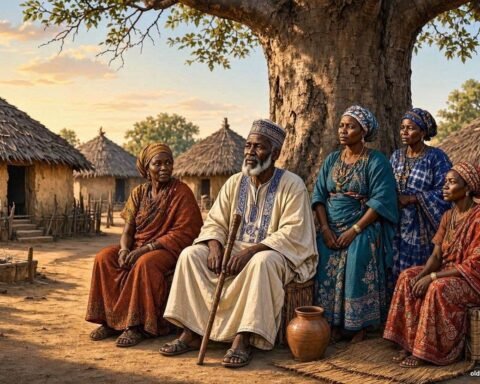
Among those who listened most attentively was a humble man named Sicket.
From childhood, Sicket had believed that one day he would complete the pilgrimage that every faithful Muslim hoped to undertake at least once in life if able. Yet he owned no great wealth. He lived simply, cultivating millet during the rainy season, repairing fishing nets in the dry months, and helping anyone who sought his assistance.
Each evening after prayer, he whispered the same request.
“O Allah, when the proper time comes, guide my footsteps to Your Sacred House.”
Years passed.
Slowly, Sicket saved every spare coin he earned. While others spent their profits on fine robes or larger homes, he remained content with little. His greatest treasure was not hidden in a chest but in the dream he carried within his heart.
At last, when his beard had begun to show streaks of gray, Sicket possessed enough money to begin the long journey.
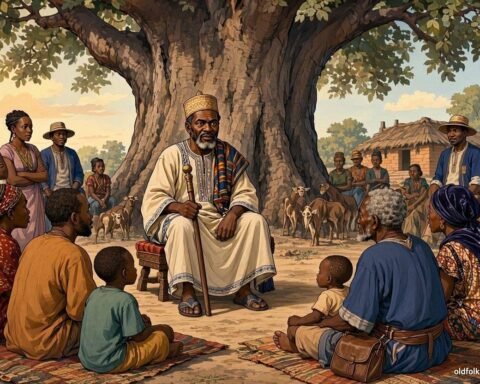
The entire village gathered to bid him farewell.
Don’t stop yet! See our complete East African folktales collection
His elderly mother embraced him tightly.
“Remember,” she said, “a pilgrim carries more than provisions.”
“What else should I carry?”
“A humble heart.”
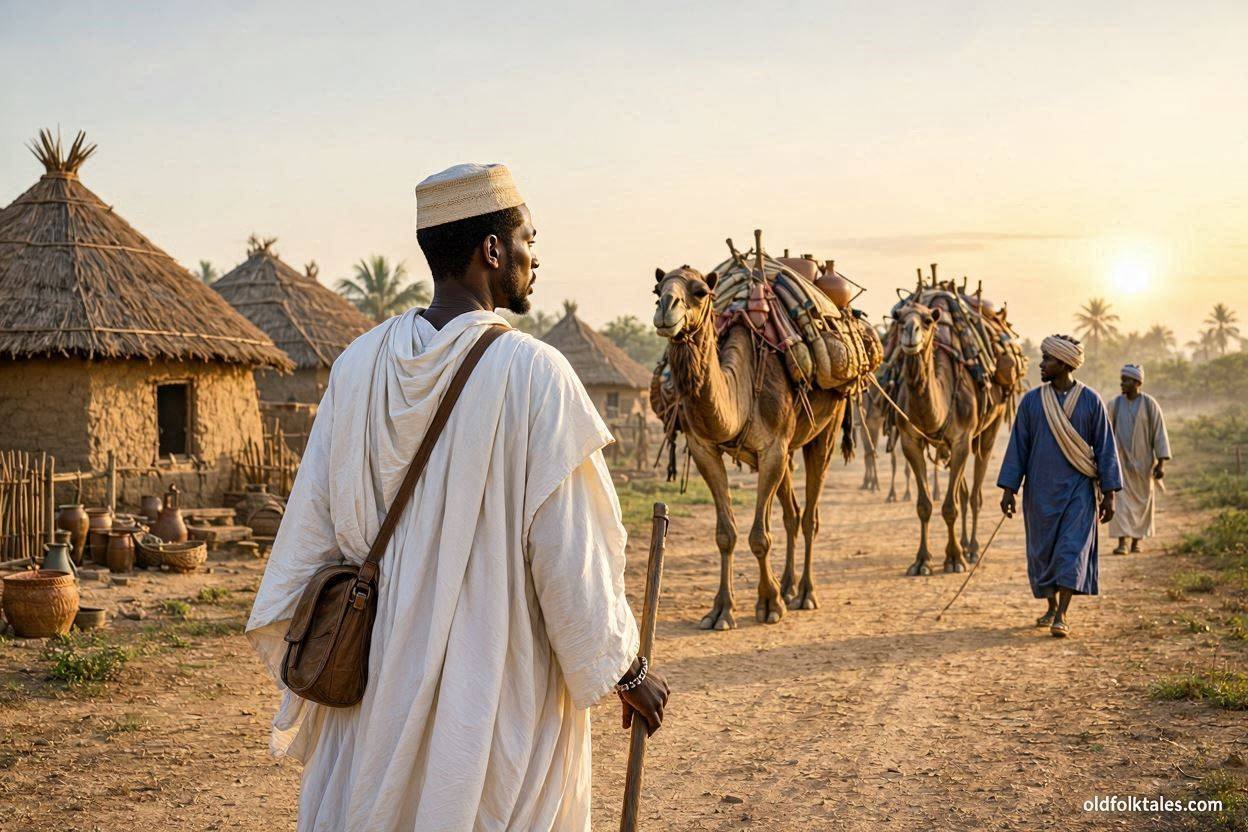
With those words echoing in his mind, Sicket joined a caravan traveling north across rivers, forests, and endless stretches of dry land.
The first weeks passed peacefully.
The pilgrims prayed together before sunrise and shared stories around their evening fires.
One afternoon they met an old blind man sitting alone beside the road.
“I have not eaten for two days,” the stranger whispered.
Some travelers hurried past, fearing delay.
Sicket opened his travel bag.
He gave the man part of his food.
“You may need that later,” another pilgrim warned.
“If Allah provides enough for today,” Sicket replied gently, “He will provide enough for tomorrow.”
The caravan continued.
Days later, a violent storm swept across the open plain.
Strong winds scattered supplies.
Several travelers lost everything they carried.
Without hesitation, Sicket divided his remaining provisions among those in greater need.
Again, some questioned his decision.
He simply smiled.
“No one reaches a sacred destination by abandoning compassion along the road.”
Weeks later, the caravan reached a bustling town.
Markets overflowed with beautiful fabrics, perfumes, and ornaments from distant kingdoms.
Many pilgrims spent their savings on expensive souvenirs.
Sicket purchased only fresh bread and water.
A merchant laughed.
“You have traveled this far and buy nothing for yourself?”
Sicket answered quietly,
“I did not leave home to fill my hands.”
“I came to strengthen my soul.”
As the journey continued, the pilgrims approached a barren desert.
Water became scarce.
The scorching sun exhausted everyone.
One afternoon, Sicket noticed a young traveler collapsing from thirst.
The last water in Sicket’s flask was barely enough for himself.
Without hesitation, he handed it to the young man.
“What about you?” asked the grateful traveler.
Sicket smiled.
“The One who created the desert also created mercy.”
That evening, another caravan unexpectedly arrived carrying fresh water.
The grateful pilgrims regarded Sicket with new respect.
Eventually, after many months of travel, the caravan reached the Holy City.
As Sicket stood before the Kaaba for the first time, tears filled his eyes.
He had imagined this moment throughout his entire life.
Thousands of voices praised Allah together.
People from every nation stood side by side, dressed alike, reminding one another that before the Creator, wealth, status, and nationality meant nothing.
Only sincerity mattered.
Sicket completed every rite of the pilgrimage with gratitude.
When he finished his prayers, he expected to feel that his greatest journey had ended.
Instead, he felt something unexpected.
Peace.
Not because he had arrived.
But because he had finally understood.
During the return journey, he reflected upon every hardship he had faced.
The hungry stranger.
The violent storm.
The thirsty traveler.
The difficult desert.
He realized none of those moments had delayed his pilgrimage.
They had been part of it.
Months later, Sicket returned to his village.
Everyone celebrated his safe return.
Children gathered eagerly to hear stories of Mecca.
An elder finally asked,
“What was the greatest miracle you witnessed?”
Many expected Sicket to describe magnificent buildings or enormous crowds.
Instead, he smiled softly.
“The greatest miracle,” he replied, “was discovering that every act of kindness along the road was already bringing me closer to Allah.”
The village grew silent.
From that day onward, Sicket became known not only as a pilgrim but as a man whose life reflected the lessons of his journey.
Whenever young people spoke eagerly about traveling to distant holy places, he reminded them,
“Begin your pilgrimage today.”
“But we have not left the village,” they would answer.
“You do not begin a sacred journey with your feet,” Sicket would say.
“You begin it with your character.”
Long after Sicket became one of the honored ancestors of the village, his story continued to inspire generations of Wolof families.
Parents repeated his words to their children.
Imams shared his example during lessons on faith.
Travelers remembered him whenever they offered food to strangers or helped someone in need.
For they had learned what Sicket himself discovered on the road to Mecca:
The longest journey a person ever makes is not across deserts or seas.
It is the journey from pride to humility, from selfishness to compassion, and from ordinary faith to complete trust in Allah.
Click here to discover more legendary tales from West Africa
Moral Lesson
True pilgrimage is not measured only by reaching a sacred destination but by allowing every step of the journey to transform one’s character through humility, generosity, faith, and perseverance.
Knowledge Check
1. Why did Sicket dream of traveling to Mecca?
He wished to fulfill the sacred pilgrimage and grow closer to Allah through sincere worship.
2. What lesson did Sicket learn during his journey?
That acts of kindness, humility, and compassion are essential parts of true faith.
3. Why did Sicket share his food and water with others?
Because he trusted Allah’s provision and believed helping others was part of his spiritual journey.
4. What values does this Wolof folktale teach?
Faith, humility, generosity, perseverance, and compassion.
5. Is Sicket Starts a Journey to Mecca based on a traditional Gambian folktale?
Yes. It is an original adaptation inspired by a documented Muslim Wolof folktale preserved in a published Gambian folklore collection.
6. What is the central message of the story?
The path to spiritual growth begins with a humble heart and is strengthened through kindness to others.
Source
Adapted from: Folk Tales and Fables from The Gambia, Volume 1 by Dembo Fanta Bojang and Sukai Mbye Bojang. This is an original retelling inspired by the documented traditional Muslim Wolof folktale.