Long ago, in the waters of the Gulf of Guinea, far from the mainland coast, lay the isolated island of Annobón. Surrounded by the vast Atlantic Ocean, the island was a place of steep hills, volcanic landscapes, dense vegetation, and rocky shores. Although beautiful, it was not an easy place to live. Fresh water could be difficult to find during certain seasons, storms often swept across the island, and the sea that provided food could also bring danger. Yet it was here that the ancestors of the Annobonese people established a community whose story would be remembered for generations.
According to oral traditions, the earliest settlers arrived on the island during a time when opportunities elsewhere had become uncertain. Some sought safety, while others searched for a place where they could build a future for their families. They arrived not as a single group but as several families who shared the challenge of beginning life in an unfamiliar land.
When the settlers first stepped onto the island, they quickly realized that survival would not be easy. The terrain was rugged, and much of the island was covered by thick vegetation. There were few clear areas suitable for cultivation, and many parts of the coastline were difficult to access because of sharp rocks and powerful waves. Nevertheless, the families understood that they had little choice but to work together.
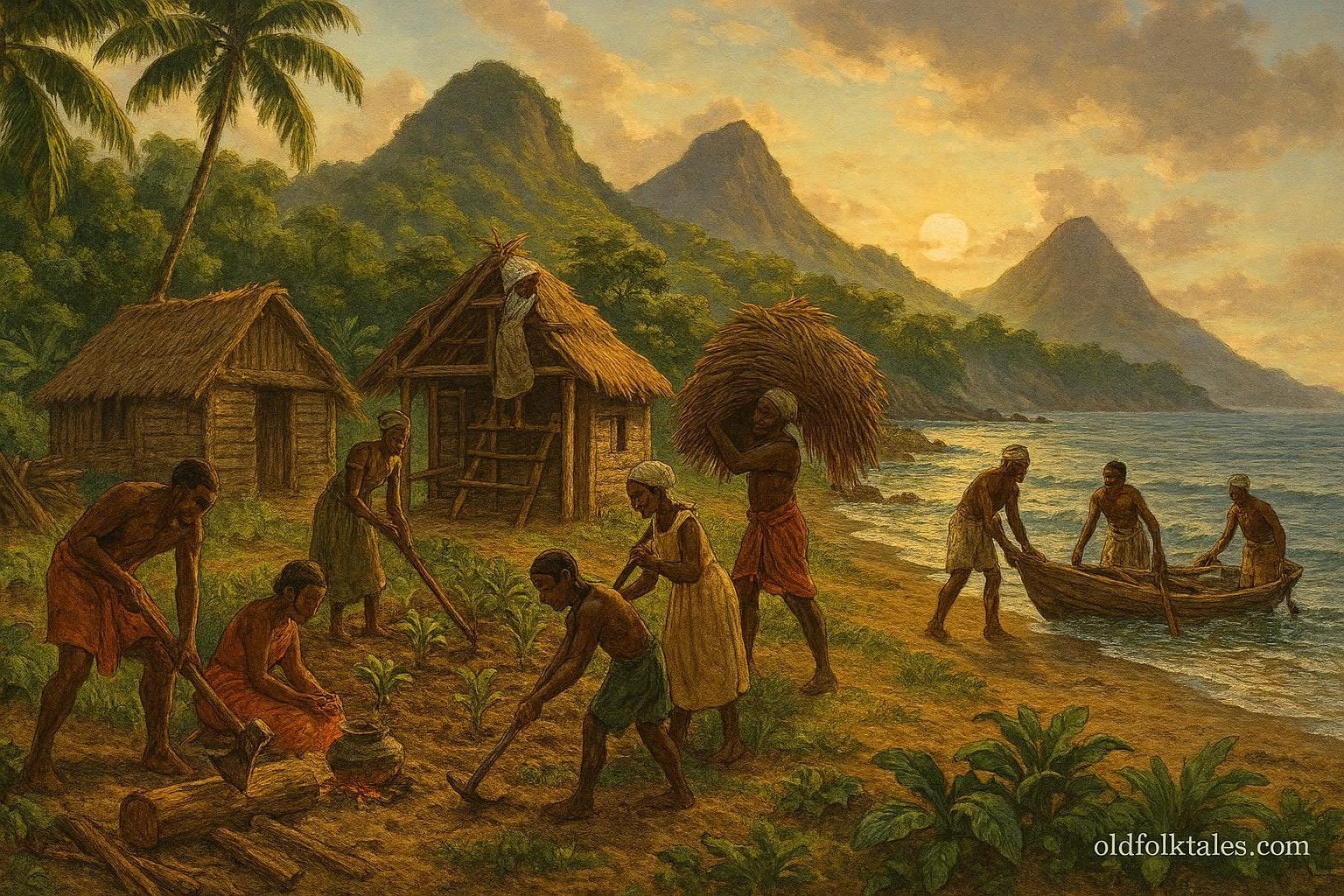
In the early days, they built simple shelters using wood, palm leaves, and other materials gathered from the surrounding environment. These structures offered basic protection from rain and wind but required constant maintenance. Every storm tested the strength of their homes, and every season brought new challenges.
Looking for more? Explore the magic of East African folktales here
Food was another concern. While the ocean provided fish and other marine resources, successful fishing required knowledge and cooperation. The settlers learned to observe the tides, weather patterns, and movement of sea life. They developed techniques for fishing safely and efficiently, sharing both labor and rewards. No family could survive alone, and the island quickly taught them the value of mutual support.
The settlers also explored the interior of Annobón, searching for fertile soil and reliable sources of fresh water. These explorations were often difficult. Dense vegetation slowed progress, and unfamiliar terrain created obstacles. Yet the families continued their efforts, determined to establish permanent settlements.
As time passed, they discovered areas suitable for farming. Crops were planted, and communal work became an essential part of daily life. Families helped one another clear land, plant seeds, and harvest food. Success was celebrated collectively because everyone understood that the prosperity of one family contributed to the well-being of the entire community.
Despite their progress, hardship remained a constant companion. Storms occasionally destroyed crops. Strong winds damaged homes. Periods of poor fishing tested their food reserves. During such times, disagreements sometimes arose. Some families argued over resources, while others questioned how responsibilities should be shared.
Recognizing the danger of division, the elders gathered regularly to discuss problems and seek solutions. These meetings became an important tradition. Rather than allowing disputes to grow, community members were encouraged to speak openly and listen carefully. Decisions were made with consideration for the needs of all families.
One particularly difficult year brought severe storms that battered the island repeatedly. Crops were damaged, fishing became dangerous, and supplies ran low. Many feared that the settlement might not survive. Yet instead of retreating into isolation, the families strengthened their commitment to cooperation.
Food was distributed fairly according to need. Fishing crews combined their efforts to maximize success during safe weather. Those with stronger shelters welcomed neighbors whose homes had been damaged. Elders shared knowledge about preserving food and managing scarce resources. Through collective action, the community endured the crisis.
The experience taught an important lesson. The settlers realized that the island rewarded unity and punished division. Survival depended not only on individual effort but also on the willingness of people to support one another during difficult times.
Years passed, and the settlement gradually grew stronger. New generations were born on the island. Children learned the stories of their ancestors and the sacrifices that had made their community possible. They were taught to respect the sea, value cooperation, and honor the resilience of the founding families.
As the population increased, the settlement expanded. Paths connected different parts of the island, and traditions developed that reinforced social bonds. Celebrations marked successful harvests, fishing achievements, and important communal events. These gatherings reminded everyone that their shared identity was rooted in collective perseverance.
The founding families eventually became symbols of determination and cooperation. Their experiences were passed down through oral tradition, not simply as historical memories but as lessons for future generations. Elders told stories of the hardships faced by the first settlers and emphasized the importance of working together when confronting challenges.
The legend of the founding families also reinforced a sense of belonging. Every generation understood that their community existed because ordinary people had chosen unity over conflict and perseverance over surrender. The island’s difficult environment had tested them repeatedly, but it had also strengthened their bonds.
Over time, Annobón became known not merely as a remote island but as a home shaped by resilience. The legacy of the founding families endured in community traditions, shared values, and collective memory. Their story reminded people that even in the most challenging circumstances, cooperation could transform hardship into opportunity.
Today, the tale of the Founding Families of Annobón continues to symbolize survival, resilience, and the power of community. It serves as a reminder that lasting success is rarely achieved alone. Instead, it is built through trust, shared effort, and the determination to face difficulties together.
Click here to explore more Central African folktales
Moral Lesson
Communities become strong when people cooperate, support one another, and remain united during times of hardship.
Knowledge Check
1. Where is Annobón located?
Annobón is an island in the Gulf of Guinea and part of Equatorial Guinea.
2. What challenge did the settlers face first?
They faced a rugged environment with limited resources and difficult terrain.
3. How did the families survive?
They survived through cooperation, shared labor, and mutual support.
4. What role did the elders play?
They helped resolve disputes and guided the community through difficult decisions.
5. What happened during the severe storm year?
The community faced food shortages and damage but survived by working together.
6. What is the main lesson of the story?
Unity and cooperation help communities overcome hardship.
Source
Adapted from Annobonese settlement traditions and island oral histories preserved in Annobón oral history archives.