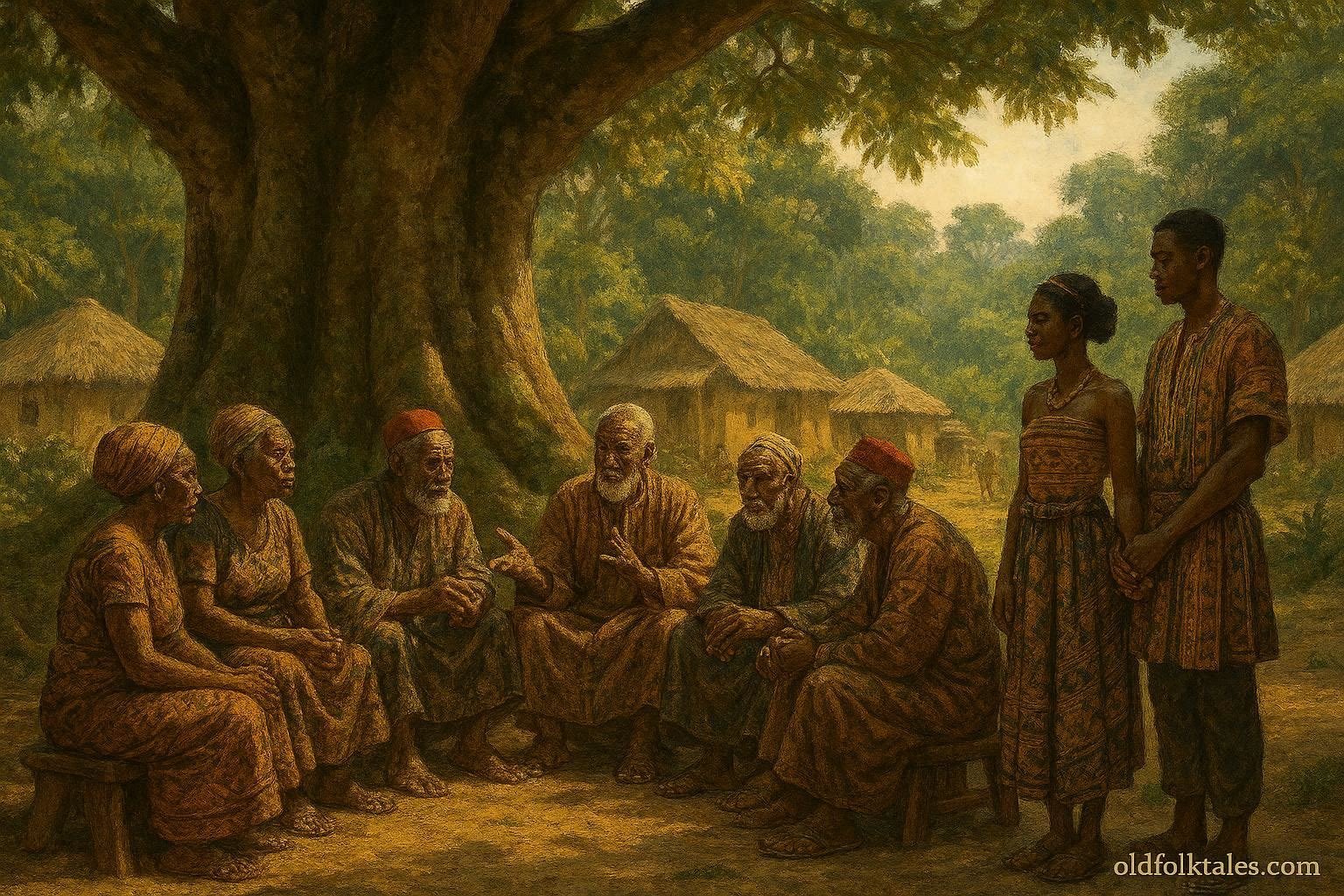
The forests and river valleys of Río Muni were home to many Fang communities whose lives were closely connected through kinship, trade, and tradition. Families depended upon one another during harvests, celebrations, and times of hardship. Among the Fang, marriage was never viewed as the union of two individuals alone. It was a bond that connected families, strengthened alliances, and created responsibilities that extended across generations.
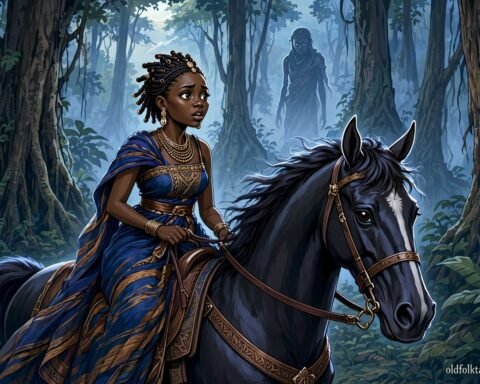
In one such community lived a young woman named Nchama, the daughter of a respected family known for its wisdom and generosity. She was admired not only for her beauty but also for her intelligence, kindness, and dedication to community life. Her parents had raised her to respect tradition while also valuing harmony among people.
In a neighboring settlement lived a young hunter named Mebale. He had earned a reputation for honesty, courage, and hard work. Though still young, he was already trusted by elders because he fulfilled his responsibilities faithfully and treated others with respect. Over time, Mebale and Nchama came to admire one another, and their families agreed that marriage would be beneficial for both households.
What seemed at first like a simple arrangement soon became more complicated.
Continue your journey: Read more East African folktales
Both Nchama and Mebale belonged to extended family networks that stretched across multiple settlements. As news of the proposed marriage spread, relatives from near and far became involved in the discussions. Before long, representatives from seven influential families gathered to participate in the negotiations.
Each family believed it had a role to play. Some had ancestral ties to the bride’s lineage. Others were connected through marriage, friendship, or long-standing alliances. While everyone supported the union, disagreements soon emerged regarding the bride price and the responsibilities that would accompany the marriage.
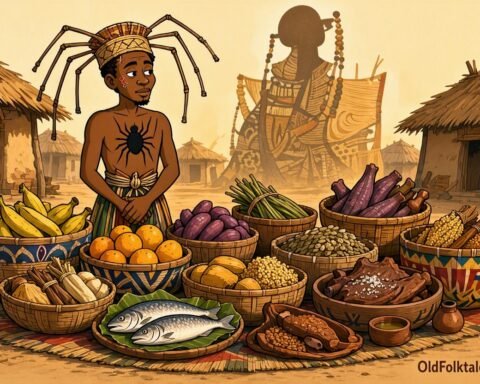
One family argued that the bride price should be substantial because Nchama came from a respected lineage. Another insisted that excessive demands would place unnecessary burdens on the groom’s family. A third family emphasized that gifts should symbolize respect rather than wealth. Others debated how resources should be shared among relatives and how future obligations would be managed.
As the discussions continued, tensions grew.
Meetings that were intended to celebrate the coming marriage became lengthy debates. Voices rose. Old disagreements resurfaced. Some relatives began focusing more on their own interests than on the purpose of the gathering.
The elders watched with concern.
One evening, after a particularly difficult meeting, the oldest elder among the seven families requested permission to speak. The gathering fell silent as he slowly rose to address those present.
He reminded them that the purpose of bride price was not to measure the value of a person. No amount of wealth could truly represent the worth of a daughter, a son, or a family. Instead, the tradition existed to demonstrate respect, gratitude, and commitment between families.
The elder then shared a story from his youth. He spoke of a marriage that had failed because families focused entirely on material exchanges while neglecting trust and cooperation. Although great wealth had changed hands, bitterness remained, and relationships suffered for years afterward.
His words encouraged reflection, but the disagreements did not disappear immediately.
The following day, representatives from all seven families met again. This time, rather than debating demands, they were asked to discuss what responsibilities each family would contribute to the success of the marriage. The conversation gradually changed direction.
One family offered support in organizing the wedding ceremony. Another pledged assistance during future harvest seasons if the young couple faced difficulties. Others promised guidance, mentorship, and help in resolving conflicts that might arise in married life.
As people focused on service rather than personal gain, the atmosphere began to improve.
The families realized that marriage was not merely an exchange of gifts. It was a partnership that required the support of an entire community. The bride price itself became only one part of a much larger commitment.
After several days of discussion, a fair agreement was reached. The gifts exchanged were meaningful but reasonable. More importantly, every family pledged ongoing support for the new union. The agreement was celebrated not because one side had won the negotiation, but because all sides had contributed to a solution that strengthened relationships.
When the wedding day finally arrived, people traveled from many settlements to attend. Songs filled the air, elders offered blessings, and families shared food in celebration. The event became one of the largest gatherings the region had seen in many years.
During the ceremony, the elder who had guided the negotiations addressed the crowd once more. He reminded everyone that the success of a marriage depended not on wealth but on mutual respect, cooperation, and responsibility. His words were greeted with approval from both young and old.
Years passed, and Nchama and Mebale built a strong family together. Whenever challenges arose, the seven families honored the promises they had made during the negotiations. They provided support, advice, and assistance when needed. Their cooperation helped the young couple overcome difficulties and thrive.
As time went on, the story of the Bride Price of the Seven Families became part of local oral tradition. Elders told it to younger generations whenever marriage discussions became overly focused on material concerns. The story served as a reminder that traditions exist to strengthen communities, not divide them.
The legend endured because it reflected an important truth. Families are strongest when they value respect above pride, cooperation above competition, and responsibility above personal advantage. Through wisdom and patience, seven families transformed a potential conflict into a lasting example of unity.
Even today, the tale continues to remind listeners that successful relationships are built not only by two individuals but also by the communities that support them.
Keep reading: Discover more Central African folktales
Moral Lesson
Marriage is strengthened by mutual respect, cooperation, and shared responsibility rather than material wealth alone.
Knowledge Check
1. Who were Nchama and Mebale?
They were a young Fang couple whose planned marriage brought seven families together.
2. Why did disagreements arise?
The families had different opinions about the bride price and marriage obligations.
3. What lesson did the elder teach?
He taught that bride price represents respect and commitment, not a person’s value.
4. How were the disputes resolved?
The families focused on their responsibilities and support for the marriage rather than personal interests.
5. What happened after the wedding?
The seven families continued supporting the couple and honoring their promises.
6. What is the main lesson of the story?
Strong relationships are built through cooperation, respect, and community support.
Source
Adapted from Fang kinship traditions, marriage customs, and oral narratives preserved in Central African kinship folklore archives.