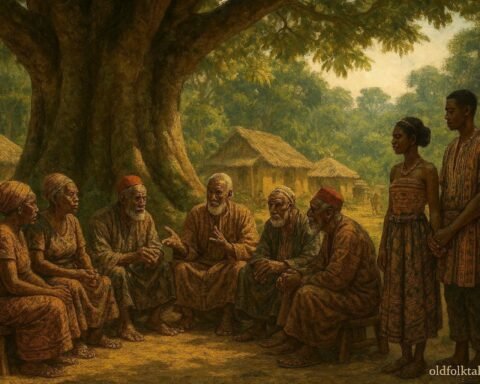
Among the forested regions of northern Gabon, where many Fang communities lived along ancient trade paths and river routes, relationships between neighboring villages were often built upon cooperation, shared customs, and mutual respect. Families traded goods, celebrated ceremonies together, and helped one another during times of hardship. Yet, like all communities, disagreements occasionally arose.
The elders taught that peace was not something that existed naturally. It required effort, patience, and wisdom. A single misunderstanding could grow into a serious dispute if left unresolved. For this reason, traditions that encouraged unity were highly valued and carefully preserved.
One such tradition centered around a ceremonial palm wine prepared only for important gatherings between villages.
According to custom, the drink was served whenever leaders met to settle disagreements, negotiate alliances, celebrate harvests, or welcome honored guests. The palm wine itself was famous throughout the region. People often remarked that conversations became calmer after sharing it. Arguments softened. Suspicion faded. Discussions that seemed impossible suddenly became productive.
Over time, many began to believe that the drink possessed unusual qualities.
Looking for more? Explore the magic of East African folktales here
The secret of its preparation was known only to a single individual in each generation, a respected figure known as the Palm Wine Keeper.
During the period of this story, that responsibility belonged to an elder named Ndzi.
Ndzi was widely respected throughout the region. He was not a chief, a warrior, or a wealthy trader. His influence came from his wisdom and fairness. For decades, he had served as a trusted mediator in disputes between communities. Whenever conflicts emerged, leaders often sought his advice.
As Palm Wine Keeper, Ndzi also carried another responsibility.
He alone knew the complete recipe used to prepare the ceremonial drink.
The knowledge had been passed down through generations of keepers. Each successor was carefully chosen and trained, not only in the preparation of the wine but also in the values associated with it.
Many younger villagers assumed the recipe contained rare ingredients with magical properties.
Ndzi always smiled when he heard such speculation.
He never confirmed or denied the rumors.
Instead, he reminded people that peace depended more upon human choices than mysterious substances.
For many years, the region enjoyed relative harmony.
Then circumstances changed.
Two neighboring villages, Ekora and Mbela, became involved in a growing dispute.
The disagreement began over access to a stretch of forest rich in hunting grounds and medicinal plants. Both communities claimed ancestral ties to the area. At first, discussions remained respectful.
However, as months passed, frustrations increased.
Hunters accused one another of crossing boundaries.
Families exchanged accusations.
Trade between the villages slowed.
Old grievances that had long been forgotten suddenly resurfaced.
Soon, many feared the dispute could lead to violence.
Concerned leaders organized a council and invited representatives from both villages to attend. Following tradition, the gathering would include the ceremonial palm wine prepared by Ndzi.
As preparations began, a curious young man named Obiang approached the elder.
Obiang had long admired Ndzi and hoped one day to become his successor.
“Grandfather,” he said respectfully, “people say your palm wine prevents conflict. Is the secret hidden in the recipe?”
Ndzi looked at him thoughtfully.
“What makes you ask?”
“Because if the recipe is truly so powerful, perhaps it should be shared with everyone.”
The elder smiled.
“Some secrets are not protected because they are powerful. Sometimes they are protected because people misunderstand them.”
Obiang considered the answer but remained curious.
The following days were filled with preparation.
Delegations from both villages arrived at the meeting grounds. Although everyone behaved politely, tension remained visible. Conversations were cautious. Distrust lingered beneath the surface.
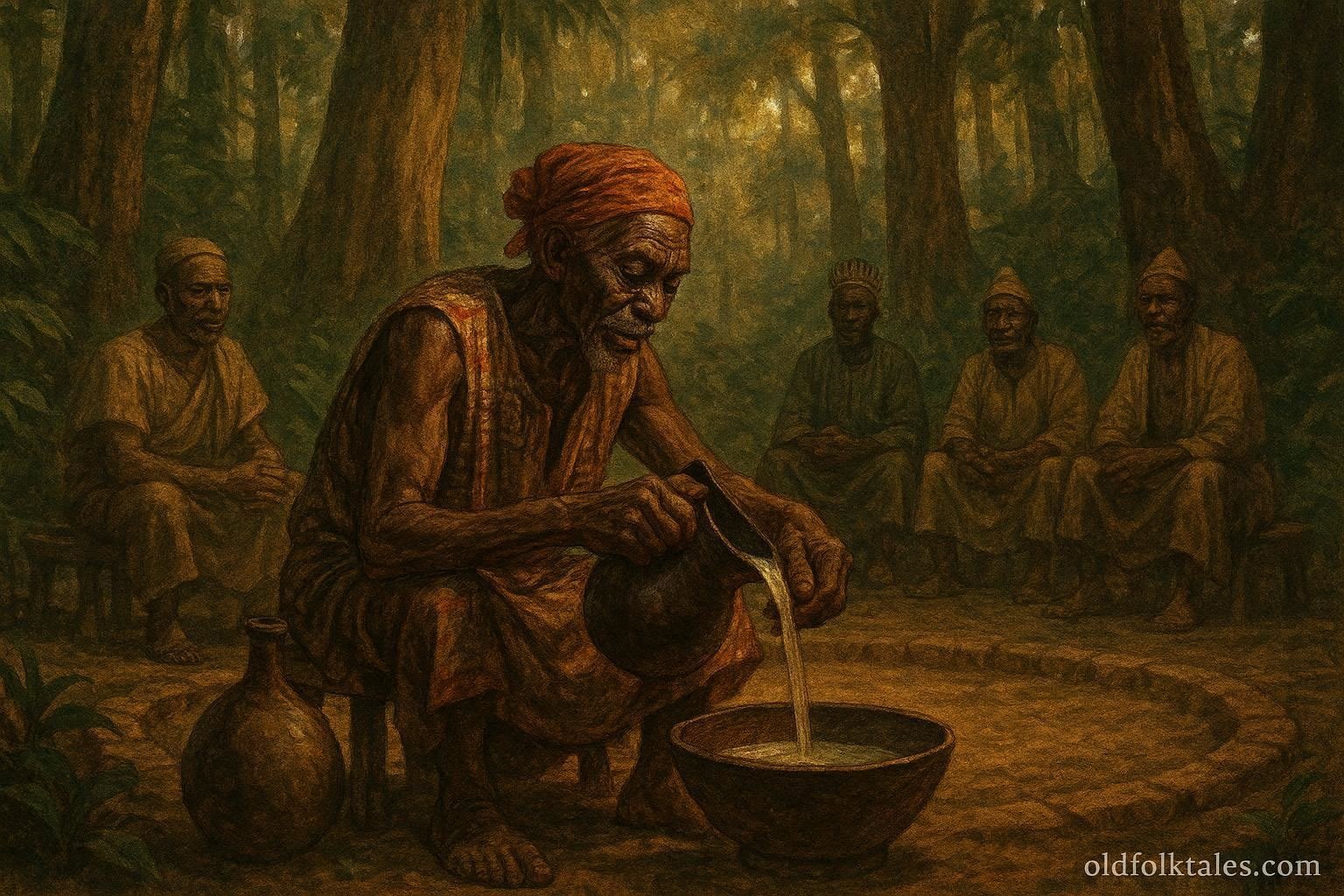
On the morning of the council, Ndzi prepared the ceremonial palm wine according to tradition.
He selected ingredients carefully and worked in complete silence, as generations of Palm Wine Keepers had done before him.
When the preparation was complete, the gathering began.
Leaders from both villages sat beneath a large shelter while community members observed from a distance.
The palm wine was served.
Each participant drank from a shared ceremonial vessel as custom required.
Only then did discussions begin.
At first, progress was slow.
Representatives repeated old arguments and defended their positions.
Several times, voices rose with frustration.
Yet as the hours passed, something remarkable occurred.
People began listening more carefully.
Instead of interrupting, they allowed others to speak.
Instead of focusing only on their own concerns, they considered the experiences of their neighbors.
Gradually, common ground emerged.
By evening, both villages agreed to establish shared access to the disputed forest and create guidelines for its use.
The gathering concluded peacefully.
Many praised the power of the ceremonial palm wine.
Once again, rumors spread that its secret ingredients had prevented conflict.
Obiang heard these conversations and became even more curious.
He decided that he must discover the truth.
Several weeks later, while assisting Ndzi with routine tasks, he finally asked directly.
“What is the secret ingredient?”
Ndzi laughed softly.
“Why are you so determined to find it?”
“Because everyone believes it creates peace.”
The elder remained silent for a moment.
Then he invited Obiang to accompany him into the forest.
They walked for hours along narrow paths until they reached a quiet clearing.
There, beneath the shade of towering trees, stood a collection of plants used in preparing the ceremonial drink.
Obiang examined them carefully.
They appeared ordinary.
There were no rare flowers.
No glowing herbs.
No mysterious substances.
Confused, he looked at the elder.
“These cannot be the secret.”
“No,” Ndzi replied. “They are not.”
“Then where is the secret?”
The elder sat on a fallen log and motioned for Obiang to do the same.
“The recipe is not what people think.”
Obiang listened closely.
“For generations,” Ndzi continued, “people have focused on the drink itself and ignored everything surrounding it.”
He explained that the preparation process required patience, discipline, and reflection.
The gathering tradition required opponents to sit together before discussions began.
Sharing a common drink reminded participants that they belonged to the same human community despite their disagreements.
The ceremony encouraged respect, listening, and restraint.
“The true secret,” said Ndzi, “is not hidden in the palm wine. It is hidden in the values attached to it.”
Obiang was surprised.
“You mean the drink is not magical?”
Ndzi smiled.
“Peace cannot be poured from a cup.”
The young man thought carefully about the answer.
It made sense.
Yet he also understood why generations had protected the tradition.
If people believed peace came solely from a recipe, they might overlook the patience and wisdom required to maintain harmony.
Years passed.
Ndzi continued serving as Palm Wine Keeper while training Obiang in the responsibilities of the role. The lessons focused less on ingredients and more on character. Obiang learned how to mediate disputes, listen without judgment, and encourage understanding between opposing sides.
Eventually, age caught up with the elder.
Recognizing that his time as keeper was nearing its end, he gathered leaders from neighboring communities.
During a ceremonial gathering, he formally named Obiang as his successor.
Many assumed he was passing down an extraordinary recipe.
Only Obiang understood the deeper responsibility he was receiving.
After Ndzi’s passing, Obiang became the new Palm Wine Keeper.
Like his mentor before him, he prepared the ceremonial drink for important gatherings and community councils. The tradition continued, and peace remained strong among many villages.
People still speculated about secret ingredients.
They still whispered stories about the mysterious recipe.
Obiang never argued with them.
Instead, whenever someone asked about the secret, he offered the same wisdom that had been given to him.
“The recipe matters,” he would say, “but not as much as the respect, patience, and understanding shared around the cup.”
Generations later, the legend of the Palm Wine Keeper remained one of the most respected stories among Fang communities.
Some remembered it as a tale about a sacred drink.
Others understood it as something more important.
A reminder that lasting peace is created not through magic but through wisdom, responsibility, and a willingness to listen.
If you liked this story, see our Central African folktales collection
Moral Lesson
True peace comes from wisdom, respect, and understanding rather than from secrets or shortcuts.
Knowledge Check
- Where is the story set?
It is set among Fang communities in Gabon. - Who was Ndzi?
He was a respected elder and the Palm Wine Keeper. - Why was the ceremonial palm wine important?
It was served during important meetings to encourage peace and cooperation. - What dispute threatened the villages?
Two villages disagreed over access to a forest rich in resources. - What was the real secret of the palm wine?
The true secret was the tradition of patience, respect, listening, and unity surrounding it. - What lesson does the story teach?
Peace is built through wisdom, responsibility, and mutual understanding.
Source
Gabonese folklore. Adapted from Fang community traditions preserved in Gabon community tradition archives and Central African oral heritage studies.