Across the fertile plains of Northern Nigeria, farming was more than a way of life. It was a sacred trust passed from one generation to another. Families carefully tended their fields, knowing that each harvest depended upon patience, hard work, and respect for the land. Among the crops that flourished during the rainy season, pumpkins were especially valued, providing food for households throughout the year.
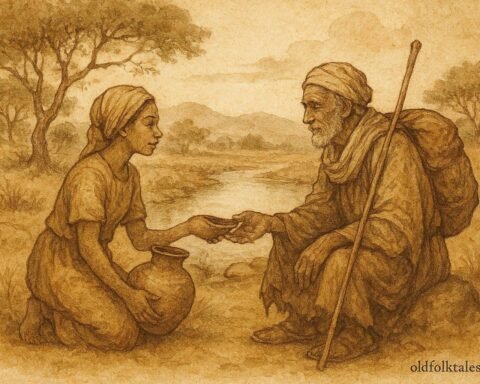
In one small Hausa village lived a young maiden whose gentle nature made her beloved by everyone who knew her. Though her family possessed little wealth, she never complained about her circumstances. Each morning she helped her parents in the fields, fetched water from the village well, and willingly assisted elderly neighbours who could no longer complete heavy work on their own.
The villagers often praised her generosity.
“She carries herself with humility,” they would say. “A heart like hers is richer than any treasure.”
Not everyone shared those qualities.
Some people mocked the maiden because her clothing was simple and her family owned only a modest piece of farmland. They believed that riches and fine possessions were the true measure of a person’s worth.
The maiden paid little attention to such words.
She believed that honesty and kindness were greater blessings than wealth.
If you liked this story, see our Central African folktales collection
One planting season, her father prepared a small patch of land where pumpkin seeds would be sown. The family worked tirelessly beneath the warm sun, clearing weeds, loosening the soil, and carefully planting each seed with hope for a plentiful harvest.
The rains came at the proper time.
Soon green vines spread across the earth, their broad leaves sheltering clusters of bright yellow blossoms. Before long, healthy pumpkins began to appear among the vines.
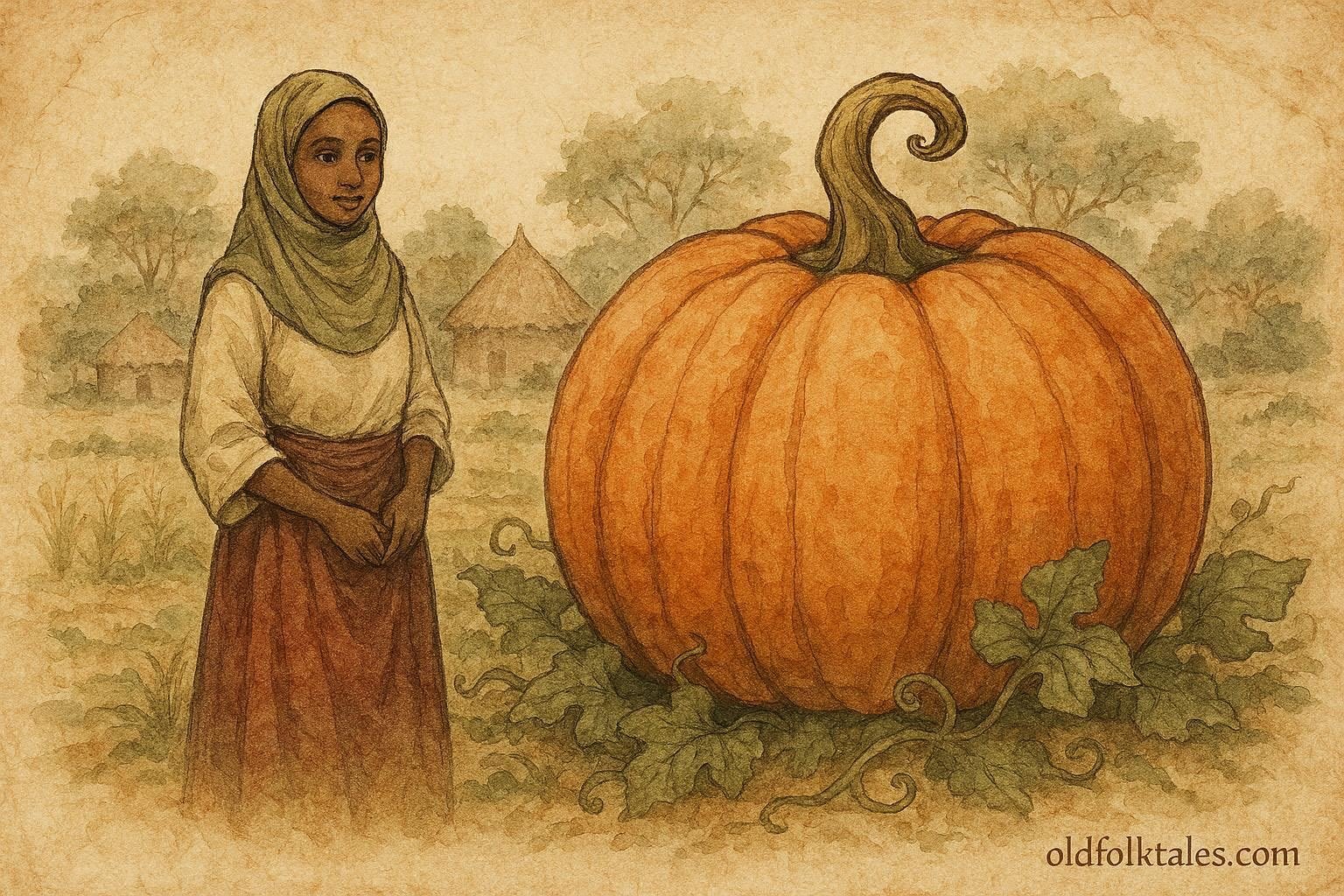
One pumpkin, however, was unlike all the others.
It grew larger with each passing day until even experienced farmers stopped to admire it. Its smooth skin shone brilliantly beneath the sunlight, and no one could explain why it continued growing long after the other pumpkins had reached their full size.
Curious villagers came from nearby settlements simply to see the extraordinary pumpkin.
Some suggested selling it for a great price.
Others proposed presenting it to an important chief.
But the maiden’s father refused every offer.
“This pumpkin has grown by the Creator’s will,” he said. “We shall not act hastily.”
As the days passed, strange stories began to circulate.
Some claimed the remarkable pumpkin possessed mysterious powers.
Others whispered that unseen forces guarded it throughout the night.
The maiden herself remained calm.
Each morning she continued watering the vines, removing weeds, and caring for the field with the same patience she showed every living thing.
One evening, after finishing her work, she noticed something unusual.
As the last rays of sunlight touched the great pumpkin, a gentle voice called her name.
Startled, she looked around the empty field.
There was no one nearby.
Then the voice came again.
Soft.
Calm.
And unmistakably clear.
It seemed to come from the giant pumpkin itself.
The maiden stood silently, wondering whether she had truly heard the impossible or whether the extraordinary harvest held a secret no one in the village had yet discovered.
The maiden stood motionless beside the enormous pumpkin.
For a moment, she wondered whether exhaustion had caused her to imagine the strange voice. Yet as she prepared to leave the field, it called to her once more.
“My child,” it said gently, “do not be afraid.”
The maiden looked around, but no one was there.
The quiet evening breeze rustled the pumpkin leaves, and the great fruit rested peacefully upon the vine.
Gathering her courage, she answered respectfully.
“I mean no harm. If there is someone speaking, tell me what you ask of me.”
The voice replied with kindness.
“You have cared for this field with patience, expecting nothing more than an honest harvest. Your heart has remained humble even when others mocked your family. Such goodness is never forgotten.”
The maiden listened in silence.
The mysterious voice instructed her to return with her parents the following morning and harvest the great pumpkin together.
She thanked the unseen speaker and hurried home, carefully telling her parents everything she had heard.
Although they found the story difficult to believe, they trusted their daughter’s honesty.
At sunrise, the family returned to the field carrying their farming tools.
The giant pumpkin lay exactly where they had left it.
With grateful hearts, they carefully cut it from the vine.
To their amazement, the pumpkin was unlike any they had ever seen.
Instead of being empty inside, it contained wonderful gifts that would free the family from poverty. The extraordinary harvest provided more than enough to care for their household, assist relatives in need, and support many struggling families throughout the village.
News of the miracle spread quickly.
The same people who had once laughed at the humble maiden now gathered to witness the astonishing pumpkin for themselves.
Some regretted treating her family with disrespect.
Others wished they had shown the same generosity and humility she had displayed throughout her life.
The maiden, however, refused to boast about her good fortune.
She reminded everyone that blessings should never become a reason for pride.
Her family continued farming as faithfully as before, sharing their abundance with widows, travellers, and neighbours who struggled during difficult seasons.
The village elders were deeply moved by her example.
They reminded the people that wealth gained through gratitude and kindness brings peace, while riches sought through envy or selfishness often bring disappointment.
In time, the remarkable pumpkin became known throughout the region as the Sarakin Pumpkin, and its story was passed from one generation to the next.
Parents told the tale to their children whenever they wished to teach the value of humility, honest labour, and compassion for others.
They explained that the greatest rewards often come to those who remain faithful in small responsibilities rather than those who seek honour through pride.
And so the story of the maiden and the Sarakin Pumpkin lived on among the Hausa people, reminding every generation that a gentle heart is a treasure greater than material wealth and that kindness, though often unnoticed at first, is always rewarded in its proper time.
Click here to discover more legendary tales from West Africa
Moral Lesson
This Hausa folktale teaches that humility, diligence, and kindness are rewarded in unexpected ways. Those who remain faithful in their work and generous toward others often receive blessings greater than they could have imagined.
Knowledge Check
1. Who was the maiden in the story?
She was a humble and hardworking young woman who faithfully helped her family and served her community.
2. What made the Sarakin Pumpkin unusual?
It grew much larger than every other pumpkin and mysteriously spoke to the maiden.
3. Why did the mysterious voice choose the maiden?
Because of her humility, patience, honesty, and willingness to care for others without expecting a reward.
4. What happened when the family harvested the pumpkin?
They discovered wonderful gifts inside that lifted them out of poverty and enabled them to help others.
5. How did the maiden respond to her newfound blessing?
She remained humble and generously shared her family’s abundance with those in need.
6. What is the central lesson of this Hausa folktale?
The story teaches that kindness, honest work, and humility are often rewarded with lasting blessings.
Source: Hausa folktale, Northern Nigeria. Adapted from Black Folk Tales: Retold from the Haussa of Northern Nigeria by Erick Berry (1928).