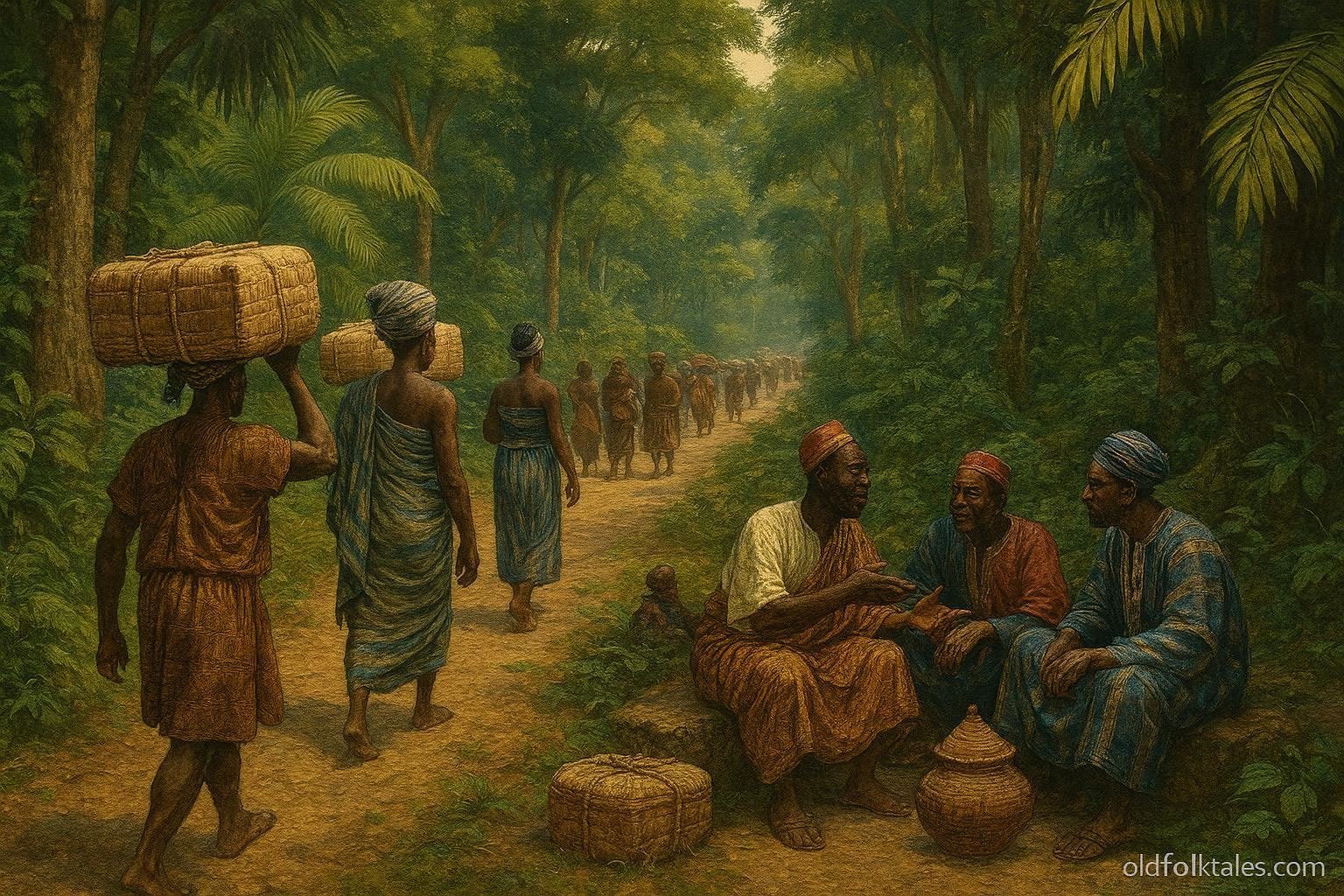
Before modern roads crossed the forests and savannahs of Côte d’Ivoire, communities depended on narrow footpaths that wound through dense vegetation, crossed rivers, and linked villages separated by great distances. Travel was often difficult. During the rainy season, streams overflowed their banks and turned pathways into muddy passages. During the dry season, long journeys under the sun tested the endurance of even the most experienced travelers. Yet movement between communities remained essential because trade, communication, and family relationships depended upon it.
Among the Agni and Baoulé people, oral traditions speak of a time when merchants, farmers, craftsmen, and travelers faced increasing challenges while moving between important settlements. Markets were growing larger, and communities relied more heavily on exchanges of goods. Farmers carried yams, plantains, and palm products to neighboring villages. Craftsmen transported tools, pottery, and woven items. Traders moved valuable goods across long distances, hoping to reach markets where demand was high.
Although trade brought prosperity, the lack of a reliable route created many difficulties. Travelers often became lost when paths disappeared beneath vegetation. Some journeys took much longer than expected because people were forced to search for safer crossings over rivers and streams. Others faced delays caused by fallen trees or poorly maintained pathways. Every community experienced these problems, and many people began to wonder whether a better solution could be found.
Fascinated by this tale? Discover more North African folktales
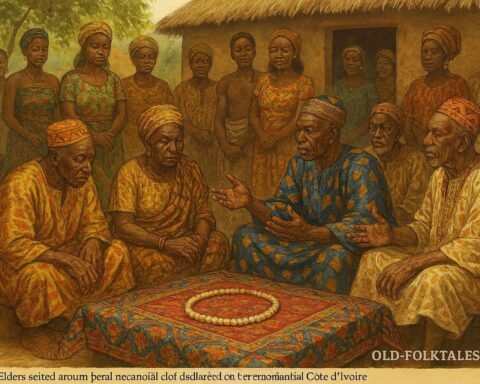
One year, after several trading expeditions encountered serious difficulties, respected elders from various communities gathered to discuss the situation. They met beneath large shade trees and listened carefully as travelers described their experiences. Farmers explained how delays affected the delivery of crops. Traders spoke about missed opportunities at distant markets. Families described the challenges of maintaining connections with relatives living far away.
As the discussions continued, a common idea emerged. Rather than relying on numerous isolated paths maintained independently by different villages, the communities could work together to create a connected route that would benefit everyone.
The proposal attracted widespread support. Leaders recognized that cooperation would require effort, but they also understood that the rewards could be significant. If travelers could move more efficiently between settlements, trade would increase, communication would improve, and relationships between communities would become stronger.
Soon preparations began.
Representatives from many villages volunteered to contribute their knowledge. Hunters familiar with the forests identified the safest passages through difficult terrain. Farmers shared information about seasonal changes and flood prone areas. Experienced travelers suggested locations where people could rest during long journeys. Elders offered guidance based on stories and knowledge passed down through earlier generations.
Working together, they carefully selected a route that connected important settlements while avoiding dangerous obstacles whenever possible. The process required patience because each section of the path had to be examined and improved. Fallen trees were cleared away. Overgrown passages were widened. Difficult crossings were marked so travelers could navigate them safely.
As work progressed, communities along the route accepted responsibility for maintaining nearby sections. This arrangement encouraged cooperation because everyone understood that the success of the entire route depended on collective effort. If one section became neglected, all travelers would suffer the consequences.
Months passed, and the route gradually took shape.
The completed pathway was not a road in the modern sense. It remained a network of carefully connected trails stretching across forests, fields, and settlements. Yet compared to what existed before, it represented a remarkable achievement. Travelers could now move with greater confidence, knowing that a dependable route linked important communities.
The impact was immediate.
Trade became more efficient. Farmers reached markets more easily and returned with goods that benefited their families. Craftsmen found new customers for their work. Merchants expanded their networks and developed relationships with communities they had rarely visited before.
The route also transformed cultural life.
People traveling along the pathway shared stories, songs, and traditions. Visitors attended festivals in distant settlements. Families separated by geography found it easier to maintain contact. Young people learned about customs practiced in neighboring communities. The movement of ideas became almost as important as the movement of goods.
As relationships deepened, trust grew between communities.
Disagreements that might once have led to isolation were increasingly resolved through dialogue because people interacted more frequently. Leaders discovered that regular communication reduced misunderstandings and encouraged cooperation. Communities that had once seemed distant began to view themselves as part of a broader network connected by shared interests and mutual respect.
Over time, the route became known not only for trade but also for the opportunities it created. Travelers often spoke about the friendships formed along the journey. Market days became occasions for cultural exchange. Elders shared wisdom with younger generations. News traveled more quickly than ever before, helping communities respond to challenges and celebrate successes together.
According to oral tradition, the route eventually became associated with the idea of weaving. Just as individual threads are combined to create a strong and beautiful cloth, the pathway brought together different communities and strengthened the bonds between them. This symbolism inspired the name remembered in tradition as the First Kente Road.
The comparison resonated deeply with the people who used the route. Every traveler represented a thread contributing to a larger pattern. Every village played a role in maintaining the connections that allowed the network to flourish. The road was not simply a physical path. It was a symbol of cooperation, unity, and shared progress.
Generations passed, and new methods of transportation eventually appeared. Wider roads were constructed, and travel became easier than before. Yet the story of the First Kente Road continued to be told.
Elders reminded younger generations that meaningful progress rarely occurs through individual effort alone. The route existed because people from different communities recognized a common challenge and chose to work together to solve it. Their success demonstrated the power of cooperation and the importance of maintaining connections across cultural and geographic boundaries.
Today, the story remains an enduring lesson within oral tradition. It teaches that roads do more than connect places. They connect people, ideas, and opportunities. The First Kente Road became memorable not because of its size or appearance, but because of what it represented. Through patience, collaboration, and shared responsibility, scattered communities transformed isolated pathways into a lasting symbol of unity and progress.
If you enjoyed this story, explore our full West African folktales collection
Moral Lesson
Great achievements are possible when communities cooperate and work toward a common goal.
Knowledge Check
1. Why did communities want to create a new route?
They wanted safer and more reliable travel between settlements.
2. Who helped establish the route?
Traders, farmers, hunters, travelers, and community elders.
3. How did the route benefit trade?
It made travel easier and helped merchants reach markets more efficiently.
4. What cultural benefits did the route provide?
It encouraged the exchange of stories, traditions, and ideas.
5. Why was the route compared to woven cloth?
Because it connected different communities like threads woven together.
6. What is the main lesson of the story?
Cooperation and shared effort create lasting progress.
Source
Adapted from Agni and Baoulé oral traditions preserved in Akan regional oral history archives and broader Akan trade route narratives of West Africa.