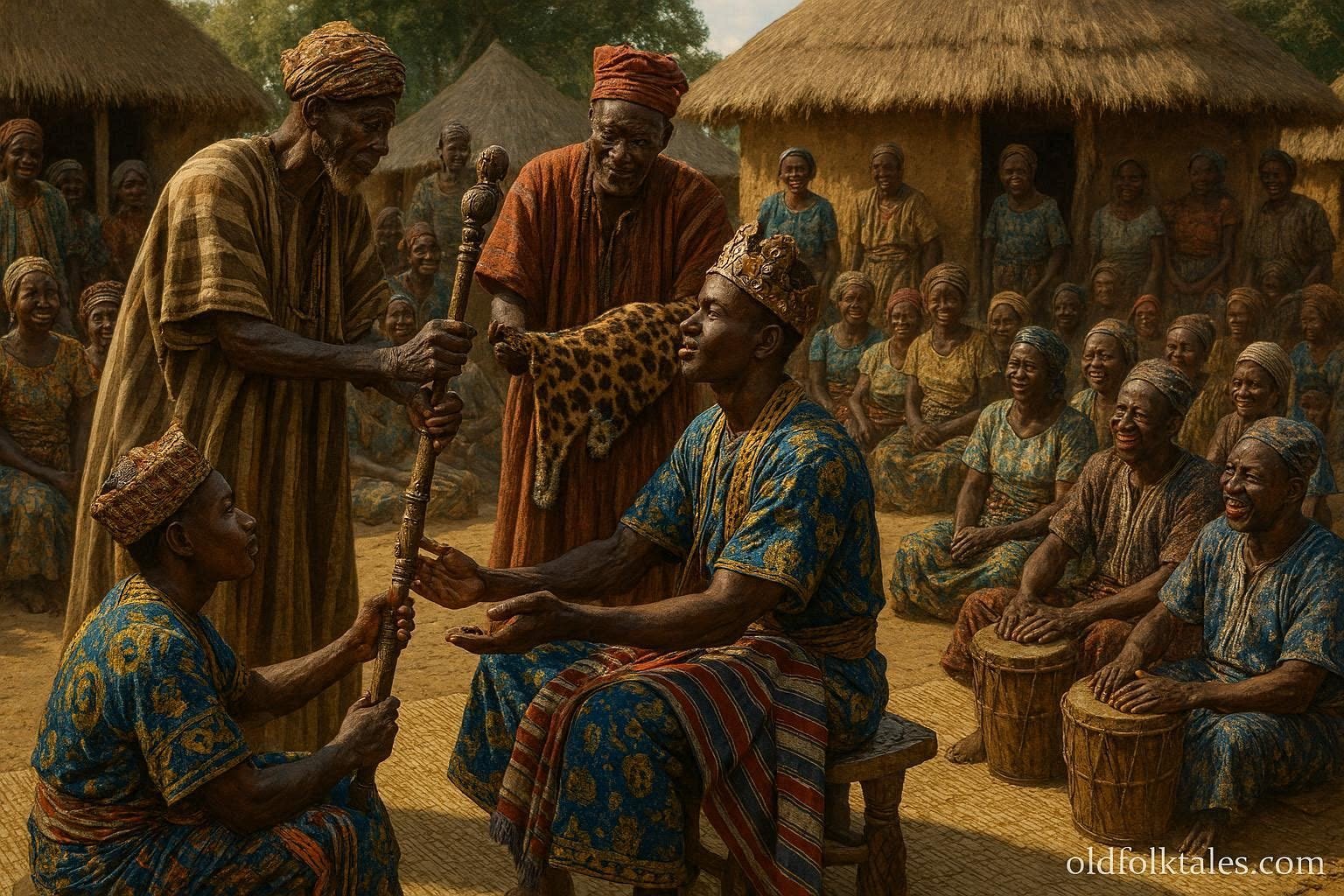
Across the broad woodlands and fertile plains of Eastern Angola, the Lunda Kingdom became known for its organized leadership, flourishing trade, and enduring customs. Villages were connected by trusted messengers, merchants traveled safely along established routes, and elders worked together to settle disputes before they grew into conflicts. The strength of the kingdom rested not only upon its rulers but also upon the customs that guided every generation.
Among the most respected of these customs was the investiture of a Mwata, the solemn ceremony through which a new ruler accepted the responsibility of leading the people.
The investiture was far more than a celebration of royal authority. According to Lunda oral traditions, it marked the moment when an individual placed the welfare of the kingdom above personal ambition. Elders taught that a ruler could wear beautiful regalia and command loyal followers, but without wisdom and humility, true leadership could never be achieved.
Whenever the time came to choose a new Mwata, the kingdom entered a period of careful preparation.
Messengers traveled from village to village carrying news of the coming ceremony. Chiefs, respected elders, craftsmen, musicians, and representatives from distant communities were invited to attend. The investiture belonged to the entire kingdom because every family would be affected by the leadership of the new ruler.
Fascinated by this tale? Discover more North African folktales
Weeks before the ceremony, artisans began preparing the royal regalia.
Skilled weavers created finely crafted ceremonial cloths.
Metalworkers polished ornaments that symbolized continuity between generations.
Woodcarvers carefully restored ceremonial stools and staffs that had been preserved by previous rulers.
Every object carried meaning.
Nothing was displayed merely for decoration.
Each item reminded the people of the responsibilities connected with leadership.
At the same time, elders met privately with the future Mwata.
Rather than discussing power or privilege, they spoke about justice.
They explained that every decision made by a ruler could influence countless families.
A careless judgment might divide communities.
A wise judgment could strengthen peace for generations.
The future Mwata listened carefully.
He understood that the ceremony ahead would not simply elevate his status.
It would bind him to a lifetime of service.
As the appointed day approached, excitement spread throughout the kingdom.
Families decorated their homes.
Marketplaces welcomed visitors arriving from distant settlements.
Traditional musicians rehearsed songs that had accompanied royal ceremonies for generations.
Storytellers prepared to recount the achievements of earlier rulers whose examples continued to inspire the people.
Before sunrise on the day of the investiture, elders gathered in a sacred meeting place.
There they offered prayers for wisdom, unity, and prosperity.
They asked that the new Mwata always remember the people entrusted to his care.
Only after these blessings were completed did the public ceremony begin.
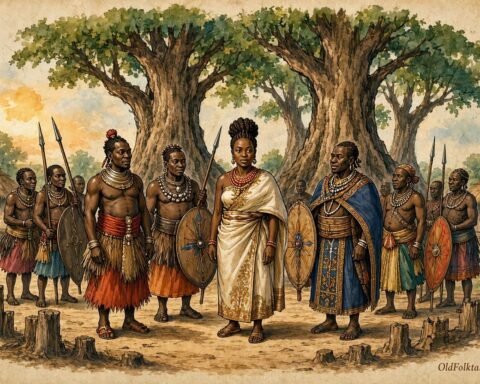
People assembled in a large open space where everyone could witness the occasion.
The future Mwata entered quietly rather than with displays of grandeur.
His modest arrival reflected one of the central teachings of the tradition.
Leadership began with humility.
An elder addressed the gathering.
He reminded everyone that kingdoms endure not because of wealth or military strength alone.
They endure because rulers govern with fairness, compassion, and wisdom.
Turning toward the future Mwata, the elder asked several important questions.
Would he protect the weak?
Would he listen to wise counsel?
Would he preserve the customs entrusted to his care?
Would he place justice above personal interest?
To each question, the future ruler answered with quiet confidence.
“I will.”
The gathered community responded with approval.
The investiture continued as respected elders presented the symbols of leadership.
Each item was accompanied by an explanation of its meaning.
The ceremonial staff represented responsibility.
The royal seat reminded the ruler that every judgment affected ordinary families.
The traditional ornaments connected him to generations of leaders who had carried similar duties before him.
When the final symbol had been presented, the senior elder declared the investiture complete.
Musicians began playing joyful melodies.
Women sang songs celebrating unity and continuity.
Children watched with curiosity, knowing they were witnessing one of the kingdom’s most important traditions.
The celebrations continued throughout the day.
Visitors exchanged gifts.
Merchants shared food with travelers.
Storytellers recounted memorable moments from earlier reigns.
Although the atmosphere was festive, everyone understood that the greatest significance of the day rested not in celebration but in commitment.
The following weeks quickly tested the new Mwata’s leadership.
Two neighboring villages became involved in a disagreement concerning farmland near a seasonal river.
Both communities believed they possessed rightful claims.
Some younger men demanded immediate action in favor of their own village.
Rather than making a hurried decision, the Mwata remembered the lessons taught during his investiture.
He invited representatives from both communities to present their concerns.
Elders described earlier agreements.
Farmers explained how the land had been used over many years.
Witnesses contributed their memories.
Only after listening patiently to every perspective did the Mwata announce his decision.
The land would be shared according to long established customs, ensuring that both villages could continue farming without unnecessary conflict.
Although neither side received everything it wanted, both accepted the judgment because it reflected fairness rather than favoritism.
The successful resolution strengthened confidence throughout the kingdom.
People observed that the investiture ceremony had prepared the Mwata well.
Its lessons were no longer ceremonial words.
They had become practical guidance for governing wisely.
Years later, another challenge emerged when severe drought reduced harvests across several districts.
Again, the Mwata drew upon the principles emphasized during his investiture.
Food reserves were distributed carefully.
Communities with greater harvests assisted those facing shortages.
Leaders cooperated instead of competing.
The kingdom endured the difficult season because responsibility outweighed self interest.
As the years passed, the investiture itself became one of the traditions most cherished by the Lunda people.
Children attended ceremonies with their parents.
Young leaders studied the teachings delivered by the elders.
Each generation learned that leadership required character before authority.
Historians and cultural researchers later recognized the investiture of a Mwata as more than a royal ceremony.
It represented an enduring system of political education.
The customs reminded rulers that their legitimacy depended not simply upon inheritance but upon their willingness to govern with justice, humility, and wisdom.
Today, the oral traditions surrounding the investiture continue to preserve these ideals.
Although times have changed, the ceremony remains a powerful reminder that leadership is measured by service rather than privilege.
The story of the Investiture of a Mwata encourages every generation to recognize that true authority begins with responsibility, grows through integrity, and earns lasting respect through fairness.
Don’t miss out: Read more Southern African folktales
Moral Lesson
A true leader earns respect by serving others with wisdom, humility, and justice.
Knowledge Check
1. What was the purpose of the investiture ceremony?
It formally installed a new Mwata and reminded the ruler that leadership is a duty of service.
2. Who attended the investiture?
Chiefs, elders, craftsmen, musicians, families, and representatives from communities across the kingdom.
3. What did the ceremonial staff symbolize?
The responsibility to lead the people wisely and fairly.
4. How did the Mwata settle the dispute over farmland?
He listened to both communities, consulted elders, and reached a fair decision based on tradition.
5. Why was the investiture important beyond the ceremony itself?
It prepared rulers to govern with justice, humility, and responsibility.
6. What is the main lesson of the story?
Leadership is a commitment to serve the community rather than seek personal gain.
Source
Adapted from Lunda oral traditions, historical accounts of the Mwata investiture, ethnographic studies of Lunda kingship, and materials preserved in Lunda historical tradition archives.