In the woodlands and savannas of eastern Angola, the changing of the seasons brought more than rain, harvests, or celebrations. It also marked the time when certain boys prepared to begin one of the most important journeys of their lives. This journey did not involve crossing great rivers or climbing distant mountains. Instead, it led into a carefully prepared place in the forest where knowledge, discipline, and tradition were passed from one generation to the next.
The Chokwe and Mbunda peoples called this tradition Mukanda.
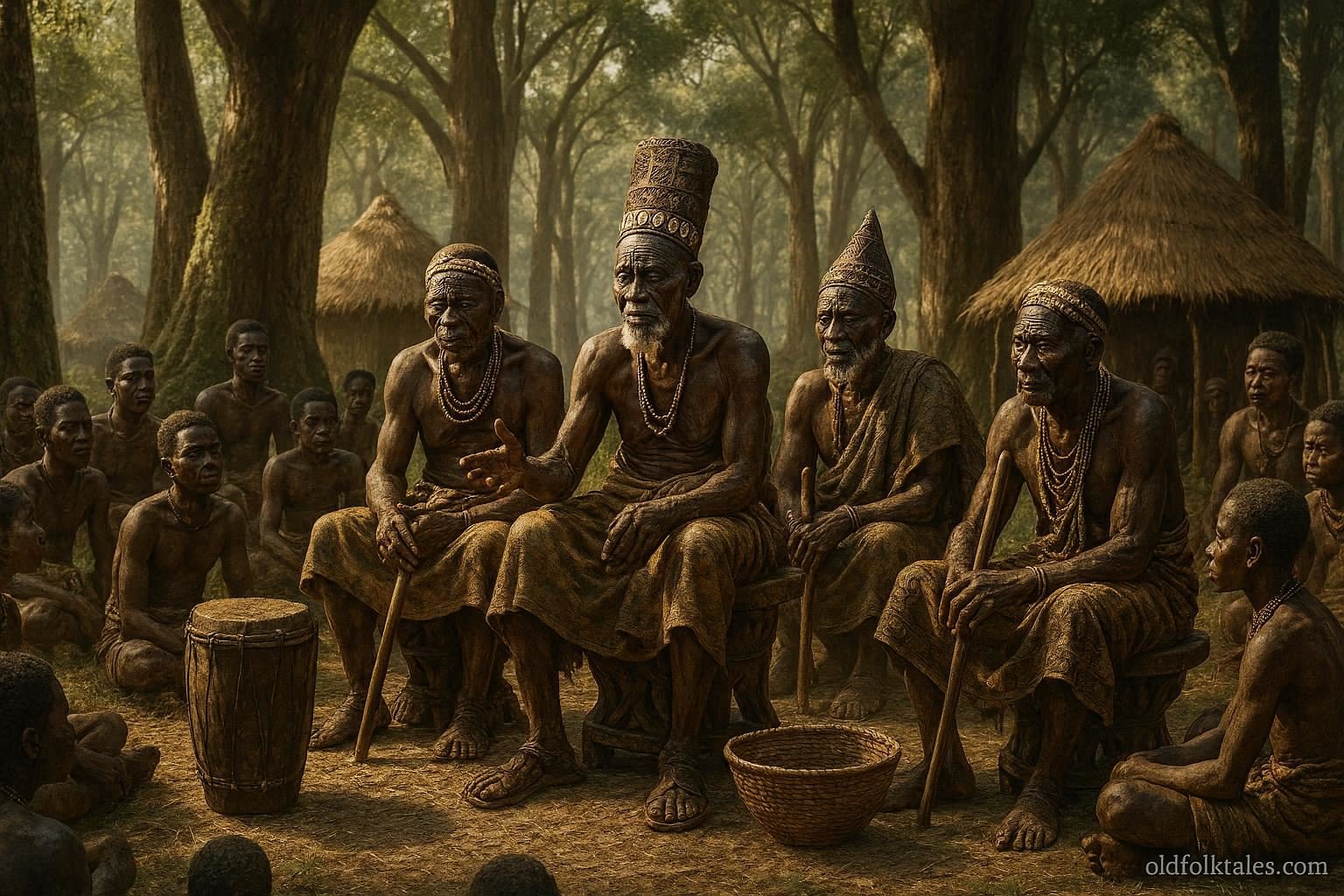
For generations, elders explained that Mukanda was much more than an initiation ceremony. It was a school where young boys learned the responsibilities of adulthood. Parents, grandparents, and community leaders believed that children were not born knowing how to become trustworthy adults. Those qualities had to be taught with patience, practice, and guidance.
As each Mukanda season approached, excitement spread throughout the villages. Families began preparing long before the first day of instruction. Mothers carefully gathered supplies for their sons, while fathers and uncles spoke quietly about the importance of courage, humility, and respect.
The boys themselves experienced mixed emotions. Some looked forward to proving they were ready for greater responsibilities. Others felt nervous because they did not know exactly what awaited them in the forest. Older brothers who had already completed Mukanda smiled knowingly but rarely revealed what would happen, believing each generation should discover its lessons through experience.
Fascinated by this tale? Discover more North African folktales
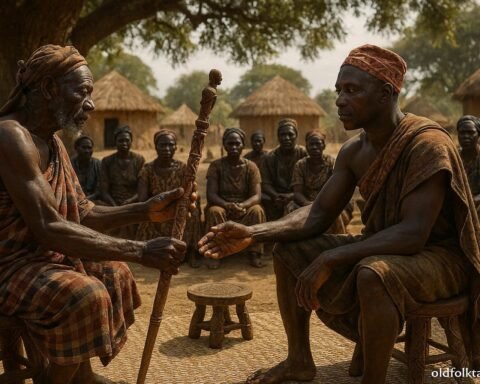
When the appointed day arrived, respected elders gathered the initiates at the edge of the village. Family members offered words of encouragement, reminding the boys that they represented not only themselves but also their ancestors and future generations.
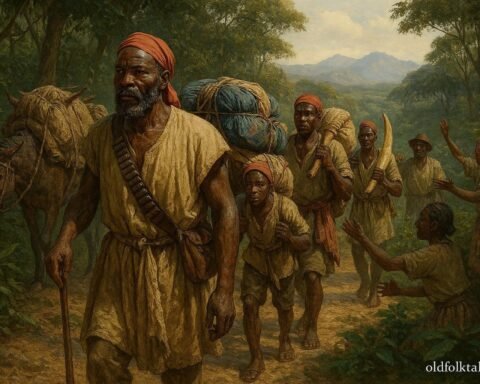
After farewells were exchanged, the group entered the forest.
The path wound beneath tall trees where birds sang in the early morning light. The deeper they traveled, the quieter the world became. Before long they reached a carefully prepared camp that would serve as their home during the period of instruction.
The camp was simple but orderly. Shelters had been built using local materials. Cooking areas were arranged neatly. Spaces for teaching, storytelling, and ceremonies had been prepared with great care. Everything reflected the values the elders hoped to teach.
The first lesson surprised many of the boys.
Rather than beginning with physical training, the instructors spoke about character.
One elder addressed the group.
“Strength without wisdom can bring harm. Knowledge without kindness can divide a people. True adulthood begins when a person learns to serve others before seeking praise.”
The boys listened carefully.
These words became the foundation for everything that followed.
Each morning began before sunrise. The initiates rose together, cleaned the camp, and prepared for the day’s activities. They quickly learned that discipline meant completing every task carefully, even when no one was watching.
Throughout the day, different elders shared their knowledge.
Some taught practical skills needed for daily life.
Others explained family responsibilities, community customs, and the importance of honoring agreements.
Experienced hunters described how to move respectfully through the forest without wasting its resources.
Farmers explained how cooperation during planting and harvest ensured that no family was left behind.
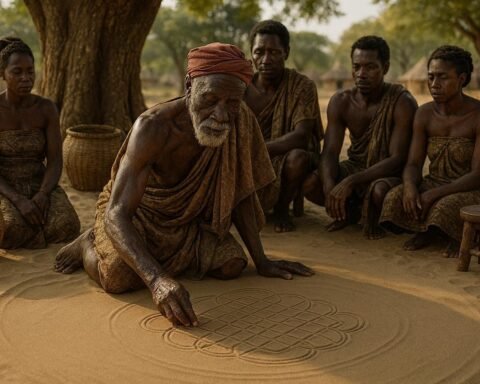
Storytellers gathered the boys beneath the shade of large trees each afternoon.
There they recounted the histories of respected ancestors, courageous leaders, skilled craftsmen, and wise women whose actions strengthened the community.
The stories were not told simply for entertainment.
Each carried an important lesson.
After every story, the elders asked questions that encouraged the boys to think carefully about honesty, patience, generosity, and responsibility.
Evening brought another opportunity for learning.
As fires illuminated the camp, musicians performed traditional songs while elders explained their meanings. Some songs celebrated unity. Others praised hard work or reminded listeners that selfishness often brought unnecessary suffering.
The boys soon discovered that education could take many forms.
Sometimes lessons came through conversation.
Sometimes they came through music.
Sometimes they came through careful observation.
On one occasion, an elder divided the initiates into small groups and assigned each team the task of building a shelter before sunset.
At first, several boys tried to work alone.
They believed individual effort would produce the fastest results.
Before long, they realized their mistake.
Those who cooperated completed stronger shelters in less time.
When everyone gathered afterward, the elder smiled.
“You have learned today’s lesson,” he said.
“No one becomes a respected adult by refusing the help of others.”
Another day focused on honesty.
The instructor placed a carved wooden bowl at the center of the gathering.
He asked each boy to describe a moment when telling the truth had been difficult.
The conversations that followed required courage.
Some admitted mistakes they regretted.
Others described times when honesty strengthened friendships or earned the trust of their families.
The elder reminded them that communities survive only when people can rely upon one another’s words.
Weeks passed.
The boys gradually became more confident.
Tasks that once seemed difficult now felt familiar.
They worked together naturally.
They listened more carefully.
They showed greater patience when solving problems.
The transformation became visible not only in their abilities but also in their attitudes.
The instructors noticed the change.
One elder remarked that the boys had begun to understand that leadership meant accepting responsibility rather than seeking recognition.
As the period of instruction neared its conclusion, preparations began for the return to the village.
Families eagerly awaited the homecoming.
Parents wondered how much their sons had changed.
Younger children listened with curiosity, imagining the experiences that had taken place beyond the forest.
When the initiates finally emerged from the woodland path, they were welcomed with songs, dancing, and joyful celebration.
Although their appearance had changed little, their confidence and composure reflected the lessons they had learned.
Community leaders greeted each initiate warmly.
Parents embraced their sons with pride.
The celebration continued throughout the day as elders spoke about the importance of preserving the Mukanda tradition.
They reminded everyone that the forest school existed not to separate young people from their families but to prepare them for meaningful participation within the community.
As years became generations, Mukanda remained one of the most respected educational traditions among the Chokwe and Mbunda peoples.
Its lessons adapted to changing times while preserving enduring values.
Researchers who later studied the tradition recognized that Mukanda represented a sophisticated system of education.
It combined practical knowledge, ethical instruction, storytelling, music, mentorship, and community participation into a single learning experience.
Today, Mukanda continues to be remembered as an important part of cultural heritage.
Although modern education now plays a central role in many communities, oral traditions continue to celebrate the forest school as a place where discipline, maturity, and responsibility were carefully cultivated.
The story reminds us that true education extends beyond books and classrooms.
It also grows through shared experience, wise guidance, meaningful traditions, and a lifelong commitment to serving others.
Don’t miss out: Read more Southern African folktales
Moral Lesson
Education is not only about gaining knowledge but also about developing character, responsibility, and respect for others.
Knowledge Check
1. What is Mukanda?
Mukanda is a traditional initiation school where boys learn the responsibilities of adulthood.
2. Who guided the initiates during Mukanda?
Respected elders, teachers, storytellers, hunters, farmers, and experienced community members.
3. What values were emphasized during the training?
Discipline, honesty, cooperation, respect, responsibility, and service.
4. Why were stories important in Mukanda?
They taught moral lessons and preserved the history and traditions of the community.
5. What did the shelter-building activity teach the initiates?
That cooperation produces stronger results than working alone.
6. What is the main lesson of the story?
True education develops both knowledge and good character.
Source
Adapted from Chokwe and Mbunda oral traditions, ethnographic studies of the Mukanda initiation system, and materials preserved in Chokwe and Mbunda ethnographic archives.