Across the woodlands and river valleys of eastern Angola, the Chokwe people developed rich artistic traditions that became renowned throughout Central Africa. Skilled carvers transformed wood into intricate masks, sculptors created objects of great beauty, and performers used music and dance to preserve history, teach values, and strengthen community identity.
Among these traditions, none became more admired than the Mwana Pwo mask.
For generations, elders explained that the mask represented more than artistic skill. It honored the importance of women within society and celebrated qualities that communities valued deeply. The story of the first Mwana Pwo mask dance was passed from one generation to another, ensuring that its lessons would never be forgotten.
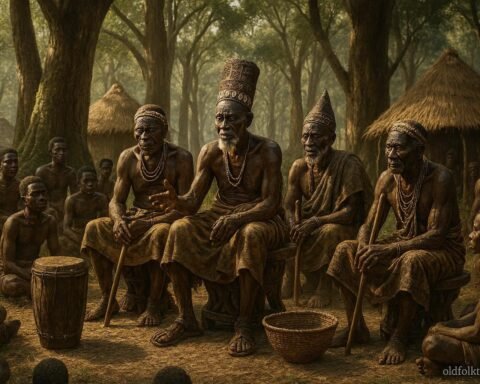
According to tradition, the story began during a period when several Chokwe communities gathered for seasonal celebrations. These gatherings were important occasions. Families reunited with relatives, traders exchanged goods, and elders shared stories that connected people to their ancestors.
Music filled the air throughout the festivities.
Fascinated by this tale? Discover more North African folktales
Drummers played rhythms that echoed across the landscape. Dancers performed before enthusiastic crowds. Storytellers entertained listeners with accounts of heroes, travelers, and memorable events from the past.
Although these celebrations were lively and meaningful, some elders believed that an important element of community life was missing from the performances.
Many dances honored hunters, warriors, and leaders.
Others celebrated achievements associated with strength or endurance.
Yet there was no major masquerade dedicated to recognizing the qualities that women contributed to the well being of society.
This concern became the subject of discussion among respected elders and artists.
One evening, a renowned carver named Chisola attended a gathering where the issue was debated. Chisola was widely admired for his craftsmanship. People traveled long distances to view his carvings and seek his advice.
During the discussion, an elder posed an important question.
“How can future generations fully understand the values that sustain families and communities if these qualities are never represented in our performances?”
The question remained in Chisola’s mind long after the gathering ended.
In the days that followed, he began reflecting on the women who had shaped his own life.
He remembered his mother, whose patience and wisdom guided the family through difficult times.
He thought about grandmothers who preserved stories and traditions.
He recalled women who managed households, cared for children, cultivated fields, and helped maintain harmony within communities.
The more he reflected, the more convinced he became that these contributions deserved recognition.
Determined to create something meaningful, Chisola began work on a new mask.
He selected a carefully chosen piece of wood and approached the task with extraordinary care.
Rather than rushing, he spent weeks planning every detail.
The mask’s features were designed to express grace, wisdom, dignity, and composure.
Its balanced proportions reflected harmony.
Its expression suggested calm intelligence.
Every element carried symbolic meaning.
As the carving progressed, curious villagers visited his workshop.
They admired the emerging design but wondered what purpose it would serve.
Chisola explained that the mask would become part of a new performance tradition.
Its role would be to honor qualities that communities relied upon every day but did not always celebrate publicly.
When the carving was completed, the result was unlike anything many people had seen before.
The mask possessed remarkable elegance.
Its features reflected ideals of character rather than the appearance of any specific individual.
Elders who viewed it immediately recognized its significance.
Preparations then began for a special performance.
Musicians gathered to develop appropriate rhythms.
Experienced dancers practiced movements that would complement the spirit of the mask.
Community leaders invited neighboring settlements to attend the event.
Excitement spread quickly.
People were eager to witness the debut of the new masquerade.
On the day of the celebration, large crowds assembled in an open gathering space.
Families arrived from distant villages.
Children found places near the front.
Elders sat together discussing the importance of the occasion.
The atmosphere combined anticipation with curiosity.
As drumming began, performers entered the arena.
Traditional dances were presented first.
The audience responded enthusiastically.
Then the rhythm changed.
A quieter and more deliberate pattern emerged.
The crowd fell silent.
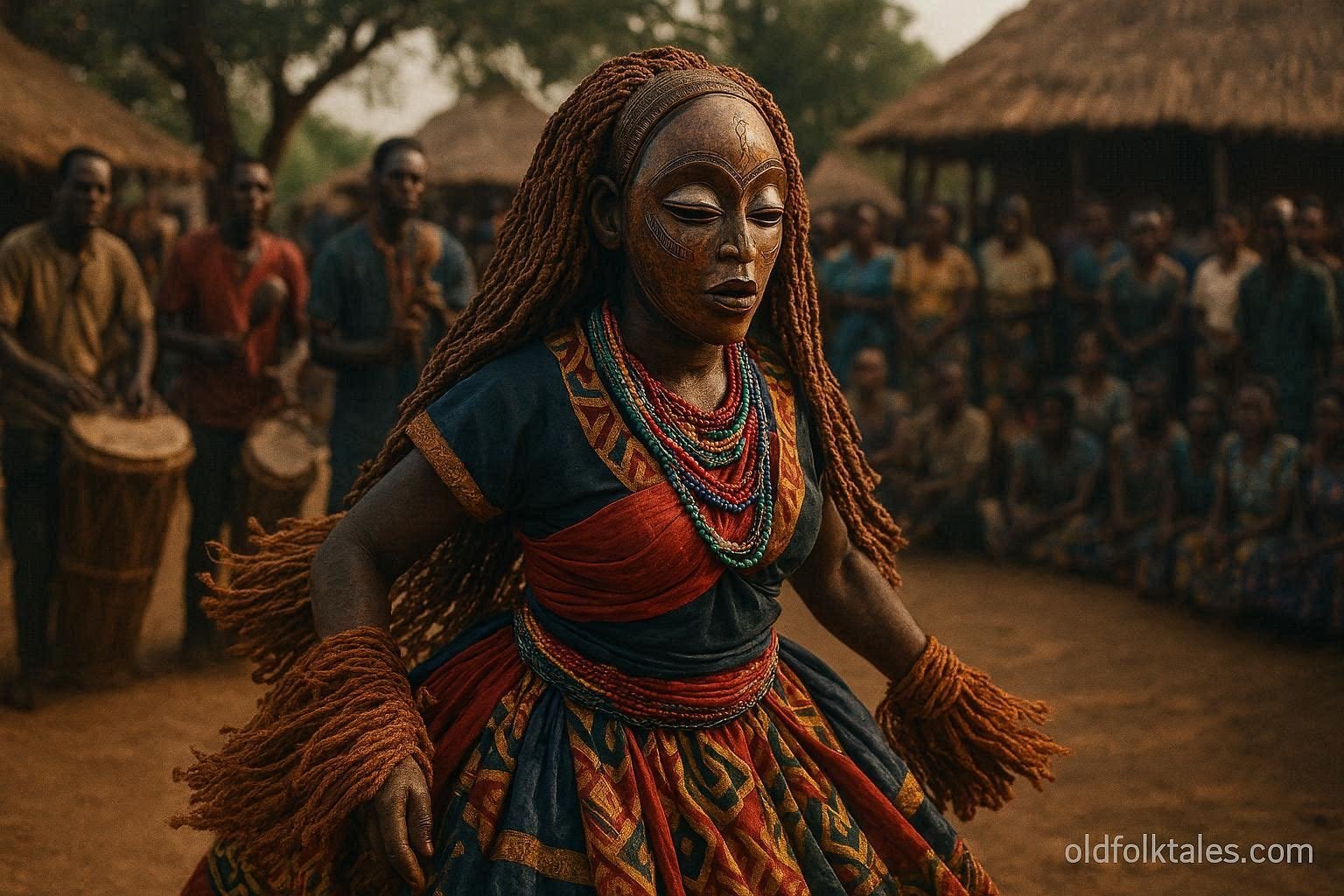
Slowly, the masked dancer appeared.
The figure moved with remarkable grace.
Each step reflected control and confidence.
The performance emphasized dignity rather than speed.
Instead of displaying physical power, the dancer communicated wisdom, patience, and composure through carefully choreographed movements.
Spectators watched attentively.
Many immediately understood the message.
The dance honored values that sustained families and communities.
It celebrated qualities often associated with respected women whose contributions shaped everyday life.
As the performance continued, admiration grew.
The audience recognized that the masquerade filled an important gap within community celebrations.
When the dance concluded, applause and praise echoed across the gathering.
Elders expressed gratitude.
Artists congratulated Chisola and the performers.
Community leaders declared that the masquerade should become a permanent part of cultural life.
From that day forward, the tradition expanded.
Future generations preserved the Mwana Pwo mask and incorporated it into important ceremonies and celebrations.
Skilled carvers produced new masks while maintaining essential design principles.
Dancers trained carefully to master the performance style.
Musicians refined rhythms associated with the masquerade.
Over time, the Mwana Pwo tradition became one of the most recognized aspects of Chokwe culture.
Its influence extended beyond individual communities.
Visitors admired the artistry of the masks.
Researchers documented their cultural significance.
Museums and cultural institutions later highlighted their importance within African artistic heritage.
Yet for the Chokwe people, the meaning of Mwana Pwo extended far beyond artistic appreciation.
The masquerade served as a living reminder of community values.
It emphasized respect for wisdom.
It highlighted the importance of dignity and responsibility.
It encouraged younger generations to appreciate contributions that often occurred quietly but remained essential to society’s well being.
As decades passed, elders continued recounting the story of the first Mwana Pwo dance.
The narrative helped explain why the tradition existed and why it deserved preservation.
Children listening to the story learned about creativity, respect, and cultural identity.
Artists drew inspiration from its lessons.
Performers understood that they were participating in something larger than entertainment.
They were carrying forward a heritage entrusted to them by previous generations.
Today, the Mwana Pwo mask remains one of the most celebrated symbols of Chokwe culture.
Its graceful features are recognized throughout the world.
Its performances continue to inspire audiences.
Its story remains an important part of oral tradition.
The tale of the first Mwana Pwo mask dance reminds us that culture survives when communities honor the values they cherish and find meaningful ways to pass them forward.
Through artistry, performance, and storytelling, the Chokwe people preserved a tradition that continues to connect the past with the present.
Explore more Southern African folktales here
Moral Lesson
Cultural traditions endure when communities honor their values and pass them on to future generations through creativity and respect.
Knowledge Check
1. What is the Mwana Pwo mask associated with?
It is a celebrated Chokwe masquerade tradition honoring important community values.
2. Why did elders feel a new masquerade was needed?
They wanted performances to recognize qualities that women contributed to society.
3. Who created the first Mwana Pwo mask in the story?
A respected carver named Chisola.
4. What qualities did the mask symbolize?
Grace, wisdom, dignity, and composure.
5. How did the community respond to the first performance?
They admired it and chose to preserve it as an important tradition.
6. What is the main lesson of the story?
Cultural heritage survives when communities value and preserve meaningful traditions.
Source
Adapted from Chokwe oral traditions, Mwana Pwo masquerade heritage, ethnographic studies of Chokwe performance culture, and materials preserved in Chokwe ethnographic archives.