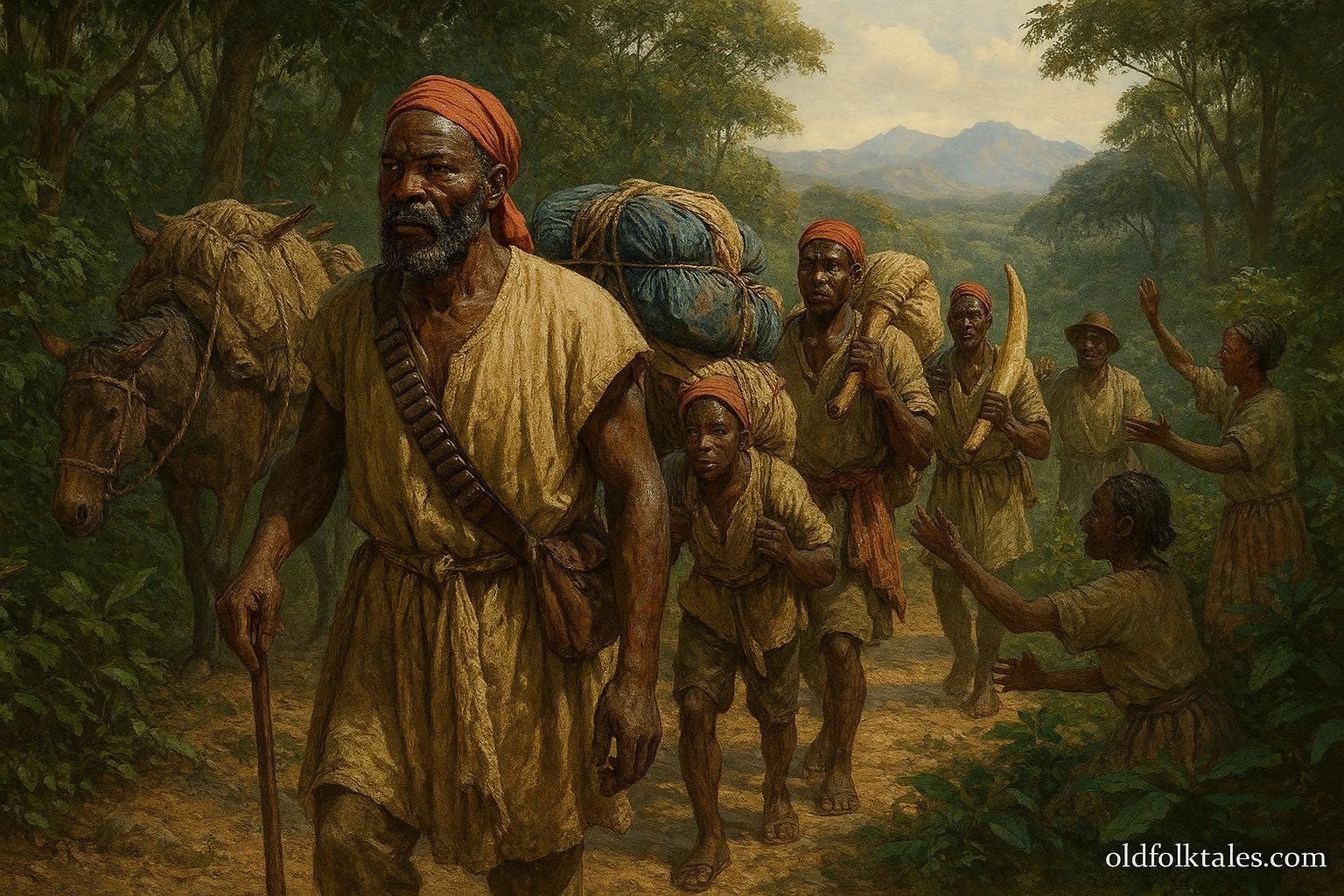
Long before modern roads crossed the highlands of central Angola, the Ovimbundu people built their reputation through determination, careful planning, and the remarkable trading caravans that connected distant communities across Central Africa. These caravans traveled hundreds of miles through forests, rivers, grasslands, and mountain passes, carrying goods that could not be found in every region. They also carried stories, friendships, customs, and knowledge that strengthened relationships between peoples separated by great distances.
Among the Ovimbundu kingdoms, the region of Bié became famous for producing skilled caravan leaders whose names were remembered long after their journeys ended. These leaders were admired not because they possessed great wealth, but because they earned something far more valuable. They earned trust.
One such leader was a respected trader named Chivanda.
Unlike many young men who dreamed of becoming caravan leaders as quickly as possible, Chivanda spent many years learning before leading his first expedition. As a young apprentice, he accompanied experienced traders across unfamiliar landscapes, carefully observing how they organized supplies, greeted village elders, negotiated fairly with merchants, and protected everyone traveling in the caravan.
If you enjoyed this story, explore our full West African folktales collection
His teacher, an elderly caravan master named Sambu, often reminded the apprentices that trade depended upon character before profit.
“A caravan may carry ivory, cloth, salt, or copper,” Sambu would say, “but if it carries dishonesty, it will never return safely.”
Those words became the foundation of Chivanda’s education.
Each journey presented new lessons.
Sometimes the caravan crossed swollen rivers after heavy rains.
Sometimes they climbed rocky hills where every step required patience.
On other occasions they entered unfamiliar villages where different languages were spoken and different customs were observed.
Before any trading began, Sambu always requested permission to enter respectfully.
Gifts were exchanged.
Greetings were offered.
Local customs were carefully observed.
Only after mutual respect had been established did business begin.
The apprentices quickly realized that successful trade depended less upon bargaining than upon building lasting friendships.
Years passed, and Chivanda became known as one of Sambu’s most dependable assistants.
He could estimate travel distances with remarkable accuracy.
He remembered safe resting places between villages.
He recognized approaching storms by studying the movement of clouds.
Most importantly, he treated every person with fairness regardless of their wealth or social standing.
Eventually Sambu announced that the time had come for Chivanda to lead his own caravan.
The responsibility was considerable.
Several dozen traders would depend upon his judgment throughout the long journey.
Families entrusted valuable goods to his care.
Villagers expected him to represent the honor of the kingdom wherever he traveled.
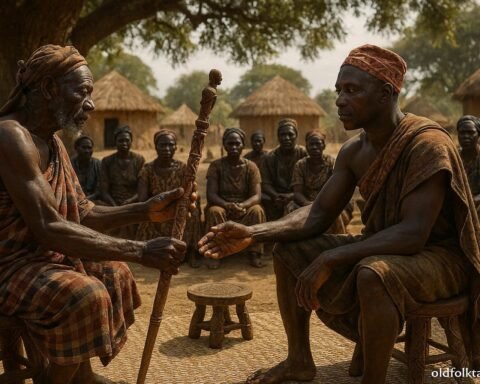
Before departure, the elders gathered beneath a large tree in the center of Bié.
The oldest among them addressed the young leader.
“You will carry many valuable things,” he said.
“But remember this.”
“The reputation of our people is worth more than every bundle your caravan will transport.”
Chivanda bowed respectfully.
He understood that every decision he made would reflect upon generations of Ovimbundu traders.
Preparations occupied several weeks.
Cloth woven by skilled artisans was packed carefully.
Salt gathered from distant regions was secured in protective coverings.
Iron tools crafted by experienced blacksmiths were inspected one final time.
Food supplies were measured with great care because the journey would last many months.
Every traveler received specific responsibilities.
Some cared for pack animals.
Others guarded supplies during the night.
Experienced guides monitored routes through unfamiliar territories.
Everyone understood that cooperation would determine the success of the expedition.
At sunrise on the appointed day, the caravan quietly departed.
Families gathered to offer blessings and words of encouragement.
Children watched with admiration as the long line disappeared beyond the hills.
The first weeks passed smoothly.
The caravan crossed rivers, visited friendly villages, and exchanged goods through peaceful negotiation.
Every evening Chivanda met with his companions to review the day’s progress.
He encouraged everyone to share concerns openly.
Small problems, he believed, should be solved before they became larger difficulties.
One afternoon the caravan reached a village suffering from poor harvests after several months of unusually dry weather.
Food had become scarce.
The villagers possessed little to exchange.
Some members of the caravan suggested continuing without stopping.
“Our supplies are limited,” one trader argued.
“We cannot afford generosity.”
Chivanda remained silent for several moments.
He remembered Sambu’s teachings.
Trade flourished only where trust existed.
He instructed the caravan to share a portion of its food reserves with the struggling community.
In return, the villagers offered guidance about a safer route that avoided flooded valleys farther ahead.
Several days later, heavy rains transformed those valleys into dangerous marshes.
Because of the villagers’ advice, the caravan avoided serious losses.
Many travelers quietly acknowledged that kindness had protected them more effectively than caution alone.
As the expedition continued, Chivanda encountered merchants from distant kingdoms.
Each community followed different customs regarding trade.
Some preferred lengthy discussions before negotiating.
Others expected exchanges to begin immediately.
Rather than insisting upon his own customs, Chivanda carefully adapted to local traditions.
He believed respect opened more doors than impatience.
His reputation spread steadily across the trading routes.
People recognized that agreements made with Chivanda would always be honored.
One evening, while camping beside a broad river, the caravan discovered that several valuable bundles had disappeared.
The loss caused immediate concern.
Some travelers accused strangers who had visited earlier that afternoon.
Others demanded a rapid search of nearby villages.
Chivanda refused to act without evidence.
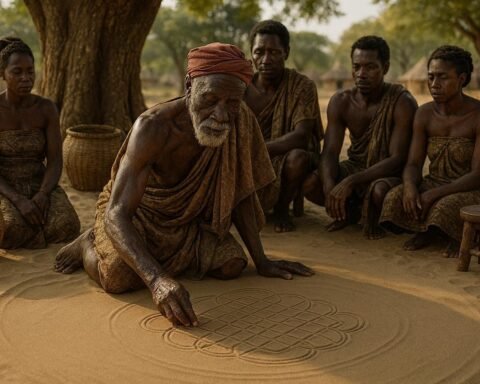
Instead, he gathered everyone together.
He calmly asked each traveler to describe everything they had observed during the day.
As the conversation continued, one apprentice hesitantly admitted moving several bundles to protect them from approaching rain.
In the confusion, he had forgotten to tell anyone.
The missing goods were soon found exactly where he had placed them.
The caravan members breathed with relief.
Later that evening, Chivanda reminded everyone that suspicion without careful investigation could easily destroy valuable friendships.
The apprentices never forgot that lesson.
Months later, the caravan approached one of the busiest trading centers on its route.
Merchants from many regions had gathered there.
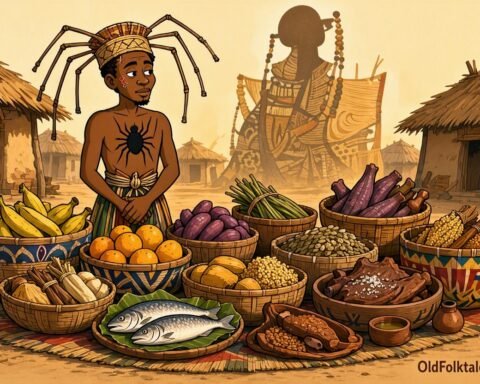
Ivory, cloth, beads, copper, salt, pottery, and finely crafted tools filled the marketplace.
Negotiations continued from sunrise until sunset.
Although many opportunities promised quick profits, Chivanda refused dishonest bargains.
When weighing goods, he insisted upon accurate measurements.
When discussing prices, he avoided deception.
Some competitors laughed at his methods.
Others claimed he could become far wealthier through clever manipulation.
Chivanda simply smiled.
“Wealth earned through dishonesty disappears quickly,” he replied.
“Trust earned through honesty lasts for generations.”
His words soon proved true.
Many merchants requested future trade specifically with his caravan because they valued reliability above temporary advantage.
The return journey presented fresh challenges.
Several travelers became ill after weeks of difficult travel.
Progress slowed considerably.
Rather than abandoning the weaker members to protect valuable cargo, Chivanda ordered frequent rest stops.
Healthy travelers shared additional responsibilities.
The caravan arrived home later than expected, but everyone returned safely.
When the people of Bié welcomed the travelers home, they celebrated more than successful trade.
They celebrated faithful leadership.
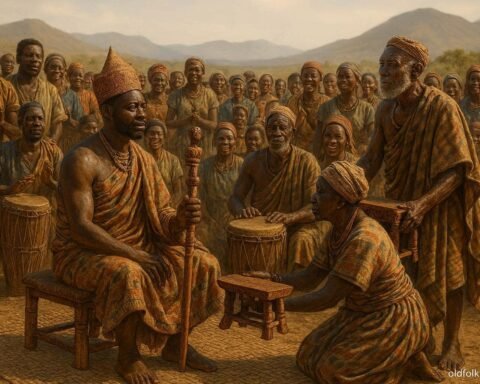
Elders gathered to hear reports from the journey.
Chivanda spoke not only about profitable exchanges but also about friendships established, customs learned, and agreements formed with distant communities.
He explained that every respectful conversation strengthened the reputation of the Ovimbundu people far beyond their own homeland.
The oldest elder smiled with satisfaction.
“You have returned with more than goods,” he observed.
“You have returned with honor.”
As years passed, Chivanda trained young apprentices just as Sambu had once taught him.
He never began lessons by discussing valuable merchandise.
Instead, he spoke about honesty.
He taught patience before negotiation.
He encouraged careful listening before speaking.
He reminded every apprentice that successful caravans depended upon cooperation among all their members.
The trade routes eventually changed as new forms of transportation developed across Central Africa.
Yet the stories of the great caravan leaders of Bié continued to be shared throughout the Ovimbundu highlands.
Researchers studying Angola’s history later recognized that these caravans did far more than transport goods.
They connected distant societies, encouraged peaceful exchange, spread new ideas, and strengthened diplomatic relationships between communities that might otherwise have remained strangers.
Today, the oral traditions surrounding the caravan leaders remain powerful reminders that commerce can become a force for cooperation when guided by integrity, mutual respect, and responsibility.
The story of the Caravan Leaders of Bié teaches that the greatest journeys are measured not only by the distance traveled or the wealth acquired but by the trust earned along the way.
Love this story? Discover our full Southern African folktales collection
Moral Lesson
True prosperity is built on honesty, trust, and respect. Wealth gained through integrity benefits both the individual and the community.
Knowledge Check
1. Why were the caravan leaders of Bié highly respected?
They earned the trust of communities through honesty, wisdom, and fair trade.
2. What important lesson did Sambu teach Chivanda?
That character and integrity were more valuable than the goods carried by a caravan.
3. Why did Chivanda share food with the drought-stricken village?
He believed that kindness and cooperation were more important than immediate profit.
4. How did Chivanda handle the missing bundles?
He investigated calmly instead of making accusations, discovering they had been moved by an apprentice for safekeeping.
5. Why did many merchants prefer trading with Chivanda?
Because he was honest, kept his promises, and conducted fair negotiations.
6. What is the main lesson of the story?
Lasting success comes from trust, fairness, and treating others with respect.
Source
Adapted from Ovimbundu oral traditions concerning long-distance caravan trade, historical studies of the Bié trading networks, and materials preserved in Angola trade history archives and Ovimbundu historical collections.