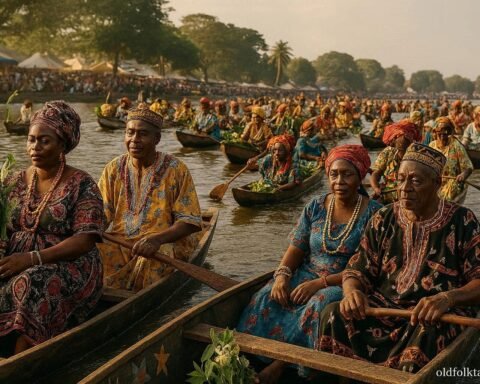
For centuries, the bustling town of Maroua stood as one of the great commercial centers of northern Cameroon. Situated along important caravan routes that linked the savannas of Central Africa with regions farther north and east, the town welcomed merchants, herders, farmers, craftsmen, and travelers from many different communities. Long before modern highways connected the region, the Great Market of Maroua served as a meeting place where people exchanged not only goods but also ideas, languages, customs, and friendships.
Among the Fulani, Kanuri, Shuwa Arab, Mafa, Mandara, and many other neighboring peoples, stories were told about the remarkable market where strangers often became trusted partners through honest trade and mutual respect. Elders remembered that the prosperity of Maroua depended not on wealth alone but on the willingness of different cultures to live and work together peacefully.
One such story tells of a young Fulani trader named Amadou.
Amadou had spent his childhood traveling with his father across the grasslands of northern Cameroon. Together they cared for cattle, visited seasonal markets, and learned the customs of many communities scattered across the region. Whenever they arrived in a new village, Amadou noticed that his father always greeted local elders before opening a single bundle of goods.
The young boy once asked why.
His father smiled and replied, “Trade begins with respect. If people trust you, business will follow.”
Those words remained in Amadou’s mind as he grew older.
If you enjoyed this story, explore our full West African folktales collection
When he reached adulthood, his father decided it was time for him to lead his own trading journey to the famous market at Maroua.
The responsibility filled him with both excitement and uncertainty.
He carefully packed leather goods, woven cloth, dried hides, and finely crafted calabashes produced by artisans in his home community. Every item represented weeks of careful work and the trust placed in him by his family.
As dawn broke, his small caravan joined other travelers moving steadily toward Maroua.
Along the road they met Kanuri merchants carrying beautifully woven mats and colorful fabrics.
Nearby walked Mandara craftsmen transporting iron tools forged in mountain villages.
Mafa farmers guided donkeys loaded with baskets of grain.
Women balanced clay pots and woven baskets upon their heads while children accompanied their families with cheerful conversation.
Although they came from different backgrounds and spoke different languages, everyone shared the same destination.
Several days later, the walls of Maroua appeared on the horizon.
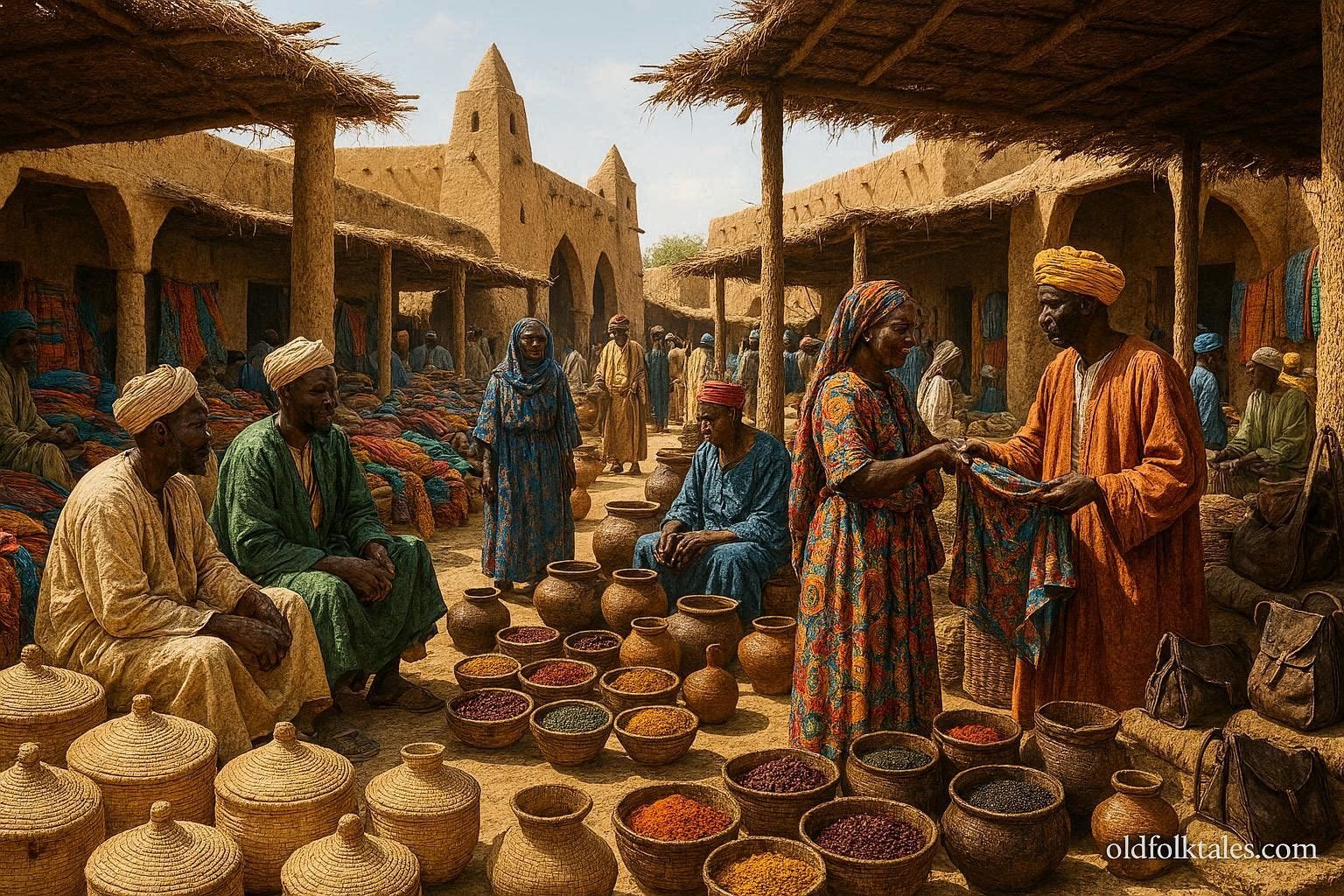
The sounds of the marketplace reached the travelers long before they entered its busy streets.
Voices filled the air as merchants welcomed customers.
Blacksmiths demonstrated their newest tools.
Leatherworkers displayed finely decorated saddles and bags.
Spices, grains, livestock, pottery, woven cloth, beads, and carved wooden objects covered the market in brilliant colors.
Amadou paused for a moment.
He had never imagined so many people gathered in one place.
His father had described the market many times, but seeing it with his own eyes was entirely different.
Before arranging his goods, he remembered his father’s advice.
He greeted neighboring traders respectfully.
He introduced himself to market elders responsible for maintaining order.
He learned where visitors were expected to trade and listened carefully to the customs observed by everyone using the marketplace.
Only then did he begin displaying his merchandise.
Business progressed steadily during the morning.
Customers examined leather bags with great interest.
Some negotiated patiently.
Others preferred exchanging goods rather than paying with currency.
Amadou treated every customer with honesty, explaining both the strengths and limitations of each item.
Nearby, an elderly Kanuri merchant watched him quietly.
Late in the afternoon the merchant approached.
“You bargain fairly,” he observed.
“My father taught me that trust is worth more than a single sale,” Amadou replied.
The older man smiled with approval.
Over the following days, the two merchants exchanged advice about routes, weather, and distant markets.
Their friendship soon extended beyond business.
One evening, after the market had closed, traders gathered around shared meals.
Stories filled the night air.
A Mafa elder described farming methods used in the mountains.
A Kanuri merchant explained caravan routes stretching toward Lake Chad.
Fulani herders spoke about seasonal grazing lands.
Each story introduced listeners to customs different from their own.
Amadou realized that every conversation expanded his understanding of the world.
One busy market day, confusion spread through the square.
A valuable bundle of cloth had disappeared from one merchant’s stall.
Some people immediately accused unfamiliar visitors.
Others argued loudly, fearing that distrust might damage business throughout the market.
Before tempers could rise further, the market elders called everyone together.
Rather than accepting the first accusation, they calmly questioned witnesses and examined the events carefully.
Eventually a young porter admitted that he had moved the bundle into a shaded storage area after an unexpected rainstorm threatened to damage it.
He had forgotten to inform the owner before helping another merchant.
The missing goods were quickly returned.
Relief spread throughout the marketplace.
The elders reminded everyone that patience protected peace far better than suspicion.
The incident strengthened rather than weakened the community because it demonstrated the importance of careful judgment.
Weeks passed.
Amadou became known as a reliable trader whose promises could always be trusted.
Customers returned year after year because they knew he offered fair prices and honest measurements.
Even merchants who competed with him respected his integrity.
During one visit to the market, a disagreement arose between two traders speaking different languages.
Neither fully understood the other’s explanation.
A respected interpreter patiently translated every word until both sides reached a fair agreement.
Watching the exchange, Amadou understood that communication itself was among the marketplace’s greatest treasures.
The market connected people who might otherwise remain strangers.
As the seasons passed, Amadou’s business prospered.
Yet he measured success differently from many others.
He valued the friendships formed across cultural boundaries.
He welcomed opportunities to learn new customs.
He believed every journey made him not only a better trader but also a wiser person.
Years later, younger merchants often sought his advice before making their first journey to Maroua.
Many expected him to explain how to earn greater profits.
Instead, he offered simpler guidance.
“Learn people’s names.”
“Respect their customs.”
“Keep your promises.”
“Listen before speaking.”
“The market rewards those who value people as much as merchandise.”
The young traders followed his advice.
They discovered that lasting partnerships produced greater prosperity than dishonest bargains.
Generations continued to preserve stories celebrating the Great Market of Maroua.
Although goods changed with time and new forms of transportation transformed commerce across the region, the market remained a symbol of peaceful exchange and cooperation among many cultures.
Today, historians recognize Maroua as one of northern Cameroon’s most important historic trading centers, where commerce encouraged dialogue between diverse peoples and strengthened regional relationships. Oral traditions continue to celebrate the market as a place where trust, respect, and understanding traveled alongside every caravan.
The story of The Great Market of Maroua reminds us that successful trade depends not only upon the exchange of goods but also upon honesty, friendship, and respect for the many cultures that meet along the journey.
Keep reading: Discover more Central African folktales
Moral Lesson
Lasting prosperity grows from honesty, mutual respect, and cooperation among people of different backgrounds.
Knowledge Check
1. Why was the Great Market of Maroua famous?
It brought together merchants from many cultures to exchange goods, ideas, and customs peacefully.
2. What advice did Amadou’s father give him before trading?
That trade begins with respect and trust.
3. How did Amadou earn the respect of other merchants?
By trading honestly, treating customers fairly, and keeping his promises.
4. How was the missing bundle of cloth found?
The market elders investigated patiently and discovered it had been moved to protect it from rain.
5. What did Amadou believe was more valuable than making a quick profit?
Building lasting friendships and earning the trust of others.
6. What is the main lesson of the story?
Honesty and cooperation create stronger communities and more successful partnerships.
Source
Adapted from oral traditions surrounding the historic markets of northern Cameroon, regional trade history, and materials preserved in Northern Cameroon historical archives.