For countless generations, the Duala people have lived along the banks of the Wouri River in present-day Cameroon. The river has long sustained their communities, providing fish, connecting villages through trade, and serving as a meeting place where families celebrated life’s most important moments. Its flowing waters became part of the people’s identity, linking the past with the present through customs carefully preserved by each generation.
Among the Duala’s most respected traditions is the Ngondo Water Ceremony.
Held each year along the Wouri River, the Ngondo is a cultural festival that celebrates the heritage of the Duala people while honoring their ancestors, strengthening community bonds, and preserving traditions passed down over centuries. Music, canoe processions, dancing, storytelling, and ceremonial gatherings remind every generation of the importance of unity and respect for their shared history.
In one riverside village lived a thoughtful young man named Ekedi.
Since childhood, he had eagerly awaited the arrival of the Ngondo festival.
He loved watching the beautifully decorated canoes glide across the river.
He admired the colorful traditional clothing worn during the celebrations.
Don’t stop yet! See our complete East African folktales collection
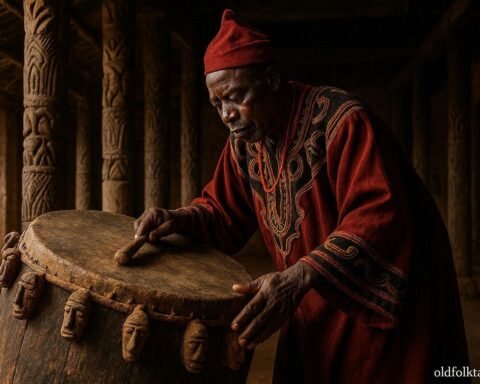
The rhythmic sounds of drums echoed across the water while elders welcomed visitors from neighboring communities.
To Ekedi, the festival seemed filled with excitement.
His grandmother, however, always reminded him that its true meaning reached far beyond celebration.
“The river remembers every generation,” she often said.
“So must we.”
As Ekedi grew older, he was invited to help prepare for the upcoming ceremony.
Together with other young people, he cleaned the riverbank, decorated gathering places, and welcomed guests arriving from nearby villages.
The elders explained that preparing the community was itself an important part of the tradition.
Respect began long before the festival opened.
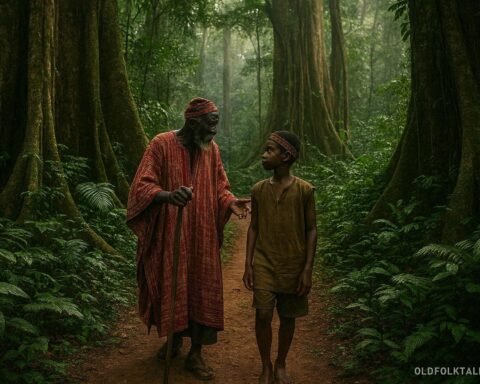
Several days before the ceremony, Ekedi accompanied his grandfather along the quiet banks of the Wouri River.
The old man pointed toward the flowing water.
“Our ancestors traveled these waters.”
“They fished here.”
“They traded here.”
“They welcomed strangers with generosity.”
“The river has always connected our people.”
Ekedi listened carefully.
For the first time, he understood that every canoe crossing the river continued a journey begun by generations before him.
As the day of the Ngondo approached, the riverside became alive with activity.
Women prepared traditional meals.
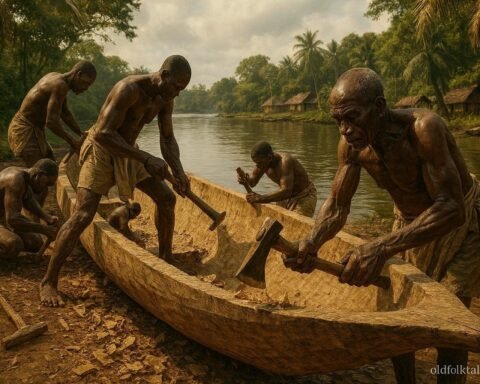
Artisans displayed woven baskets, carved wooden objects, and beautifully crafted paddles.
Musicians rehearsed songs preserved through many generations.
Children practiced traditional dances while elders shared stories explaining the origins of the ceremony.
Every family contributed to the celebration.
At sunrise on the festival day, people gathered along the riverbanks dressed in elegant traditional attire.
The atmosphere was filled with anticipation.
Decorated canoes rested upon the calm water.
Their polished wooden surfaces reflected the morning light.
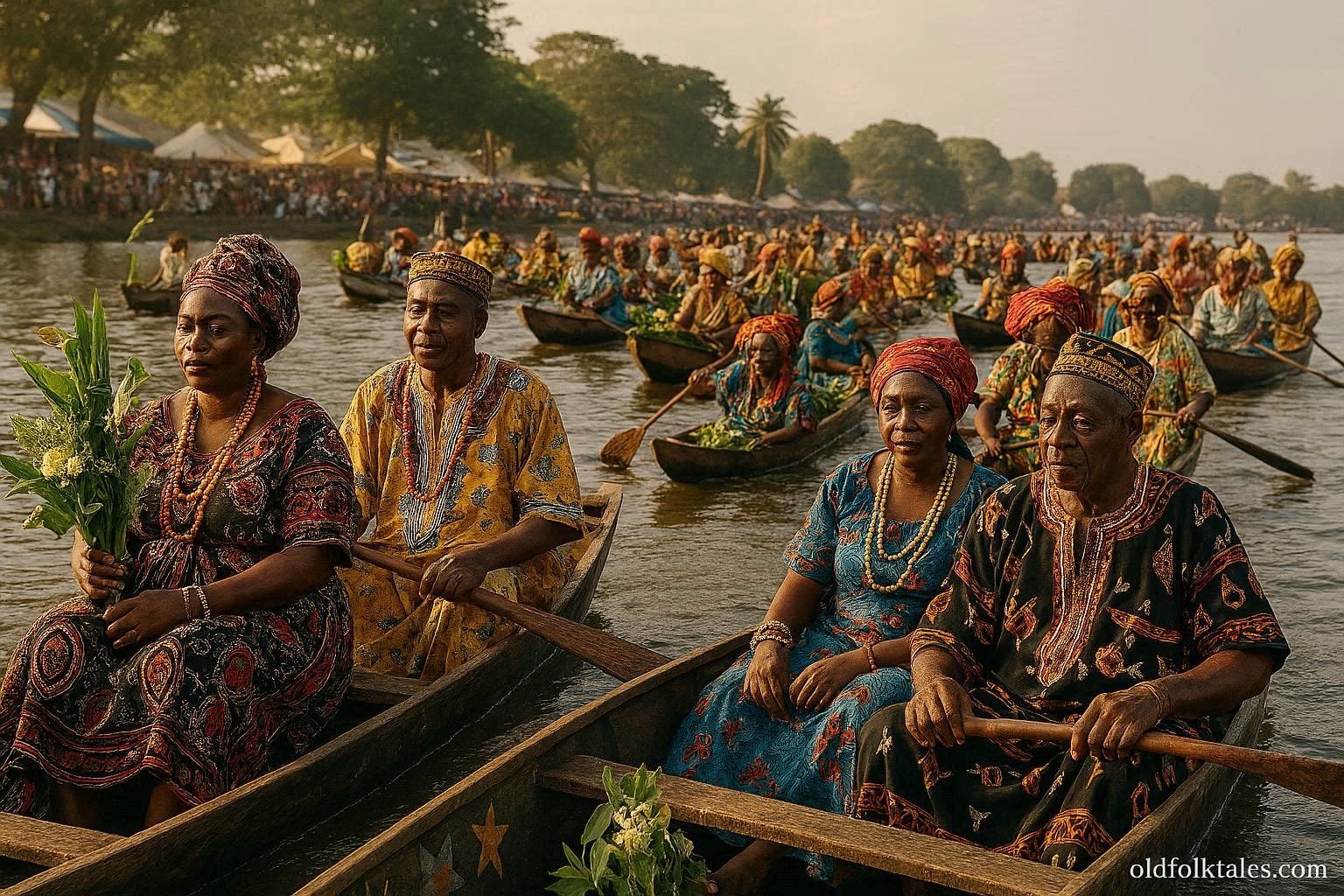
One by one, they launched onto the river in a graceful procession.
Drums echoed across the water as paddlers moved together with perfect rhythm.
Spectators cheered as the flotilla passed before them.
The procession symbolized the unity of the Duala people and their enduring connection to the Wouri River.
After the canoes returned, elders gathered the younger generation beneath large shade trees.
There they explained why the Ngondo continued to be celebrated.
“Our traditions survive,” one elder said, “because every generation chooses to remember.”
Another continued.
“We honor our ancestors not only through ceremony but by living with honesty, respect, and generosity.”
Ekedi realized the festival was not only about the past.
It also prepared young people to become responsible guardians of their culture.
Later that afternoon, friendly canoe races brought excitement to the celebration.
Teams worked together with remarkable coordination.
No single paddler could succeed alone.
Victory depended upon unity, trust, and careful cooperation.
Watching the race, Ekedi recognized another lesson hidden within the festival.
Communities, like canoes, moved forward only when everyone worked together.
As evening approached, storytellers gathered families around the riverside.
They shared ancient narratives describing the origins of the Duala people, memorable leaders, and important events preserved through oral tradition.
Children listened attentively while elders encouraged them to ask questions and remember the stories.
Ekedi found himself repeating several of the lessons to younger children who had never heard them before.
His grandmother smiled.
Without realizing it, he had begun preserving the tradition himself.
Years passed.
Ekedi became one of the respected organizers of the Ngondo ceremony.
He welcomed visitors, guided younger volunteers, and reminded children that every part of the celebration carried meaning.
Whenever someone admired the beauty of the festival, he repeated the lesson his grandmother had taught him years earlier.
“The river remembers every generation.”
“So must we.”
Today, the Ngondo Water Ceremony remains one of Cameroon’s most celebrated cultural festivals. Recognized for preserving the heritage of the Duala people, it continues to unite communities through ceremonies, canoe processions, music, traditional performances, and remembrance of ancestral traditions along the Wouri River.
The story of The Ngondo Water Ceremony reminds us that cultural heritage remains alive when every generation chooses to honor the past while working together to protect it for the future.
Keep reading: Discover more Central African folktales
Moral Lesson
A community remains strong when it remembers its heritage, honors its ancestors, and works together in unity.
Knowledge Check
1. What is the purpose of the Ngondo Water Ceremony?
To honor the heritage of the Duala people, remember their ancestors, and strengthen community unity.
2. Why was the Wouri River important to the Duala people?
It supported fishing, trade, travel, and connected communities.
3. What did Ekedi learn from his grandfather?
That the river connected generations and carried the history of the Duala people.
4. What did the canoe procession symbolize?
Unity, cooperation, and the enduring connection between the people and the river.
5. Why did the elders tell stories during the festival?
To preserve history, traditions, and cultural values for younger generations.
6. What is the main lesson of the story?
Heritage survives when people remember their history and work together to preserve it.
Source
Adapted from Duala oral traditions, Ngondo cultural heritage, and historical materials preserved in the Ngondo cultural archives and the Cameroon National Museum collections.